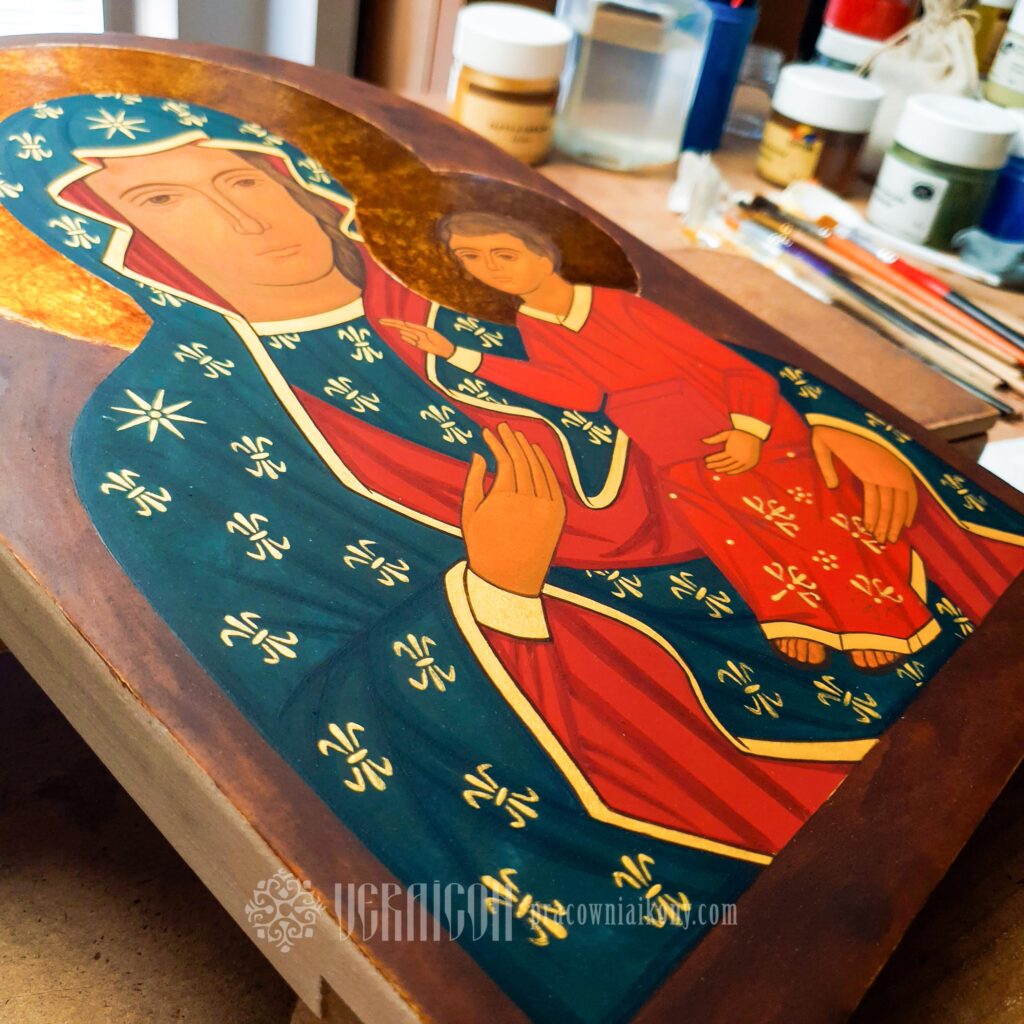
Painting icons is a journey of self-discovery, an exploration of one’s spirituality, and a continuous practice of patience and humility.
The art of icon painting is not merely the skilled copying of existing models. It is also a search for one’s own visual language. Within the canon established by tradition, it is possible to create a unique style that preserves the richness of history while conveying the experience of faith in a way that speaks to a contemporary viewer. Every work of art reflects the feelings and sensitivity of the artist — and this is true of icons as well.
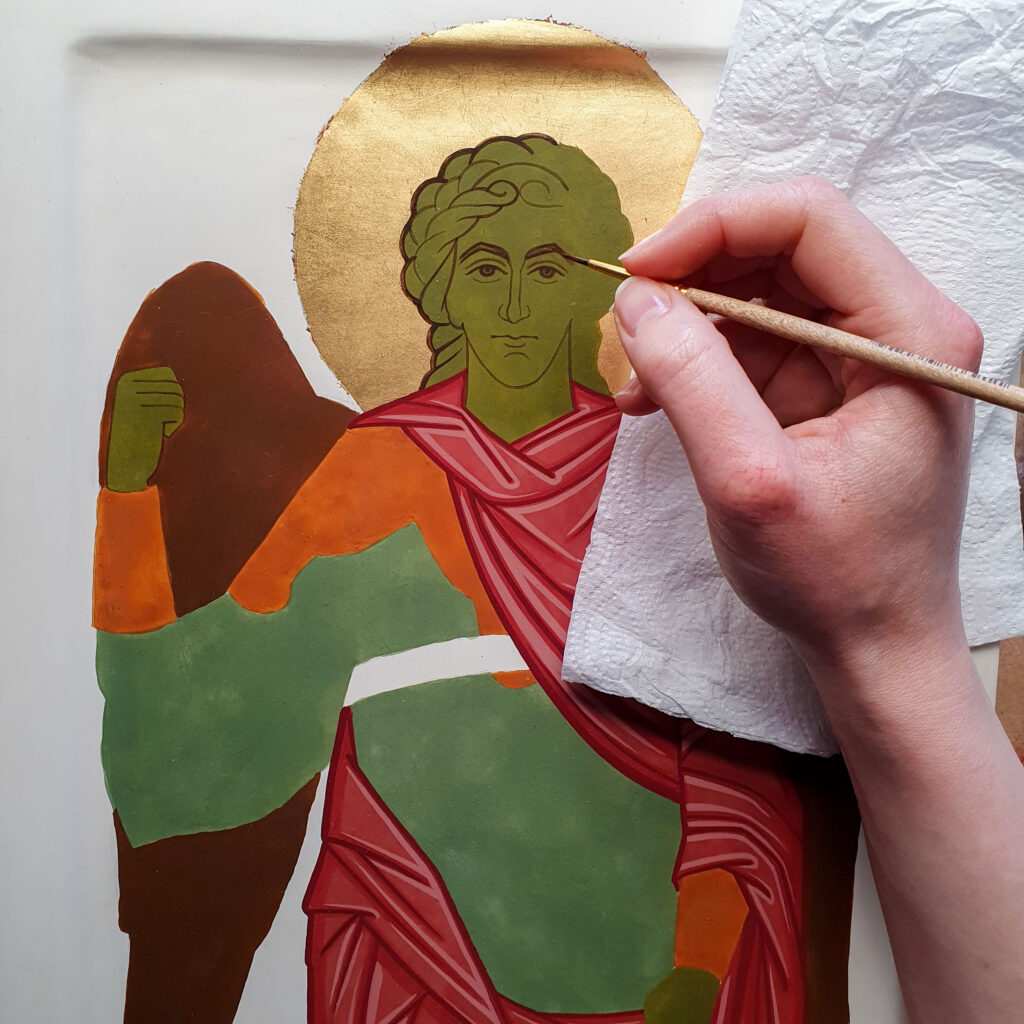
Tradition and Technique
Creating an icon is like a form of alchemy — recreating a historical painting technique becomes a true journey through time.
An icon should be not only beautiful but also durable. That is why, in the work of an icon painter, knowledge of materials and painting techniques is just as important as artistic sensitivity.
The technique I use is my own interpretation of the classical egg tempera method employed by Russian artists. It allows me to achieve effects that align closely with my personal aesthetic.
Tempera is one of the oldest known painting techniques. It is created by combining egg yolk emulsion with natural mineral pigments.
The surface of the icon is prepared on carefully seasoned linden wood panels, reinforced with crosswise battens to prevent warping. The panels are coated with a traditional chalk-and-glue primer called levkas, which, when finely polished, creates a perfectly smooth surface for painting.
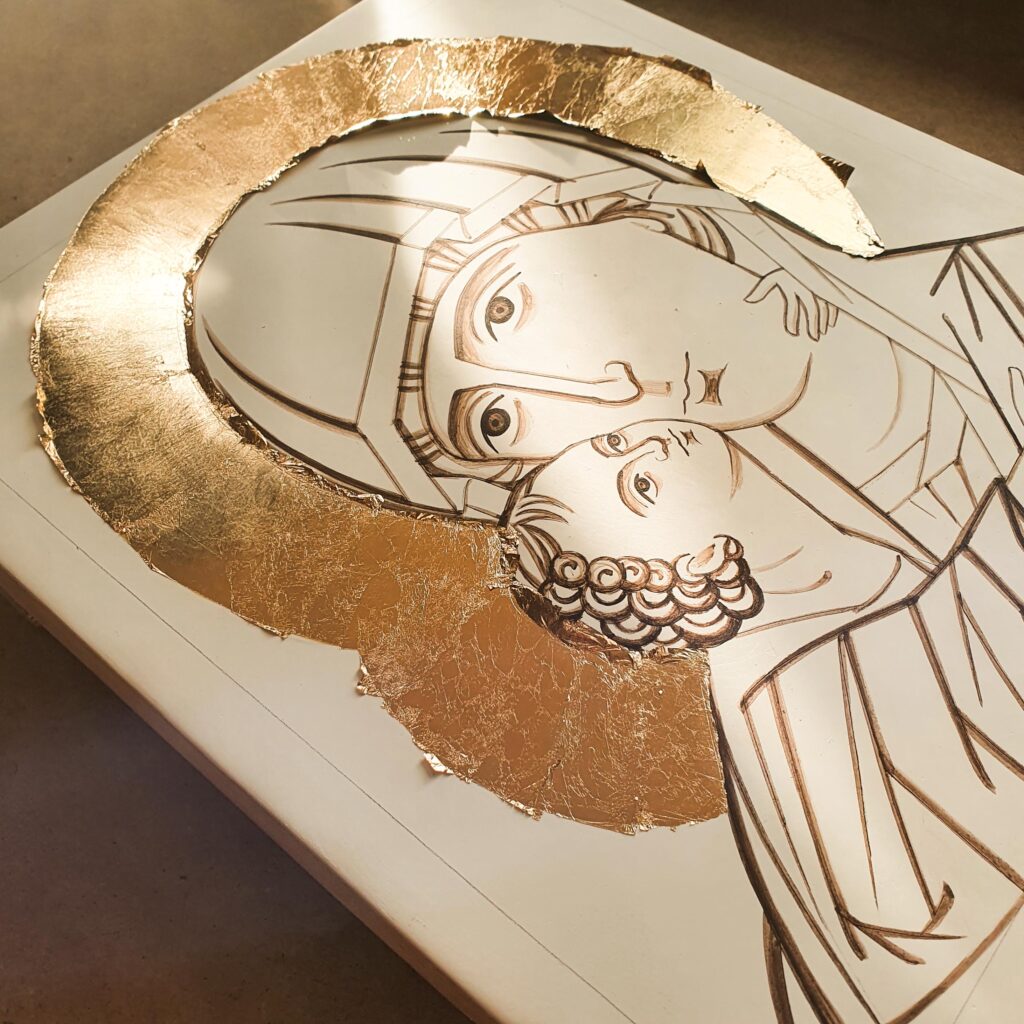
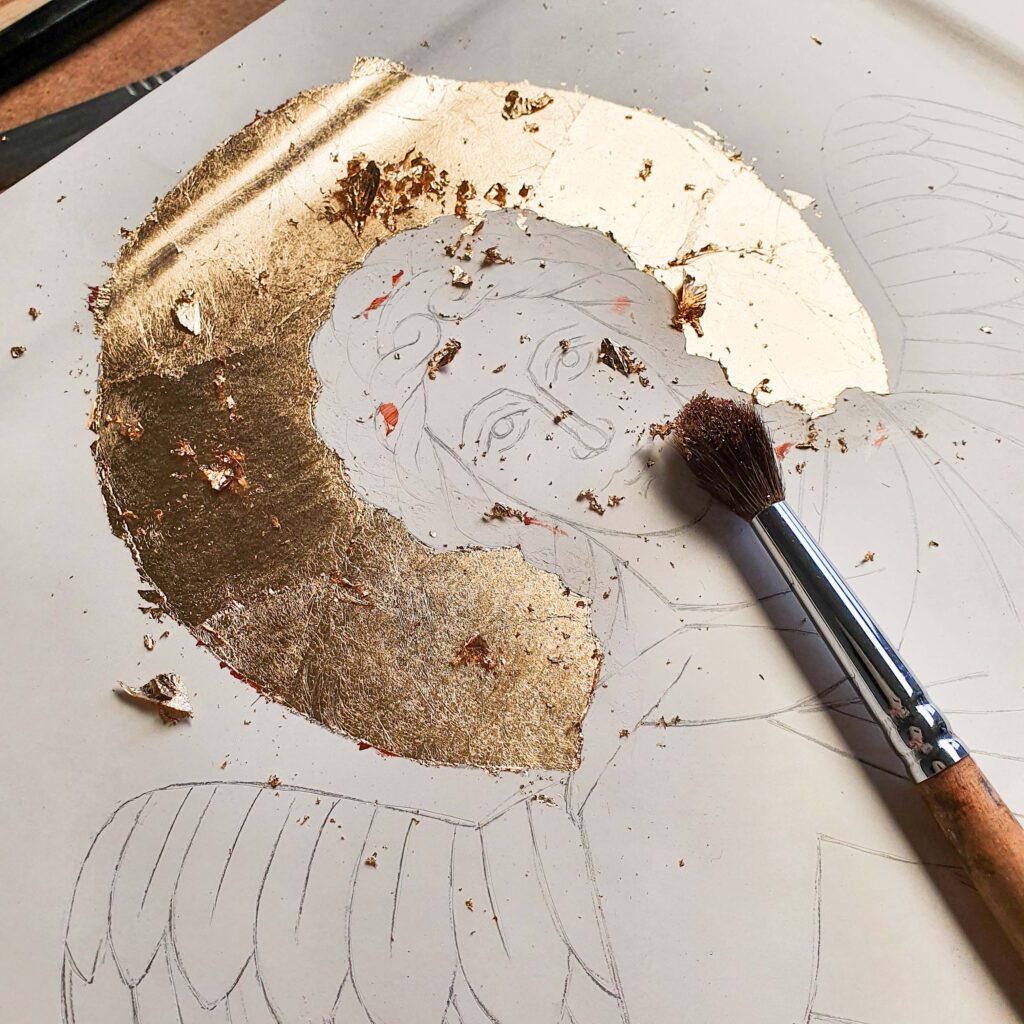
For gilding, I use gold leaf in various shades, often enhanced with subtle patina effects. After the painting is complete, the icon is protected with a layer of varnish that shields the artwork from external factors.
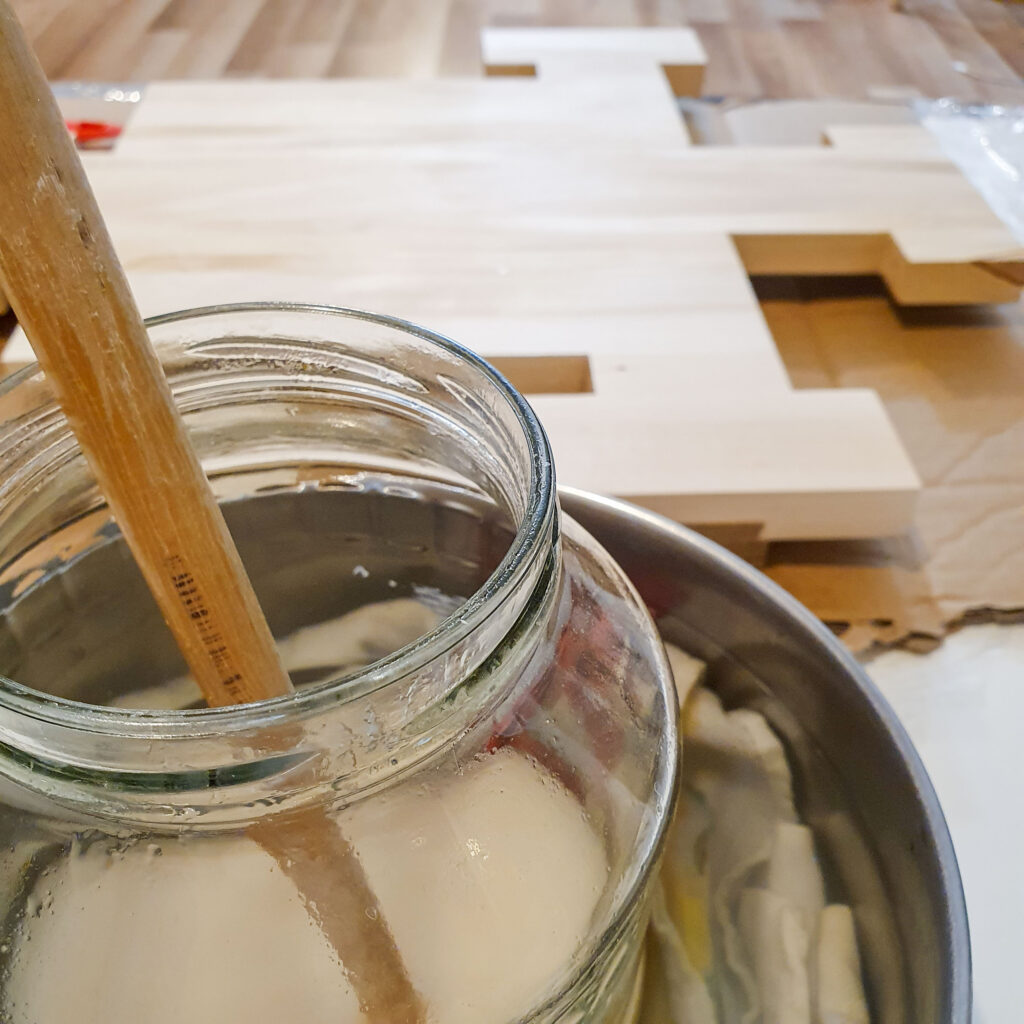
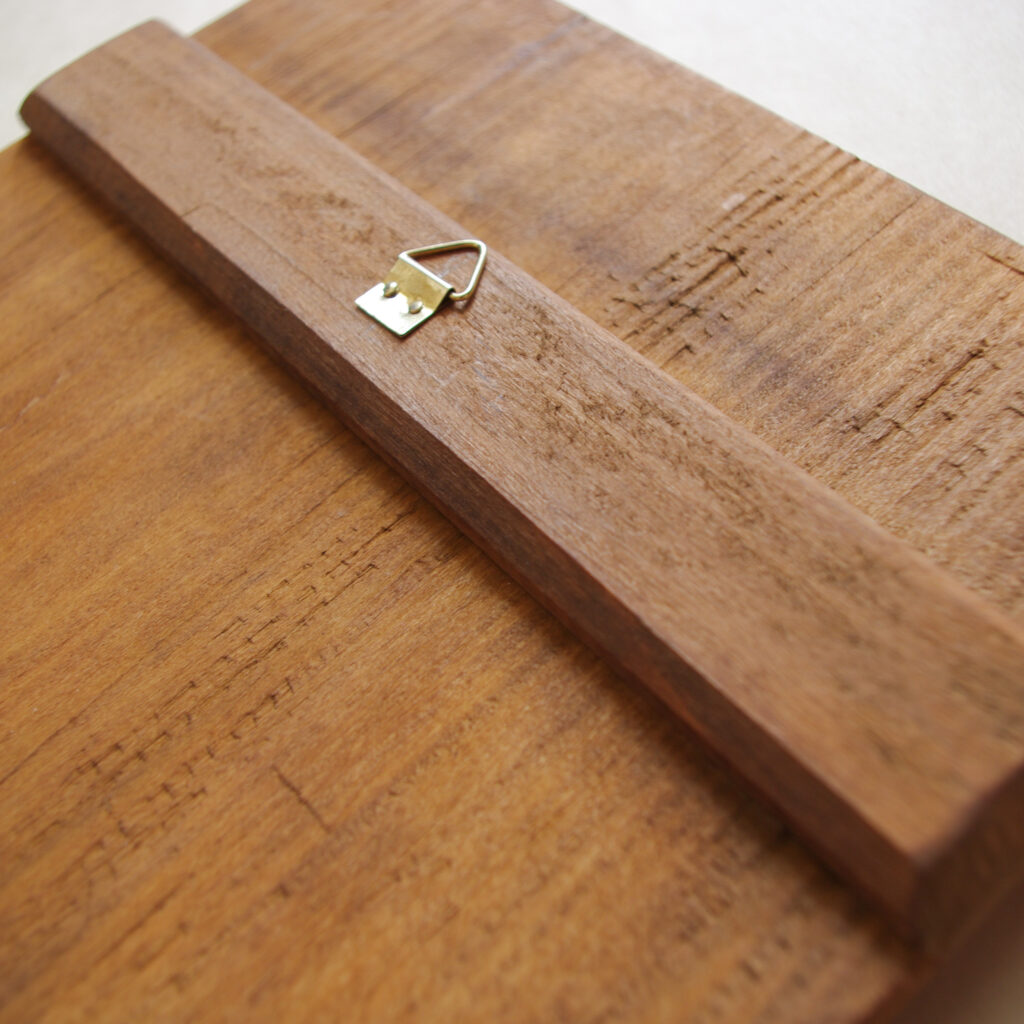
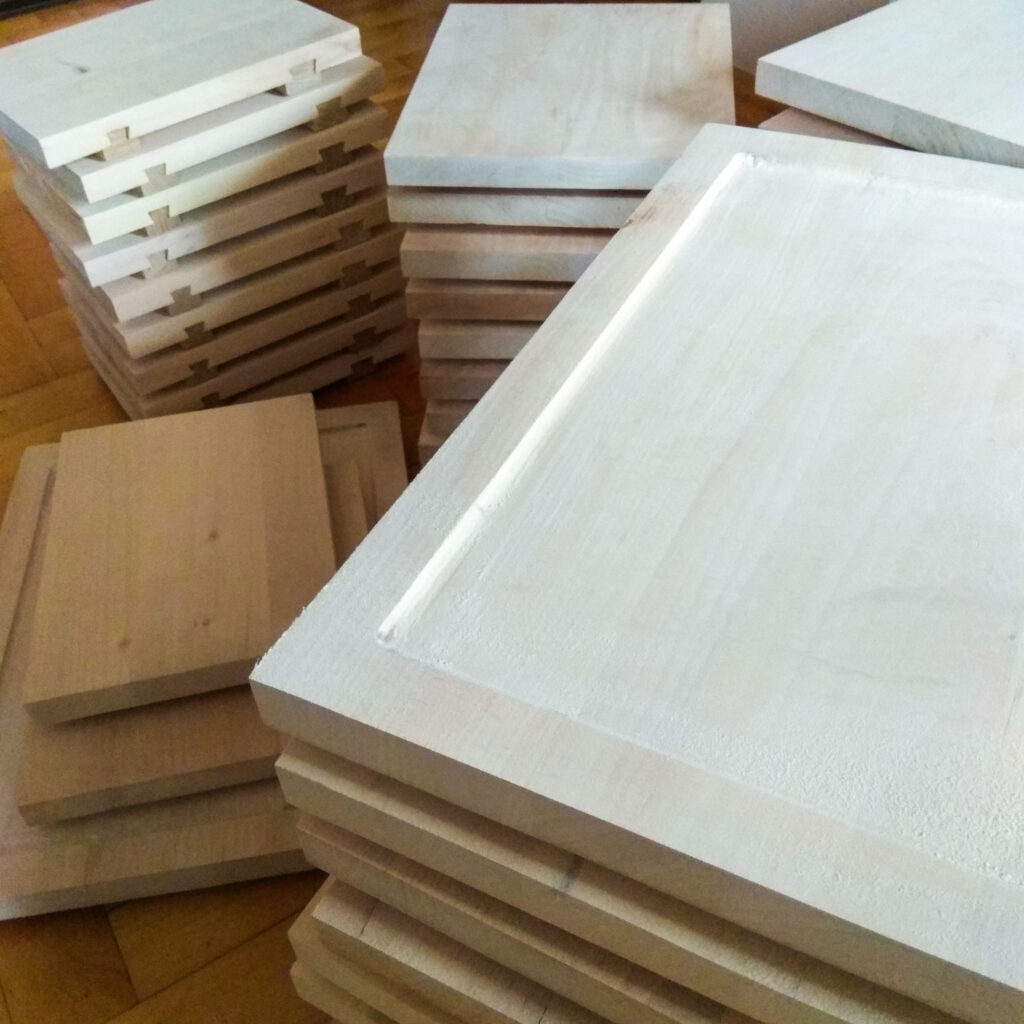
Contemporary Materials
The choice of technique and type of surface is always determined by the artist, based on knowledge of painting technology and the intended purpose of the work.
Modern materials can also be used in icon painting. Today, this includes contemporary varnishes, mixtures, and synthetic alternatives to rare or hard-to-find pigments.
In some cases, I also use contemporary materials to enhance the durability of the icon — for example, acrylic paints to protect the edges of the panel or varnishes that shield the painting from UV exposure.
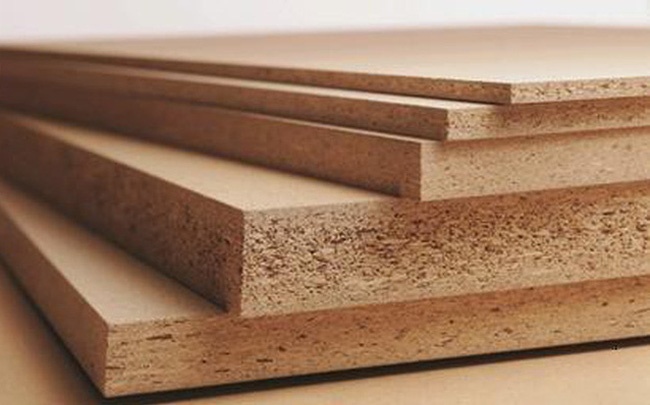
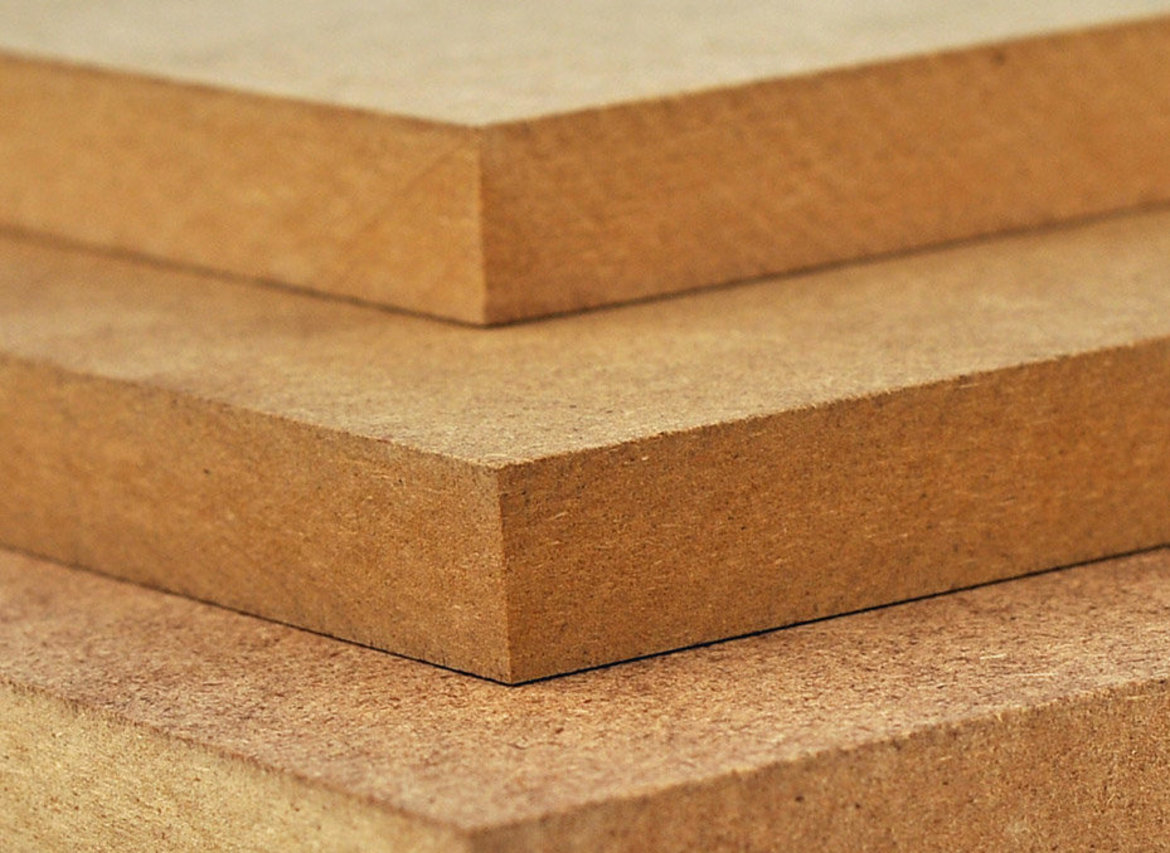
As an alternative to traditional linden wood panels, MDF boards may be used. They are highly stable and resistant to changes in temperature and humidity, which makes them ideal for large-scale icons in sacred spaces, such as contemporary church iconostases.
Stages of Creating an Icon
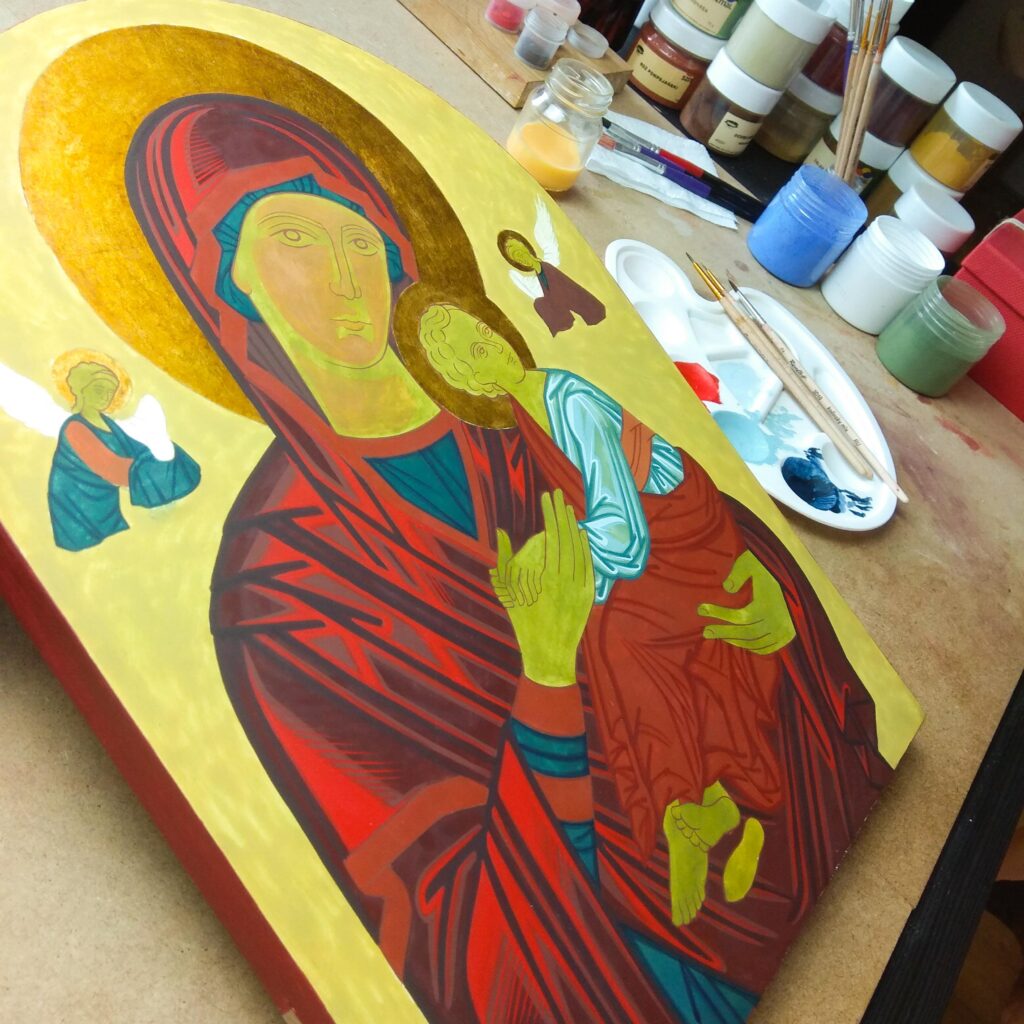
An icon is created slowly, layer by layer, gradually radiating inner light and depth of color.
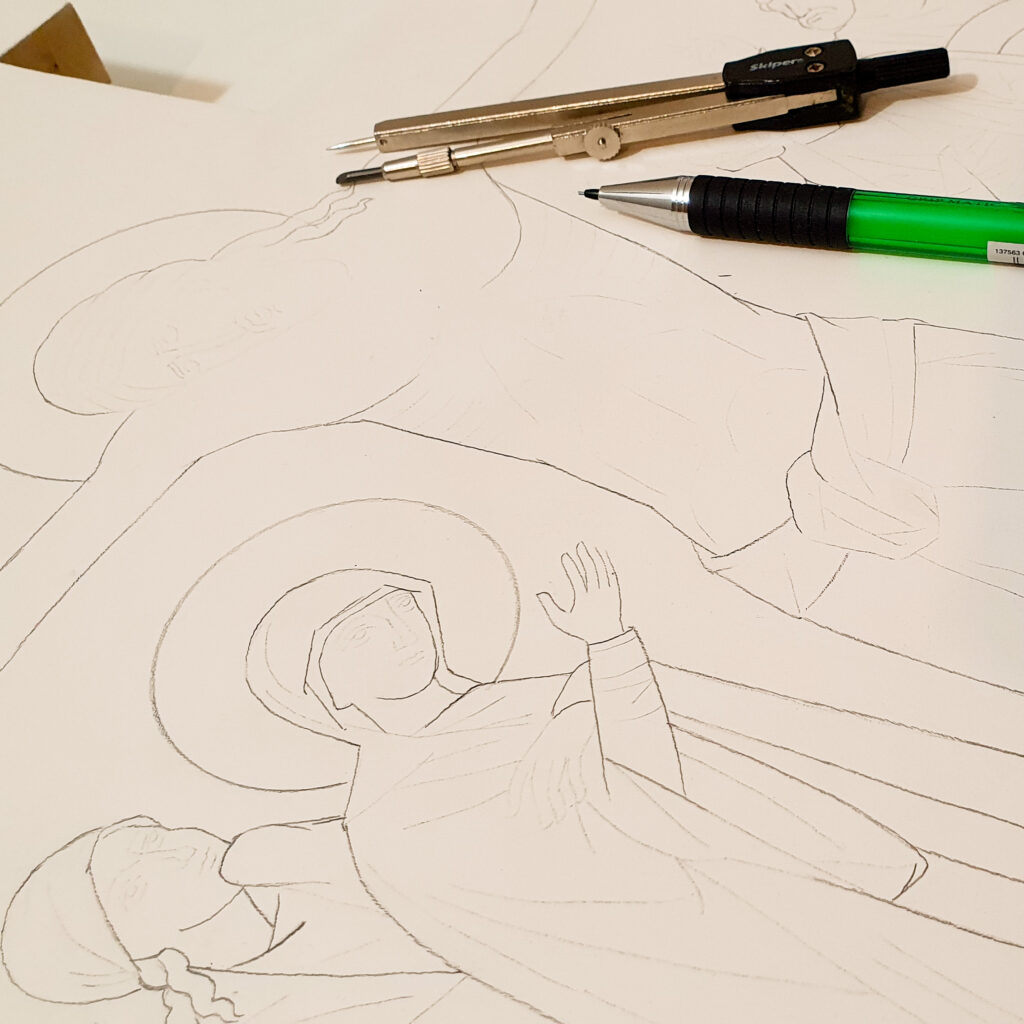
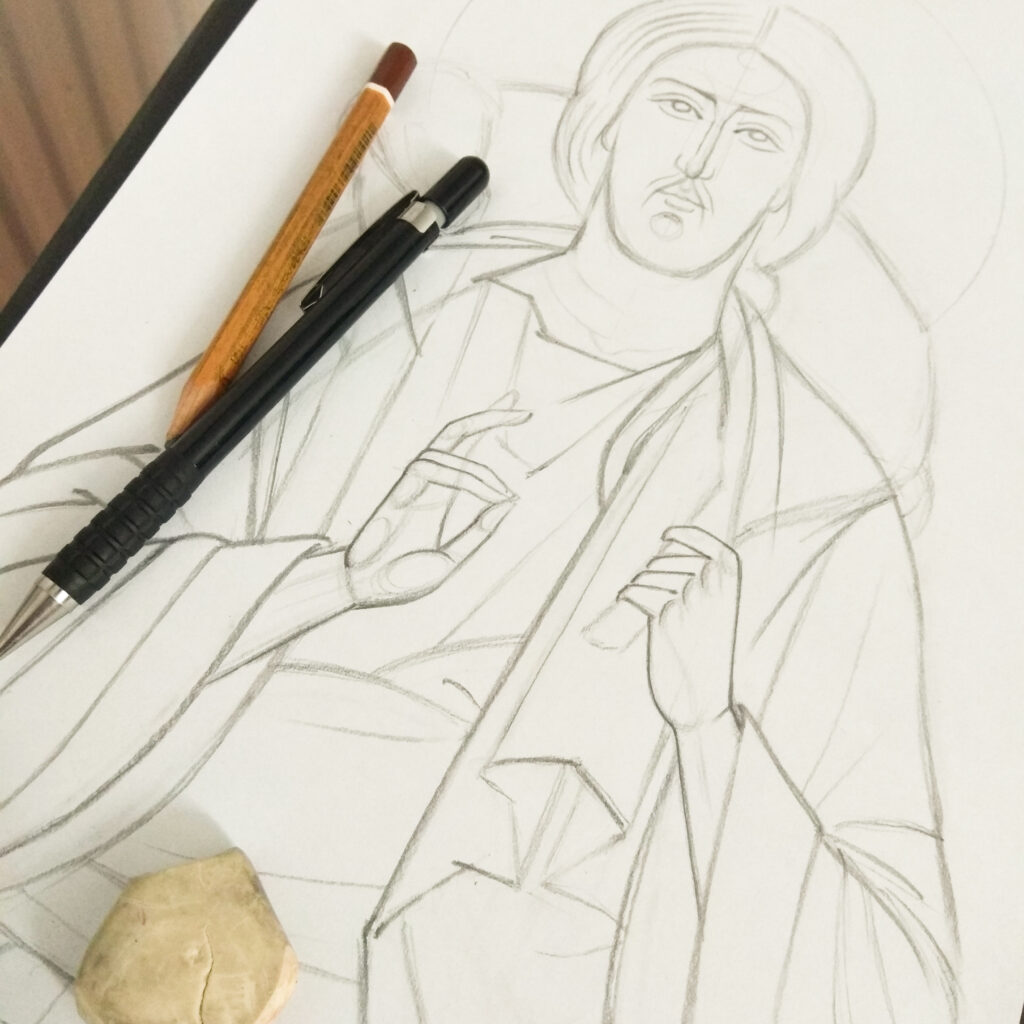
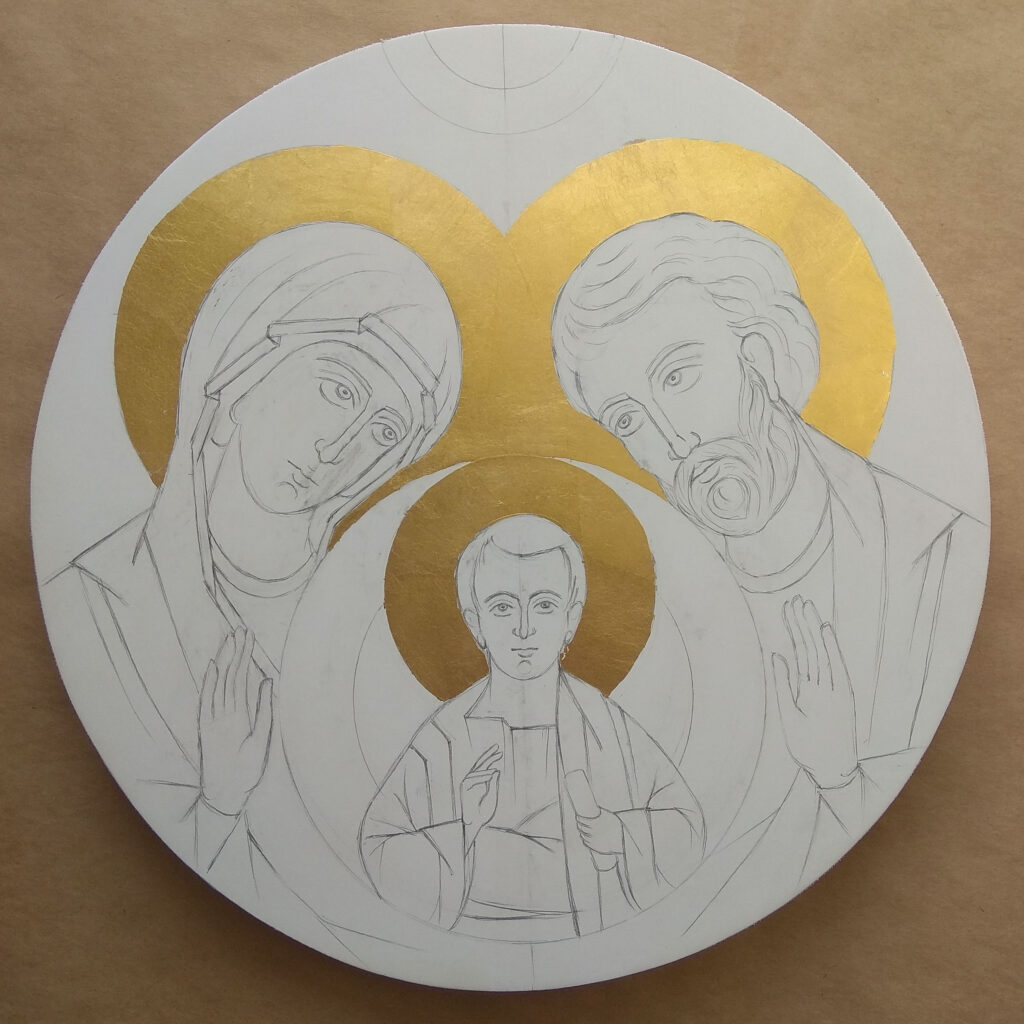
The process begins with a hand-drawn sketch of the chosen motif. This sketch is then transferred onto a carefully prepared and polished panel, and the composition’s lines are gently incised into the primer.
The next stage is gilding, depending on the chosen technique. Only after this are the first colors applied, initially filling the largest, most generalized areas of the composition.
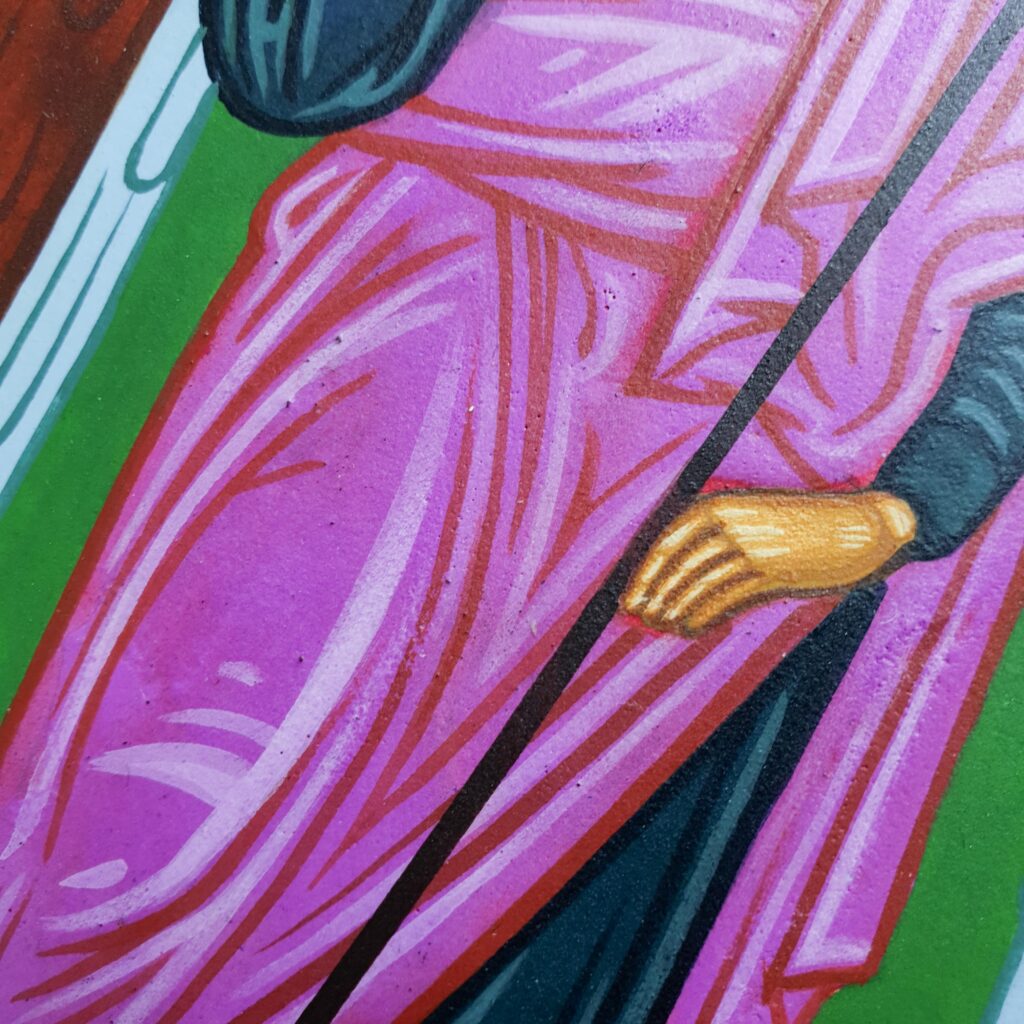
Painting progresses gradually, from the darkest tones to the lightest. Faces and visible parts of the body are painted last, with the final brushstrokes — known as highlights — illuminating the features of the figures.
Once the painting is complete, inscriptions, halo outlines, and decorative elements are added. After the icon has fully dried, it is protected with a layer of varnish to safeguard the painted surface.