
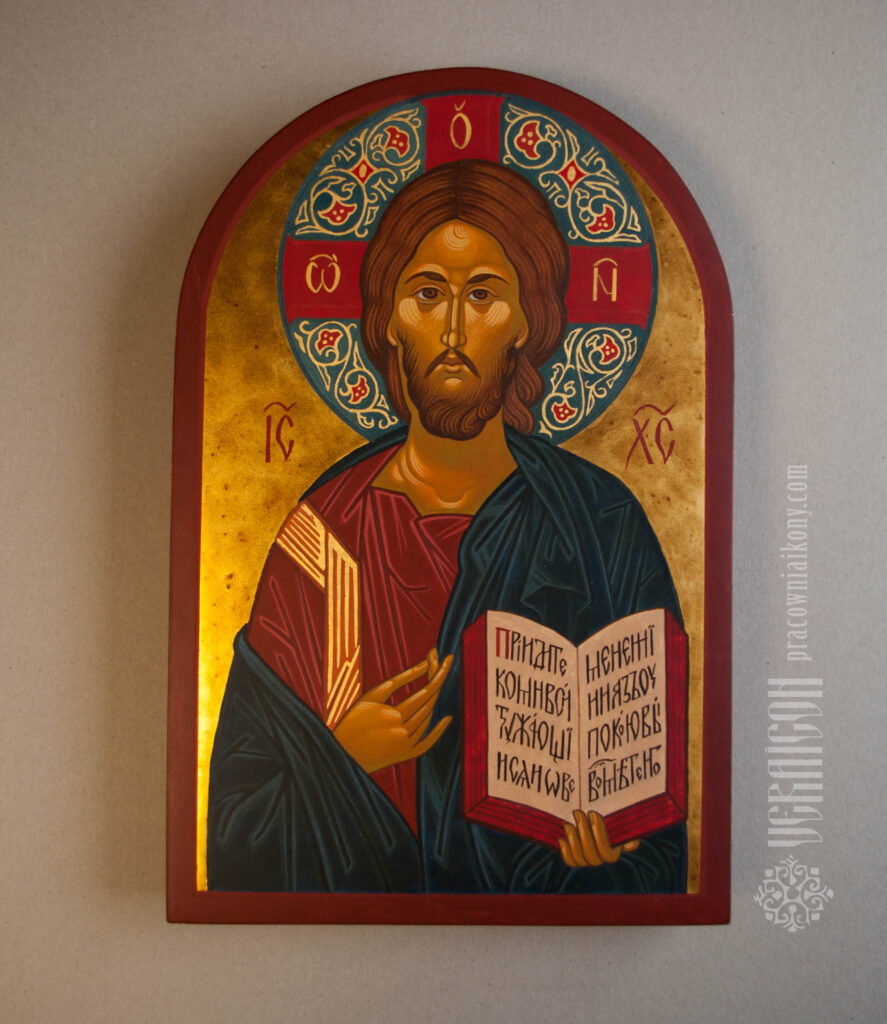
Christ Pantocrator
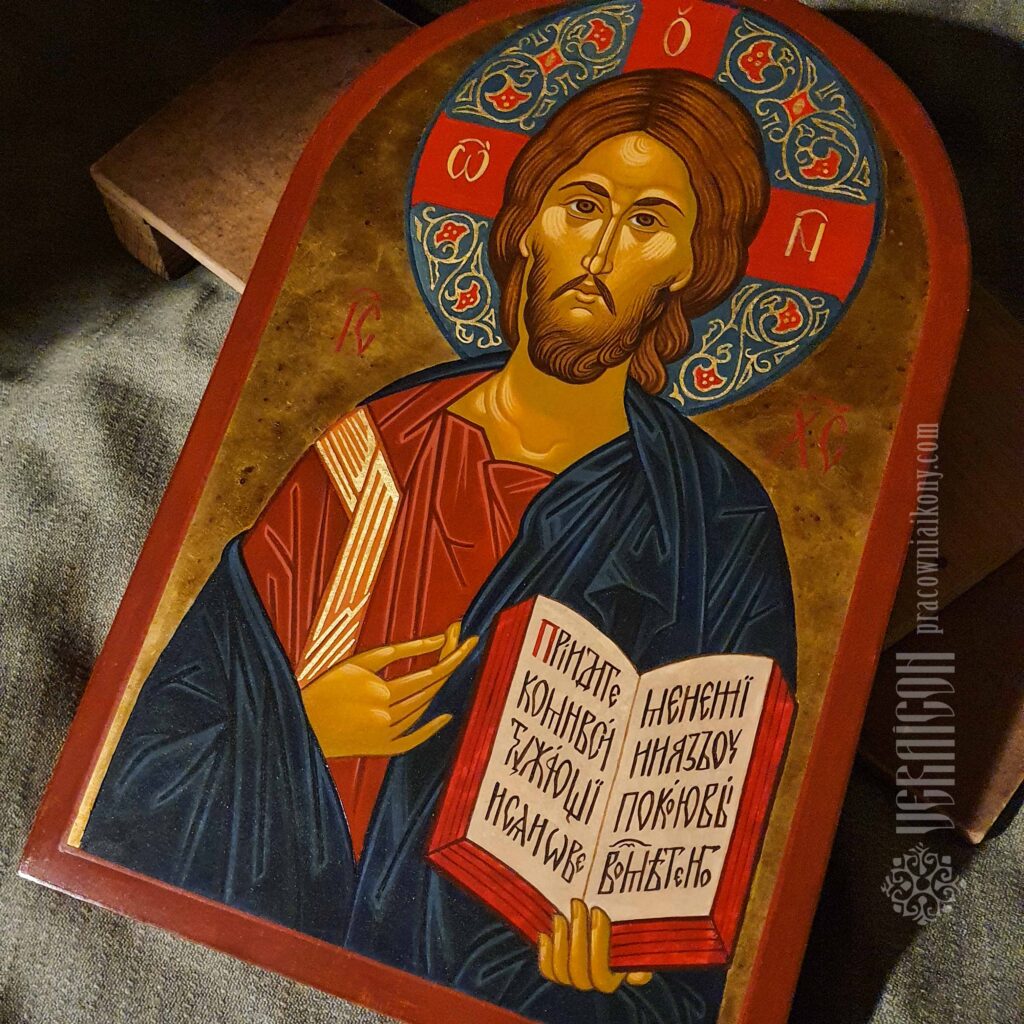
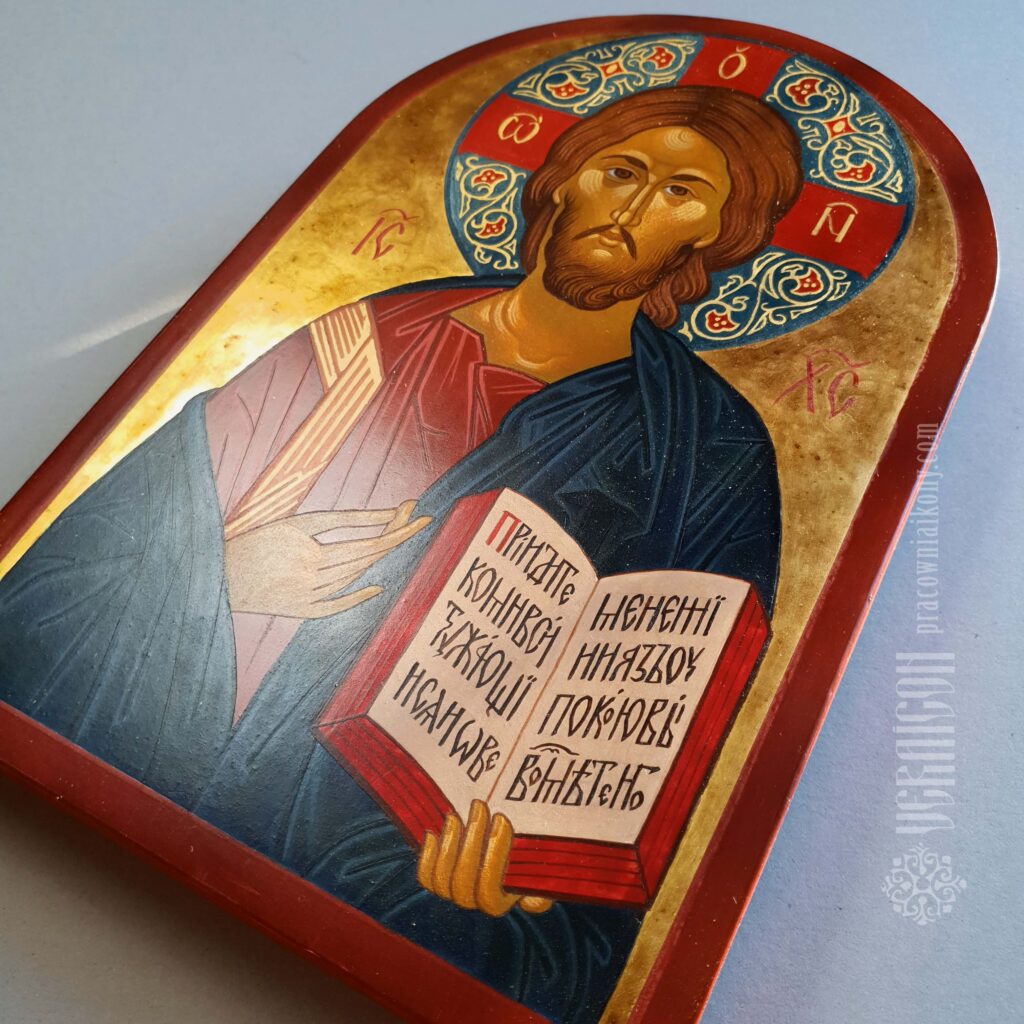
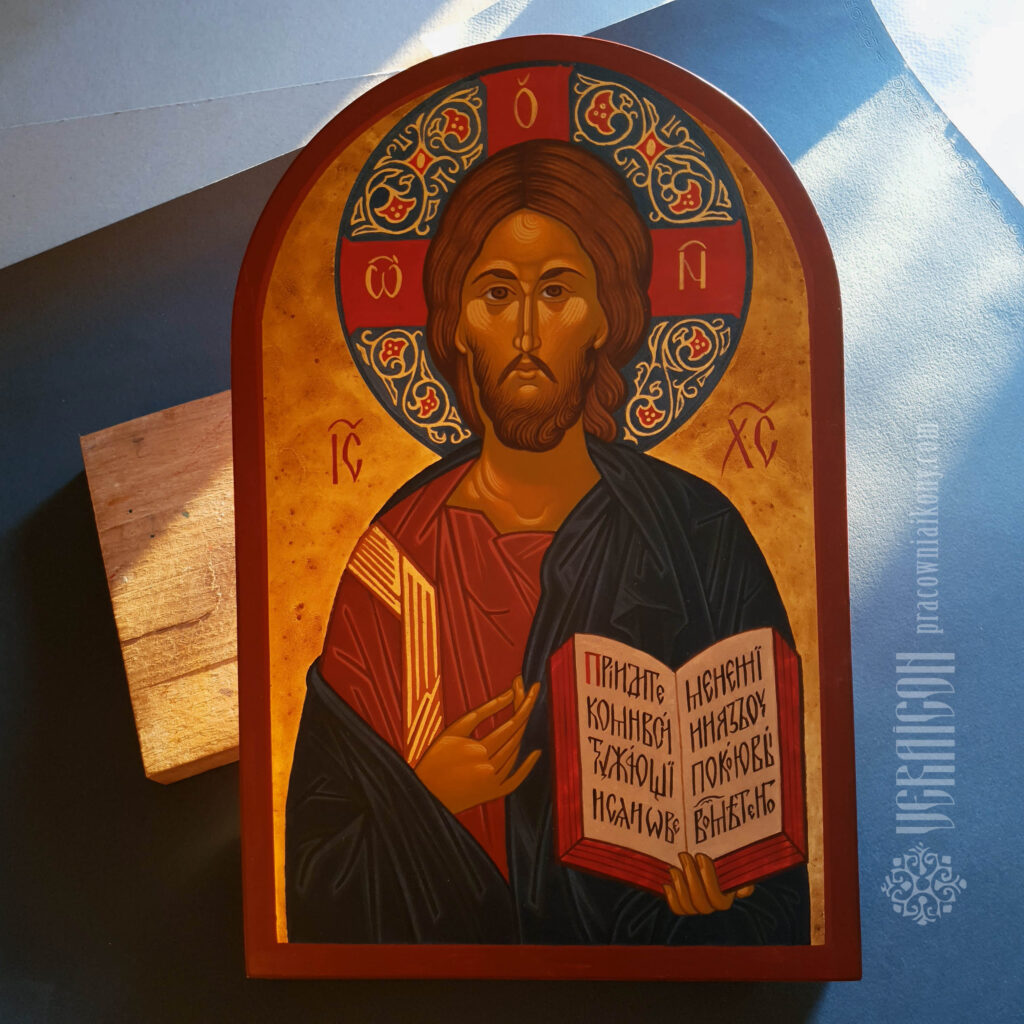
The icon of Christ Pantocrator depicts Jesus as the Almighty Judge and Ruler of the world. Shown frontally and surrounded by a richly ornamented cruciform halo, He holds an open Gospel book in His left hand and gives a blessing with His right.
The gilded background symbolizes heavenly light and the divine presence, while the classical iconographic colors — deep red, blue, and gold — emphasize His divine and human nature as well as His majesty.
The Church Slavonic text visible in the open book, “Come to Me, all who labor and are heavy laden, and I will give you rest,” comes from the Gospel according to Saint Matthew (Mt 11:28–30).
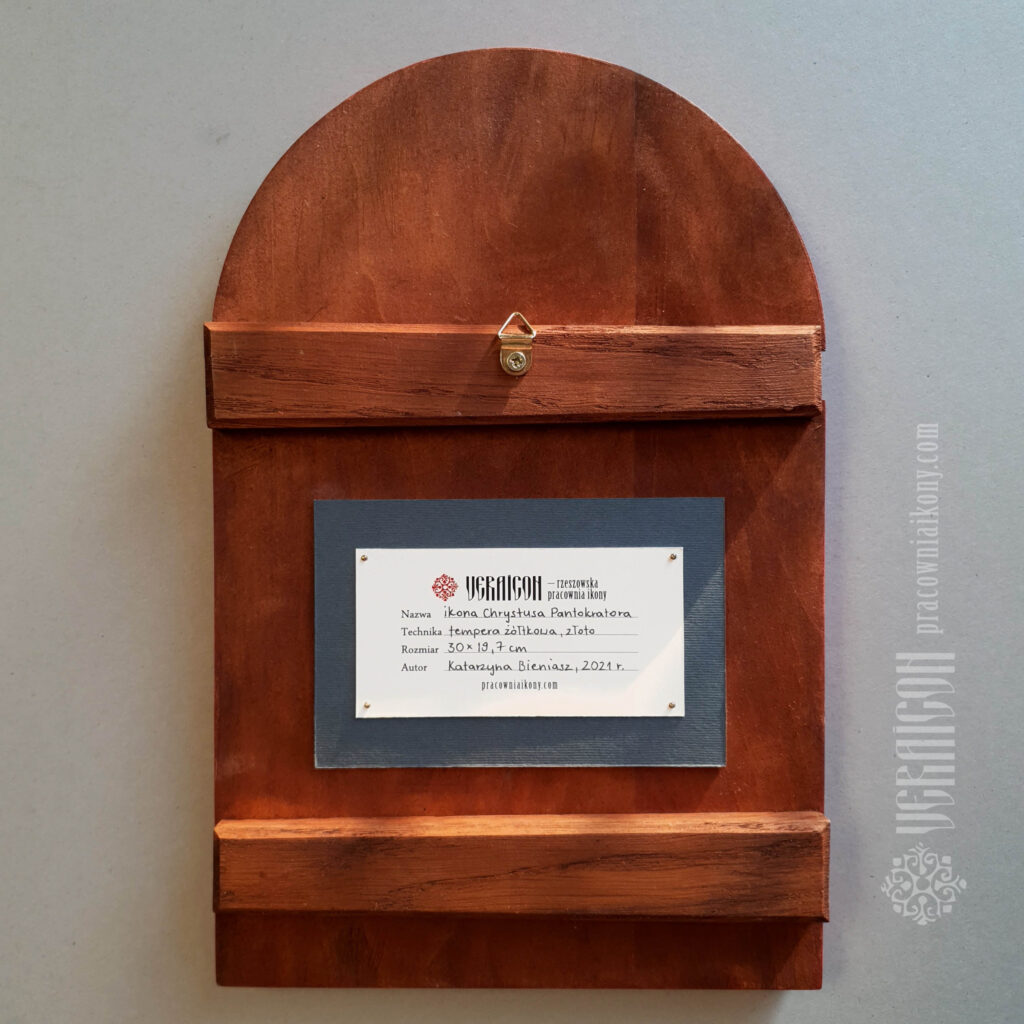
Egg tempera and gold leaf on linden wood panel.
Size: 20 × 30 cm, 2021.
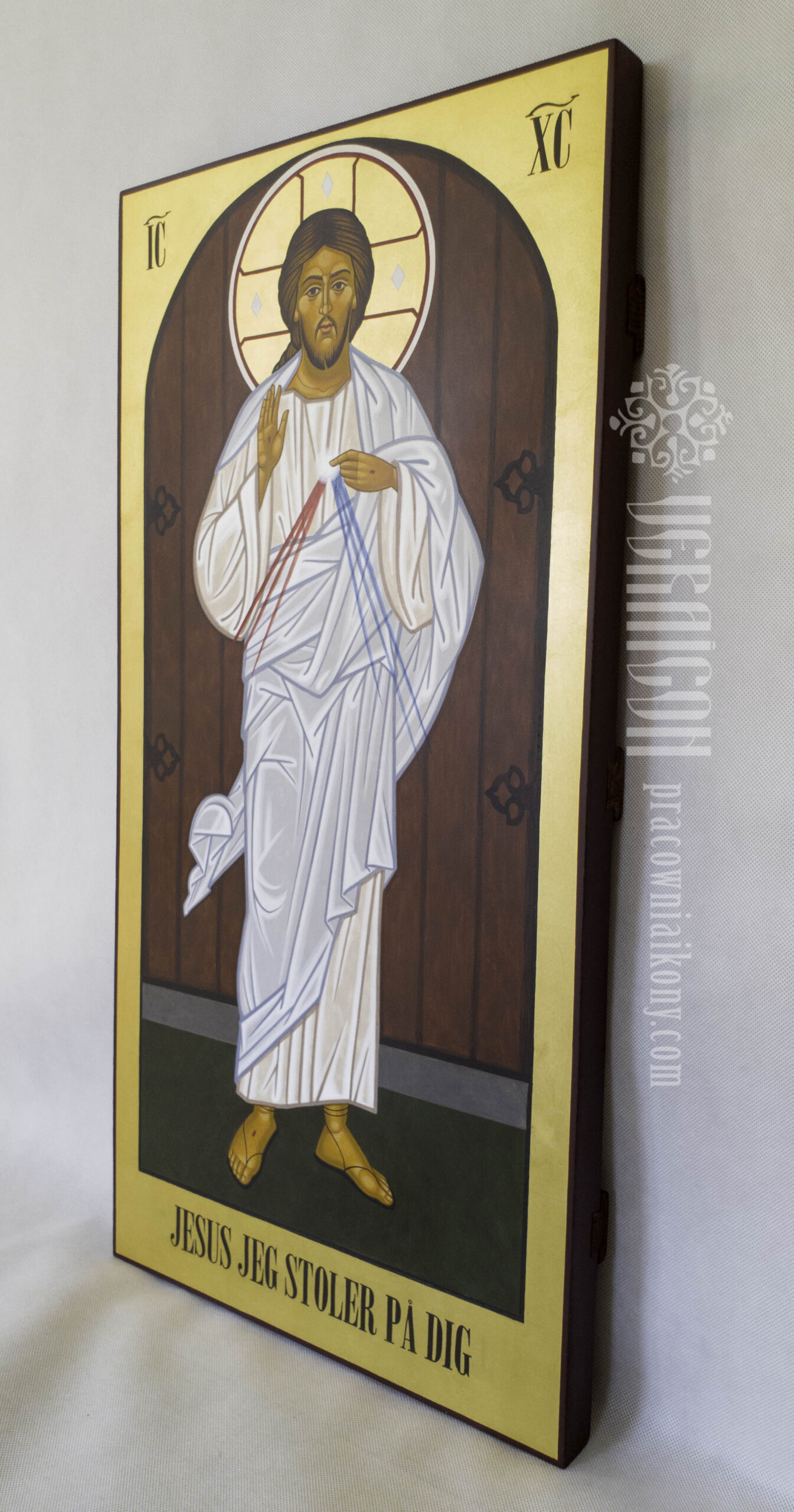
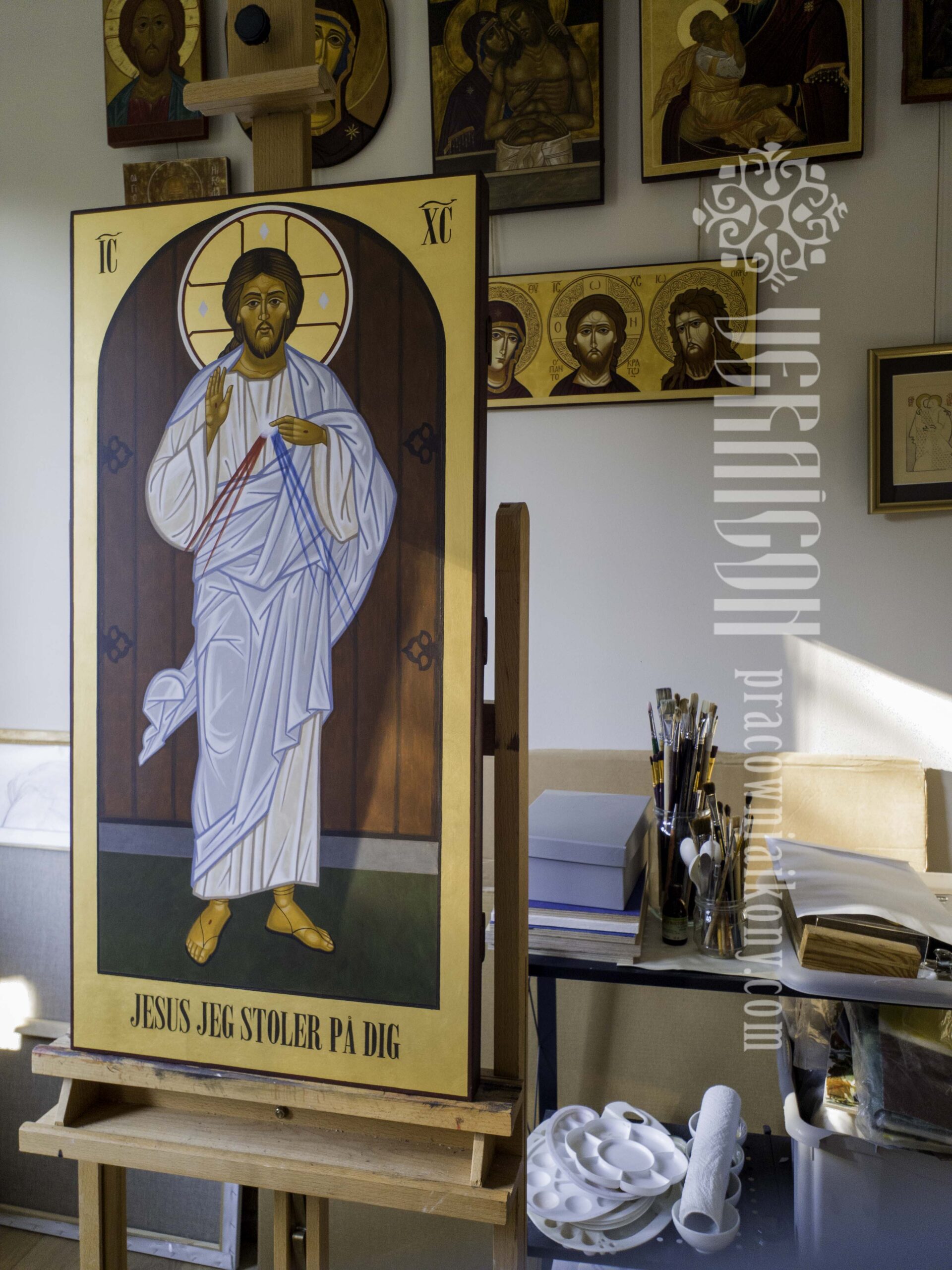
Merciful Christ
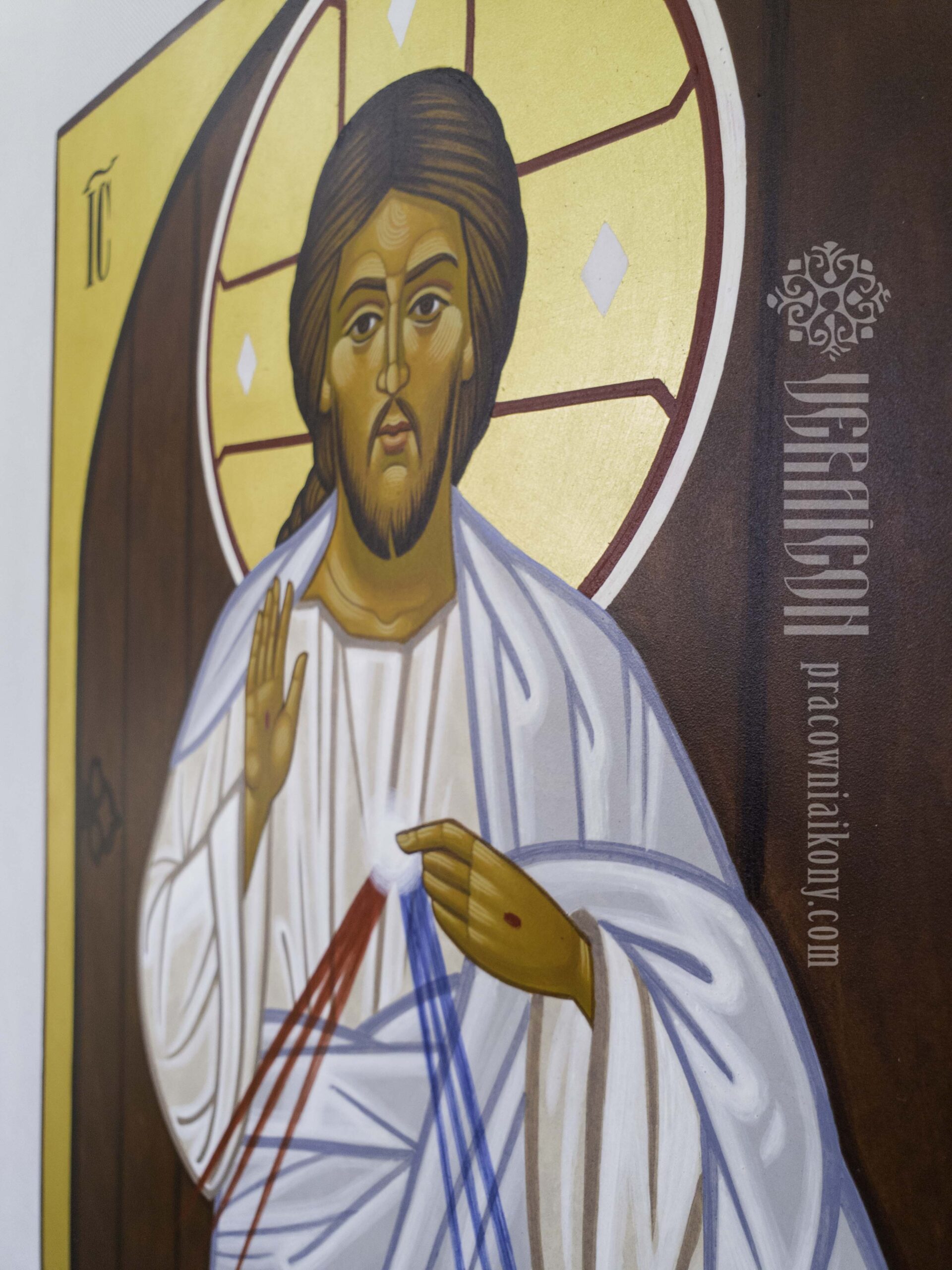
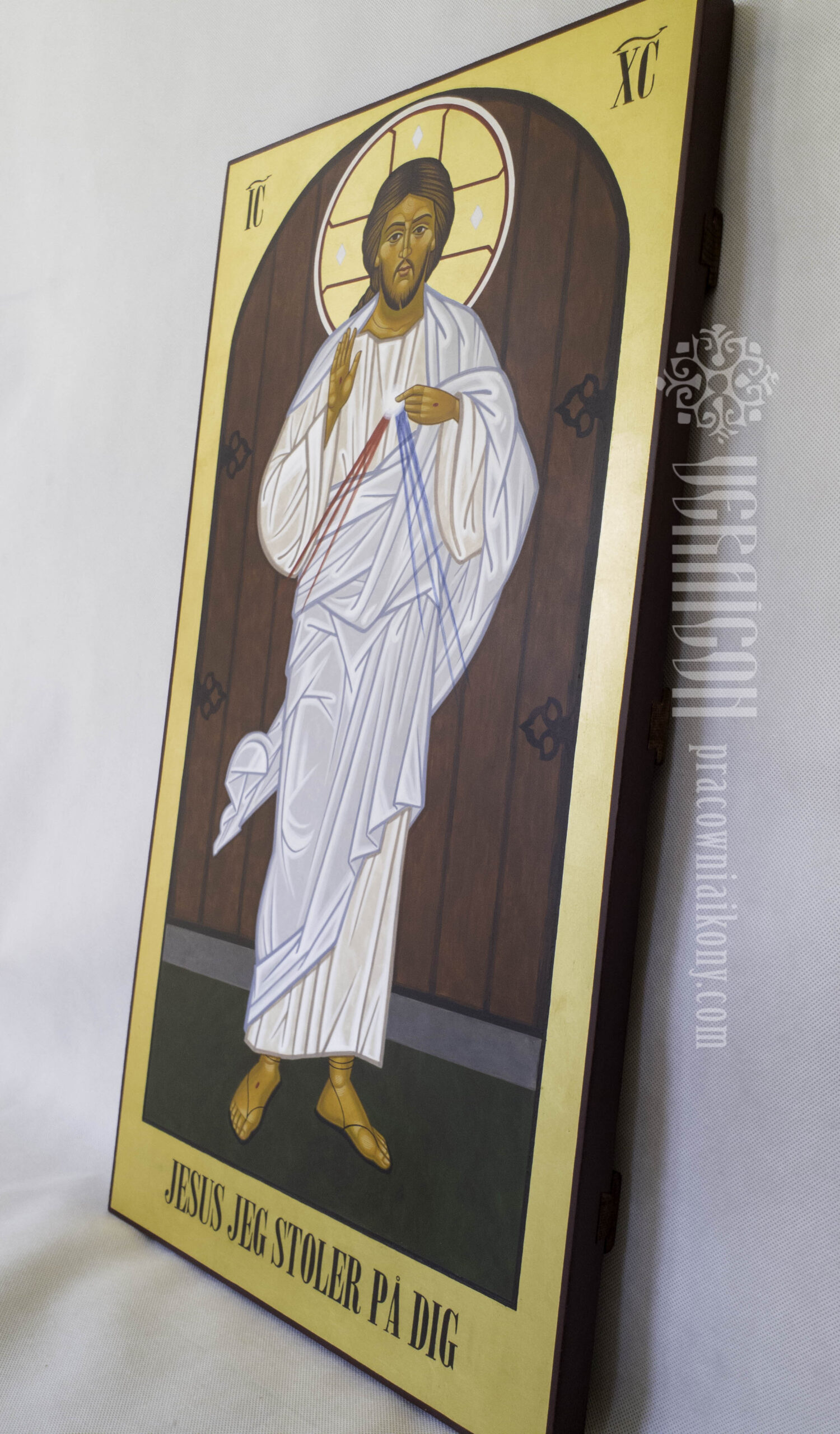
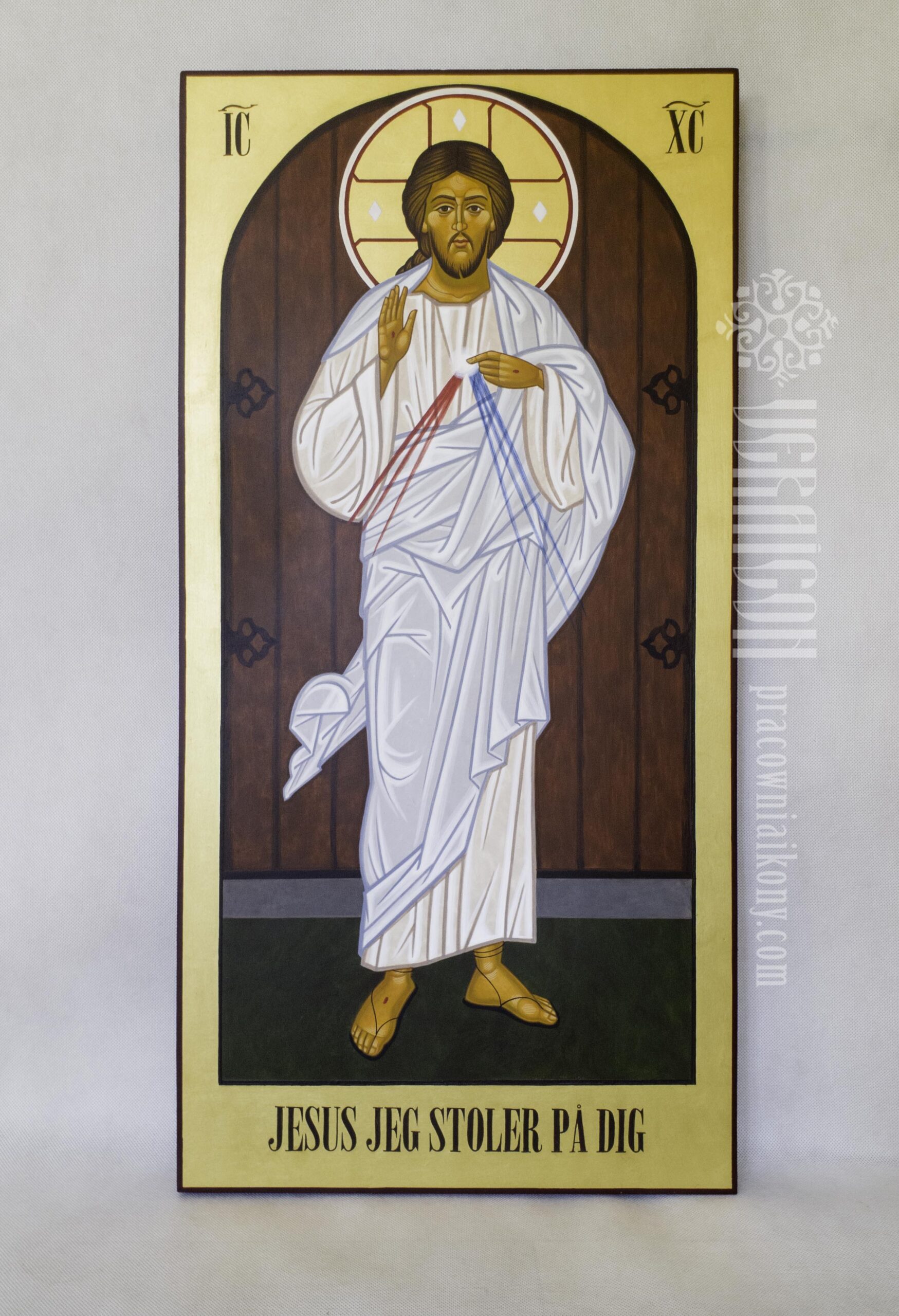
This icon depicts Christ in an iconographic style that combines the Eastern Christian tradition with the modern devotion to the Divine Mercy. From Christ’s chest radiate two rays of light — red and pale blue — symbolizing the blood and water flowing from His Heart, referring to the theology of Divine Mercy revealed to Saint Faustina Kowalska.
The gesture of His right hand raised in blessing emphasizes His divine power and invitation to trust, while His left hand points to His Heart as the source of grace. The inscription at the bottom reads “Jesus, I trust in You” in Danish.
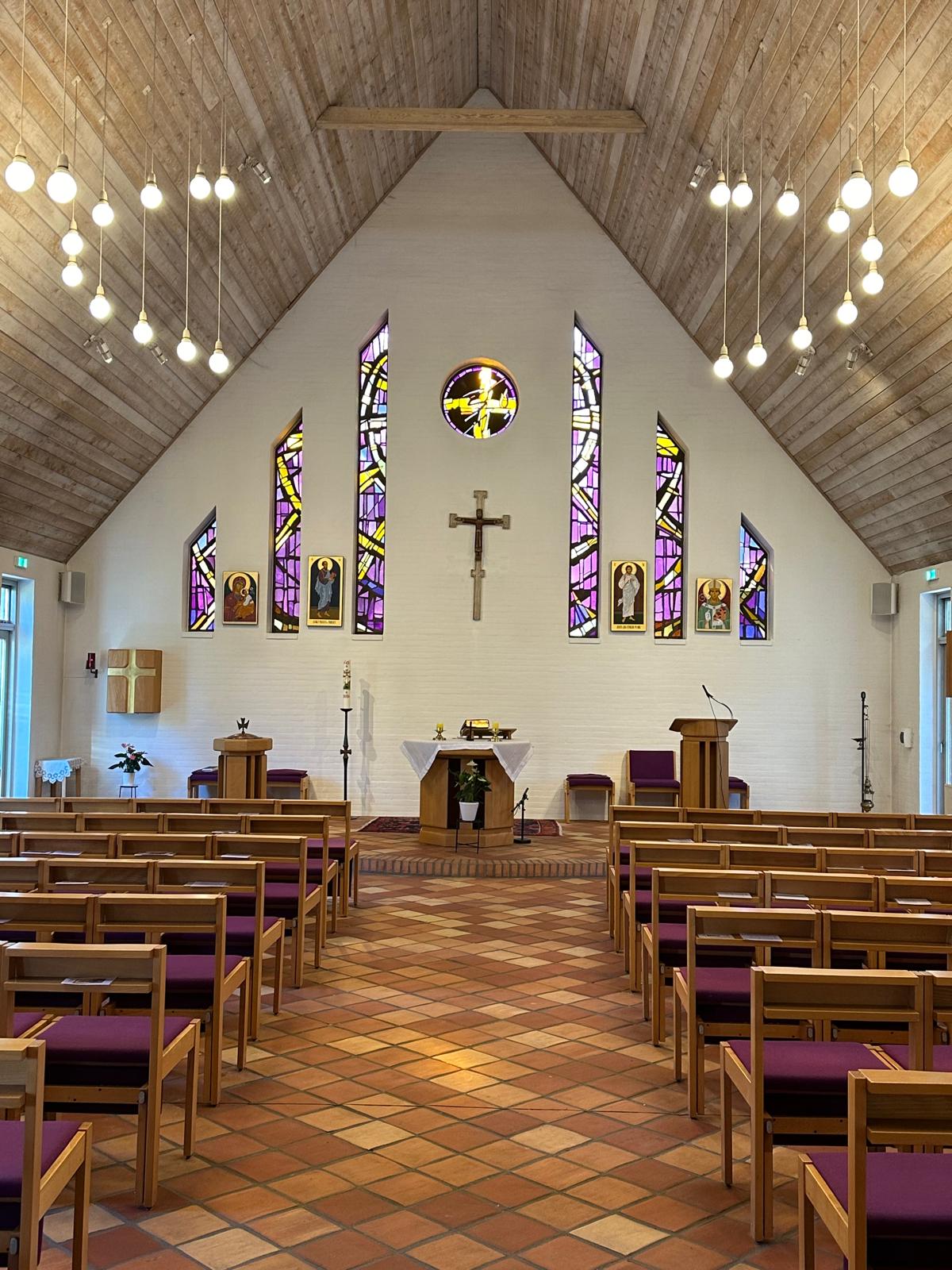
The icon is part of the interior arrangement of St. Paul’s Church in Aabenraa, Denmark.
Egg tempera and gold leaf on linden wood panel.
Size: 40 × 80 cm, 2023.
Christ Emmanuel
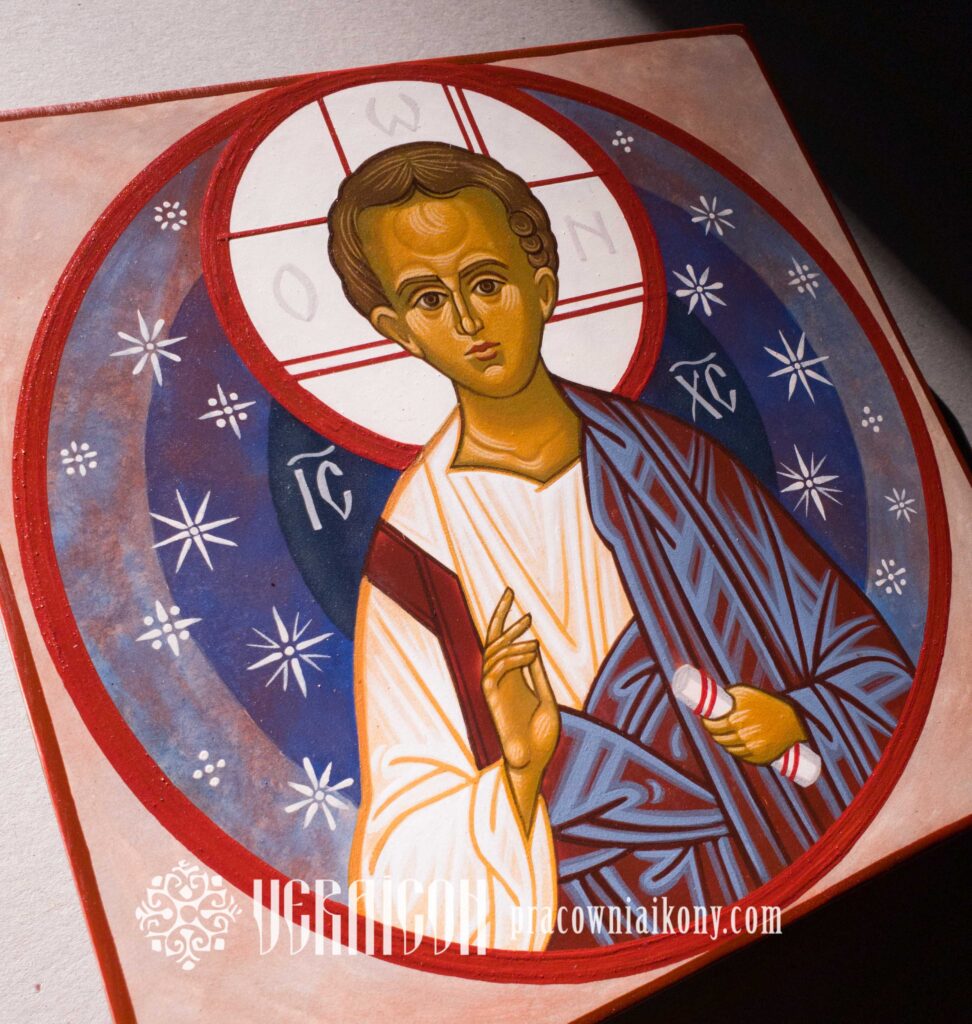
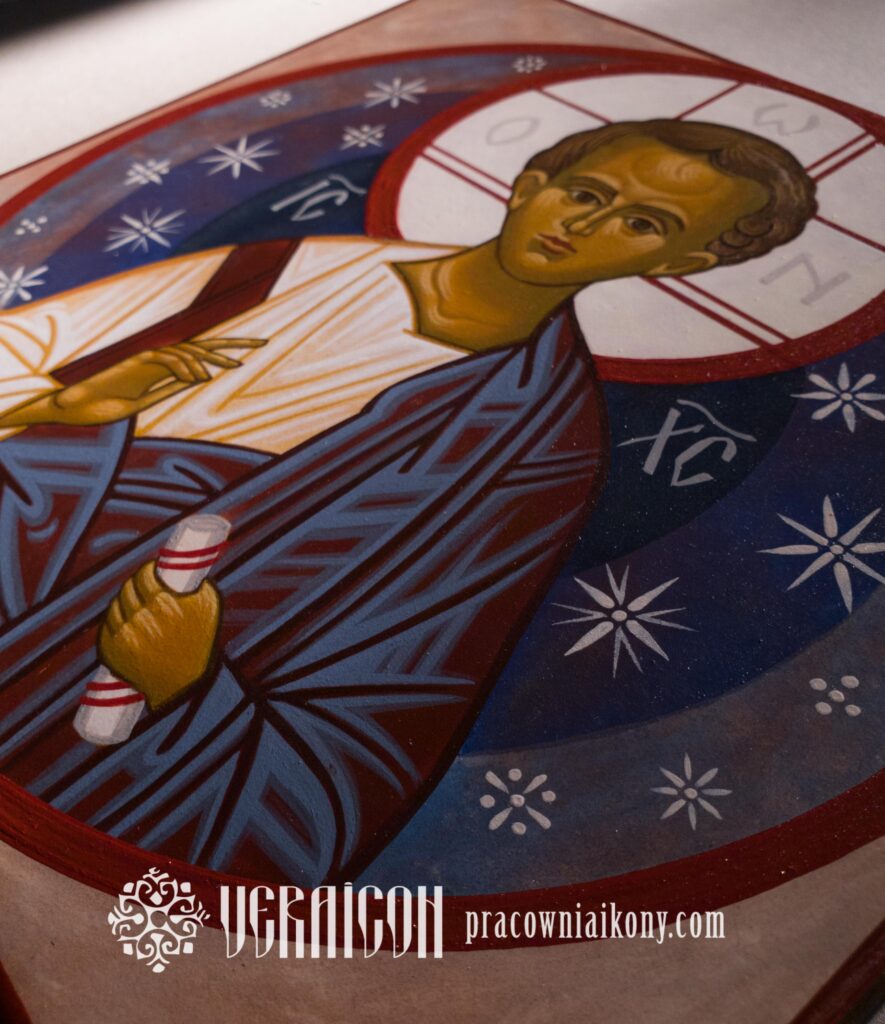
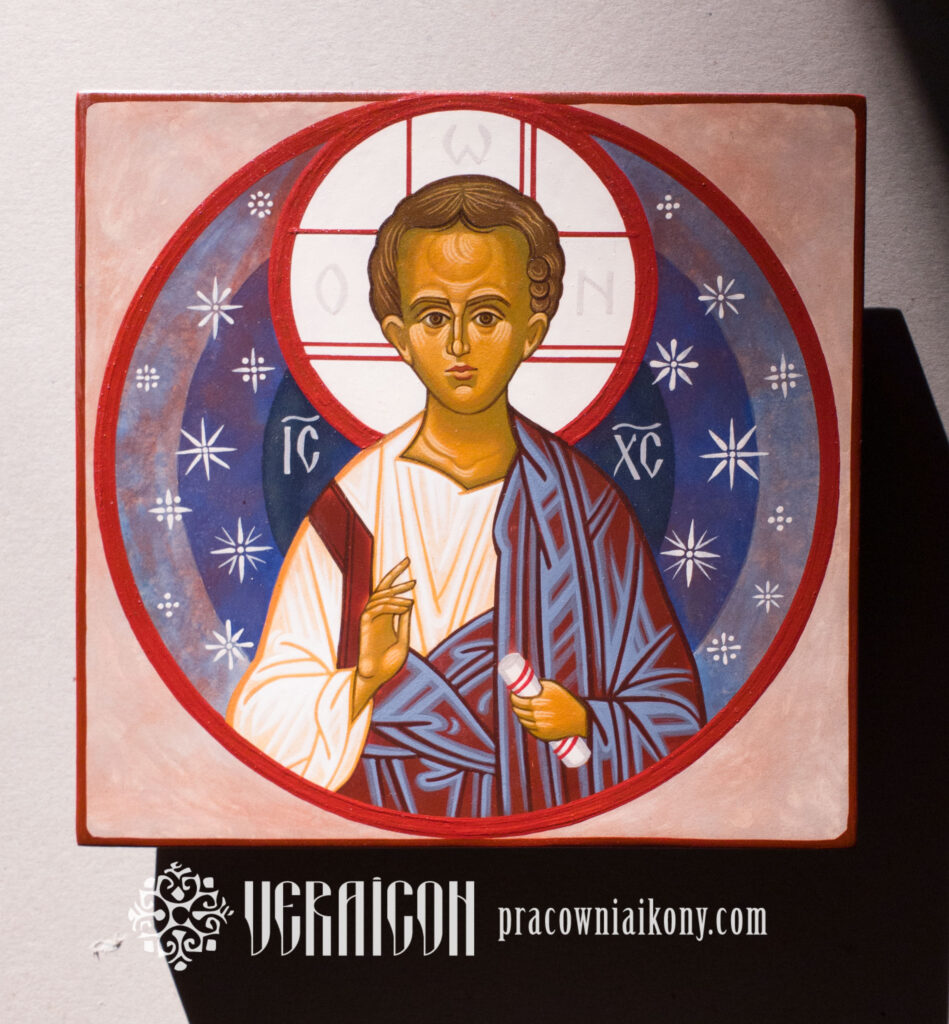
The icon of Emmanuel represents Christ as “God with us,” referring to the prophecy of Isaiah (Isaiah 7:14) and its fulfillment in the New Testament (Matthew 1:23). In Byzantine iconography, Christ is depicted as a Child shown frontally, surrounded by a cruciform halo symbolizing His divinity and His mission of salvation.
Despite His youthful appearance, the face of Christ radiates seriousness and spiritual maturity, emphasizing the paradox of the Incarnation — the fullness of both humanity and divinity present in one person.
Technique: egg tempera on a linden wood panel.
Dimensions: 20 × 21 cm, 2020
Mandylion
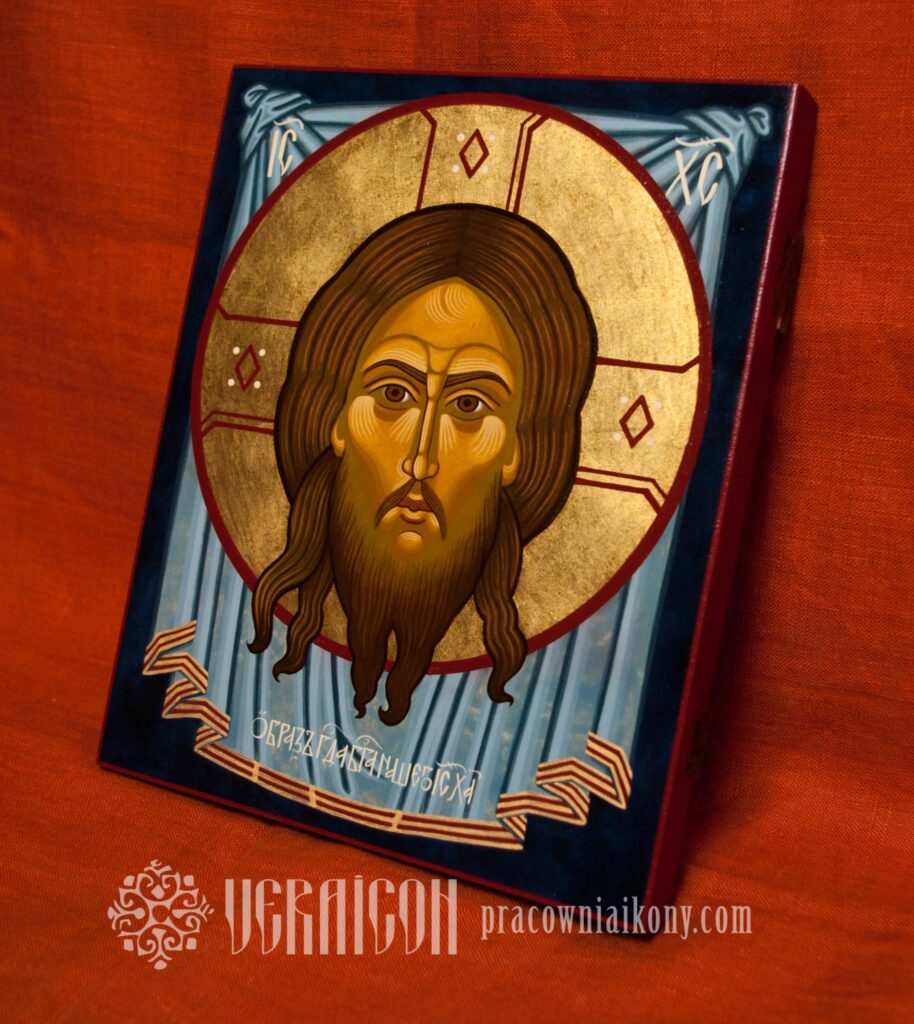
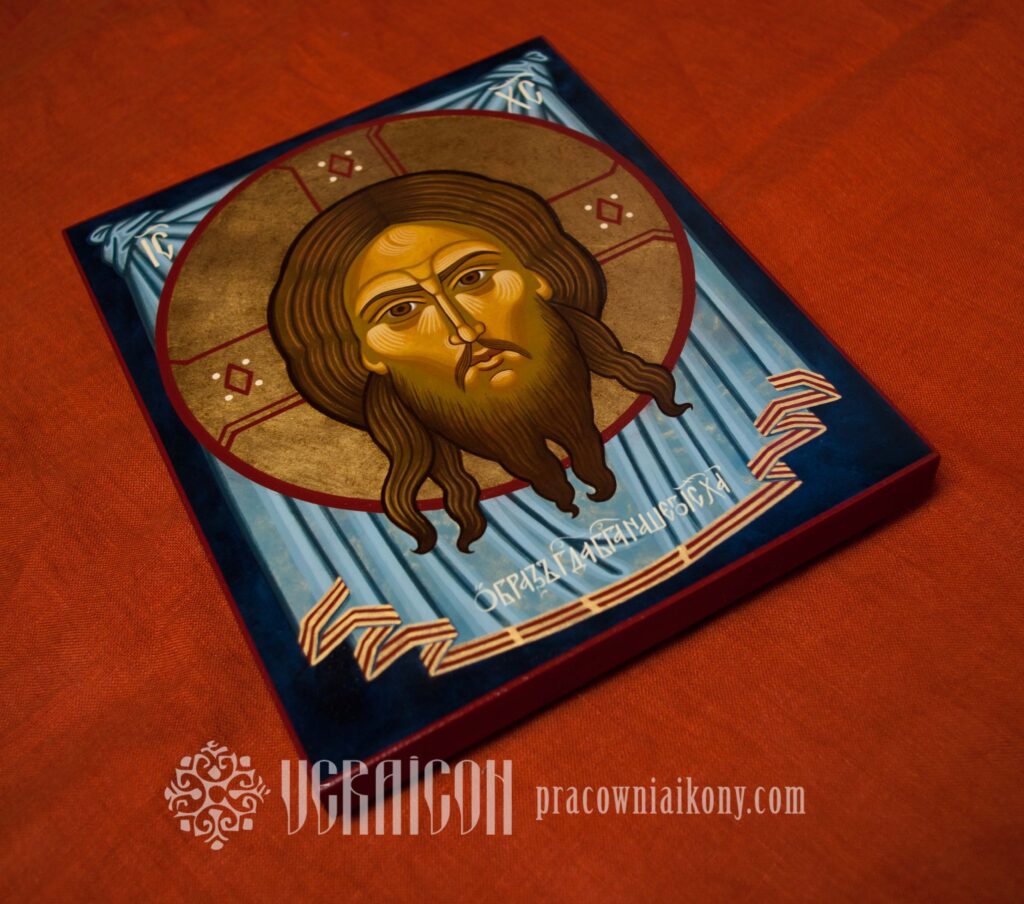
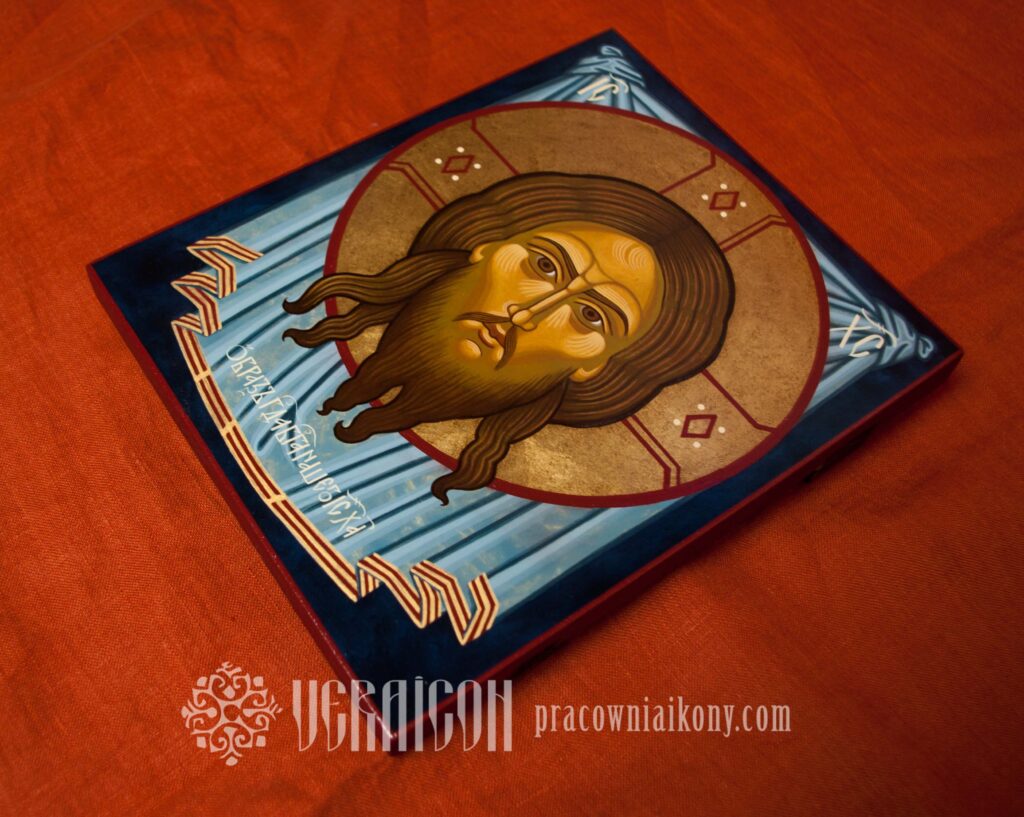
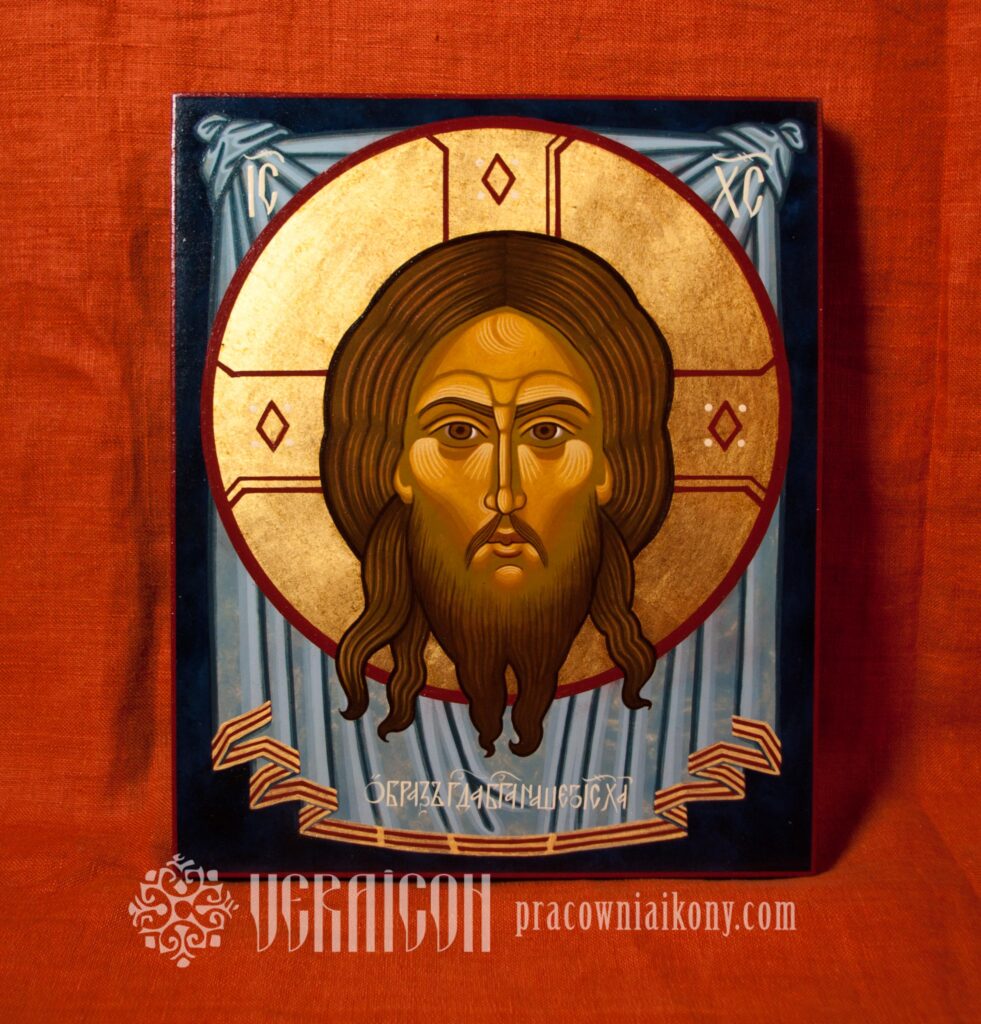
The image of Christ’s face was one of the most venerated representations from the earliest development of Christian iconography. The Mandylion was often placed on the banners of Rus’ armies, as the image was believed to possess a protective power. In the Orthodox tradition, the Mandylion eventually came to occupy a central place in the iconostasis — directly above the Royal Doors.
The inscription on the icon, written in Church Slavonic, reads “Образь Господень,” meaning “The Image of the Lord.”
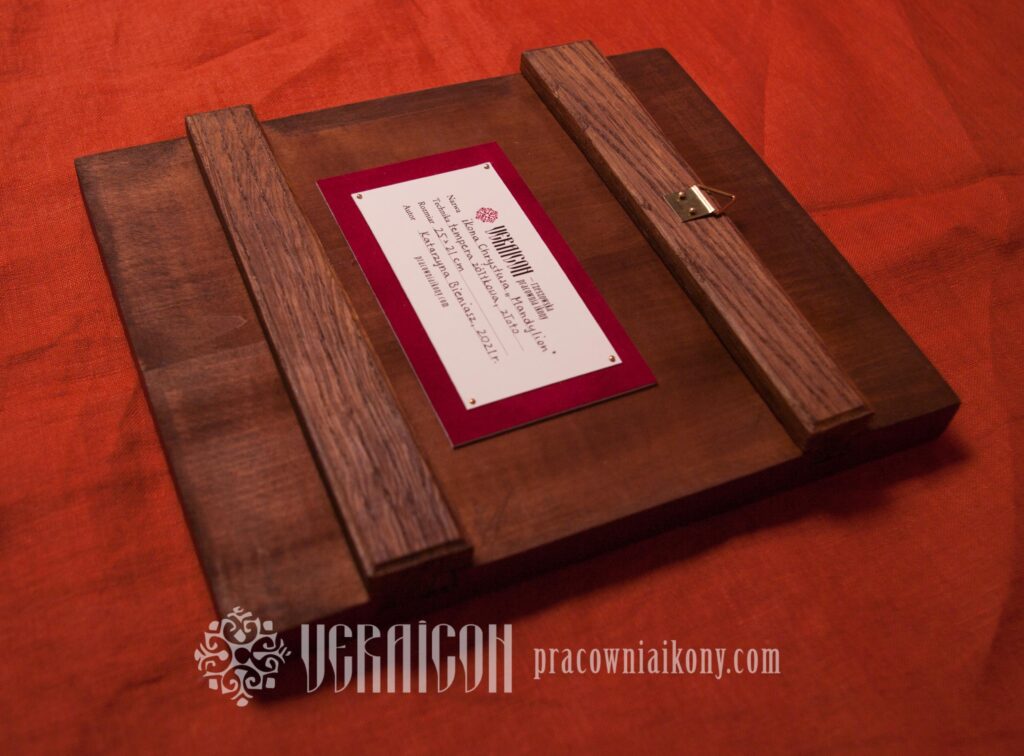
Egg tempera and gold leaf on a linden wood panel.
Size: 25 × 21 cm, 2021.
Mandylion – Keramion
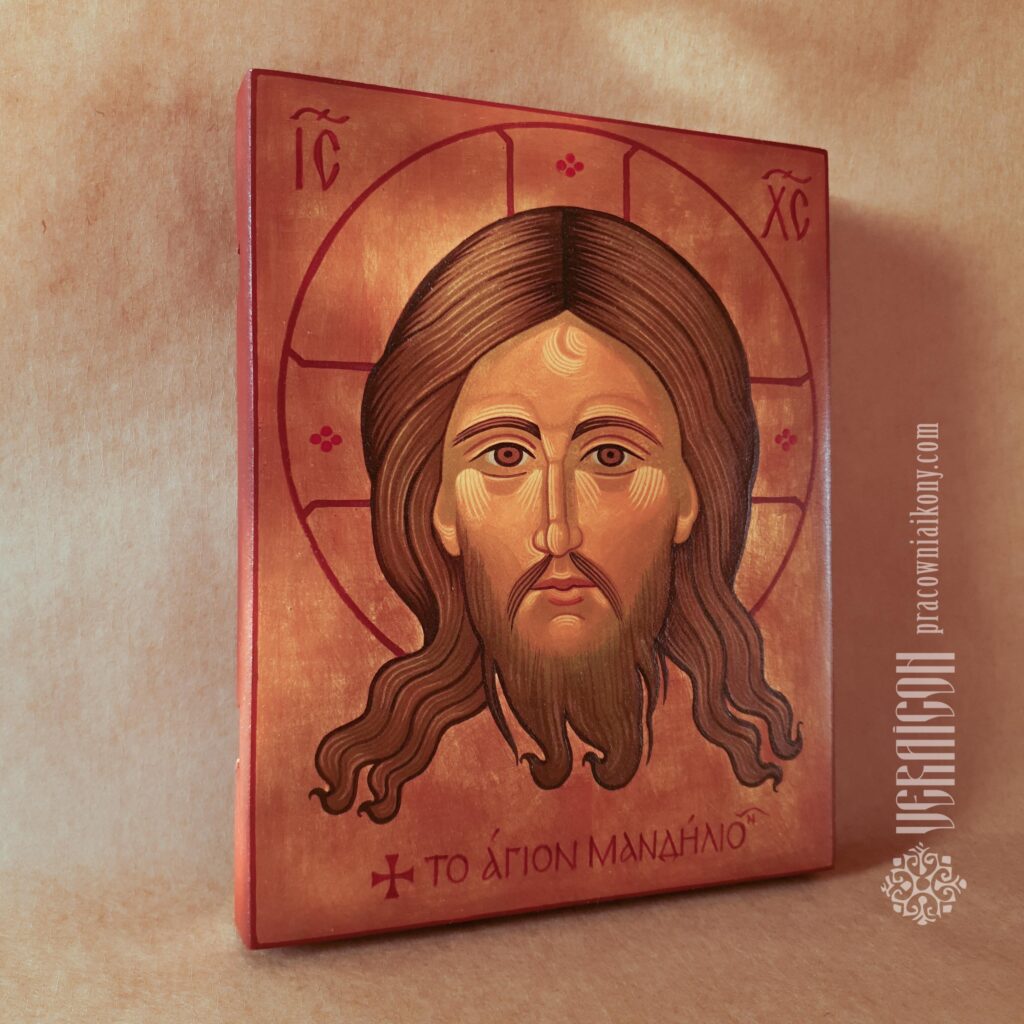
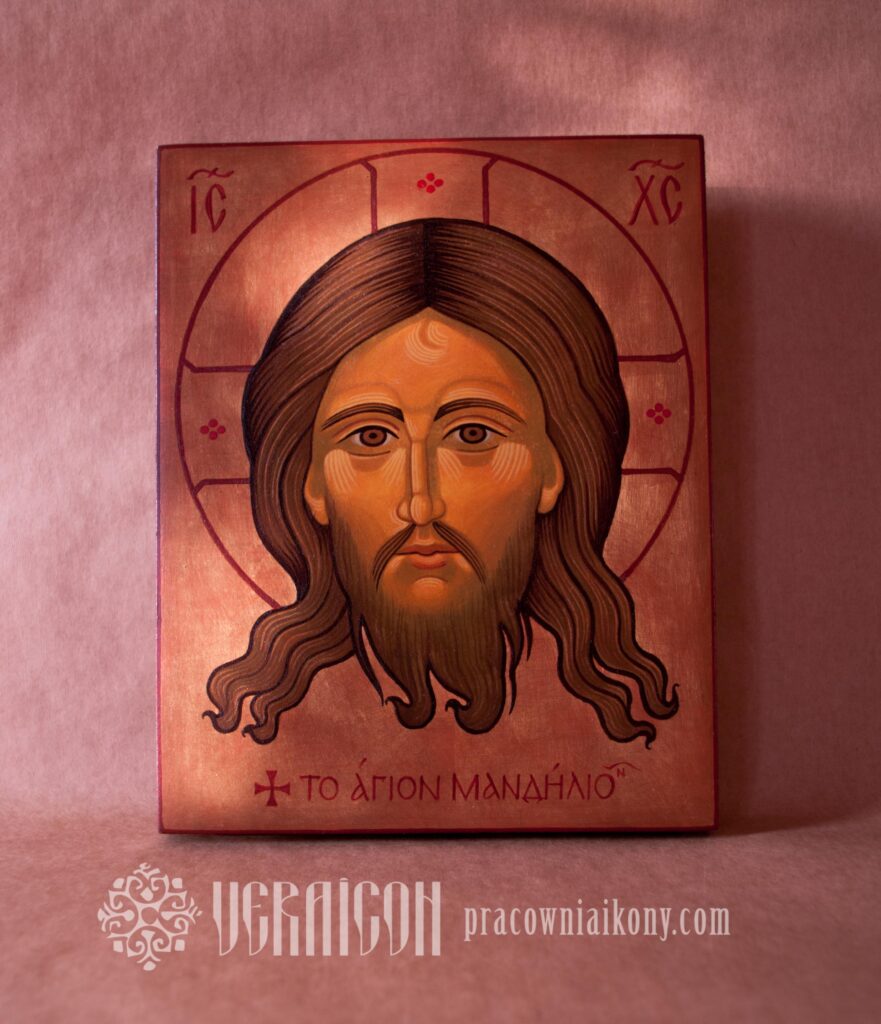
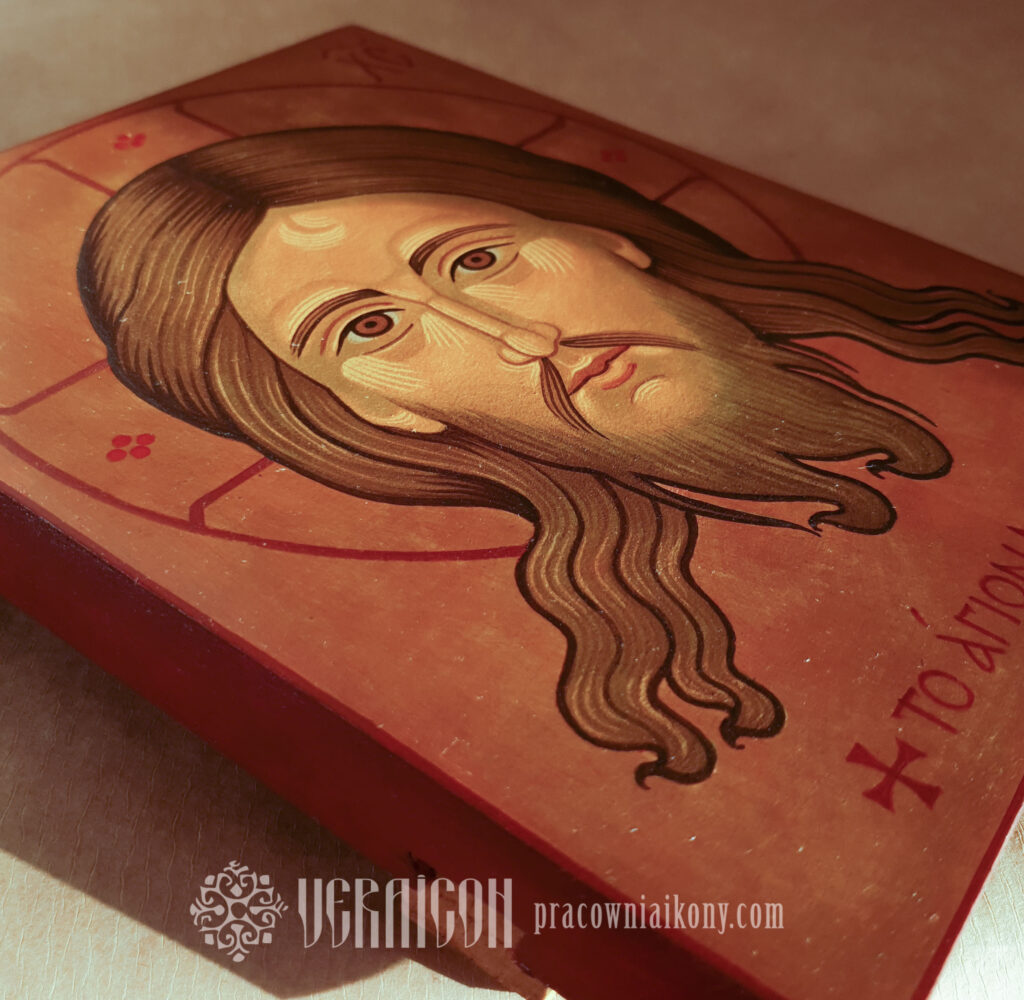
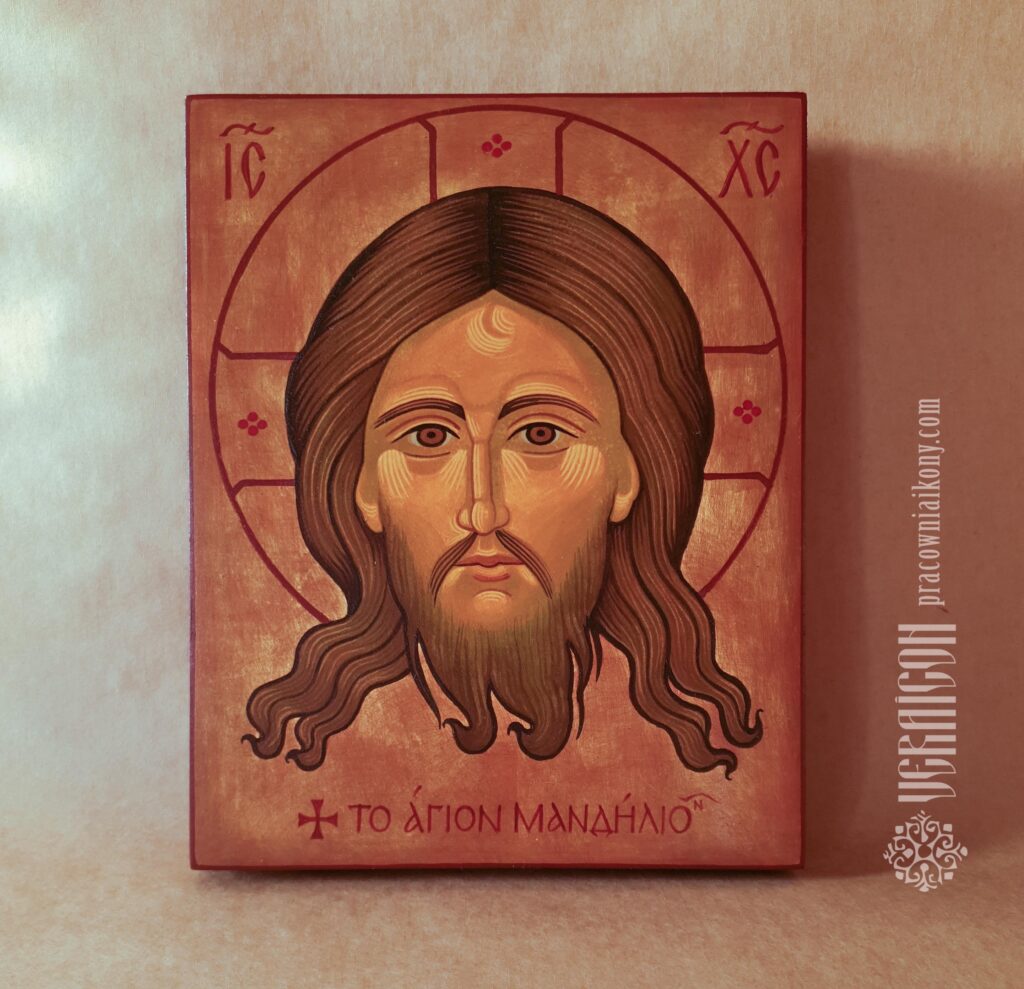
The history of the Mandylion–Keramion is connected with the tradition of the miraculous image of Christ from Edessa (present-day Şanlıurfa).
The Keramion is associated with a later part of this tradition. According to legend, while the image was being transported or kept in Edessa, the face of Christ was also miraculously imprinted on a ceramic tile (Greek keramos – clay, ceramic). In this way a second miraculous image was created — the Keramion, considered a faithful imprint of the Mandylion.
Egg tempera and gold leaf on a linden wood panel.
Size: 20 × 16 cm, 2021.
Mandylion – Miniature
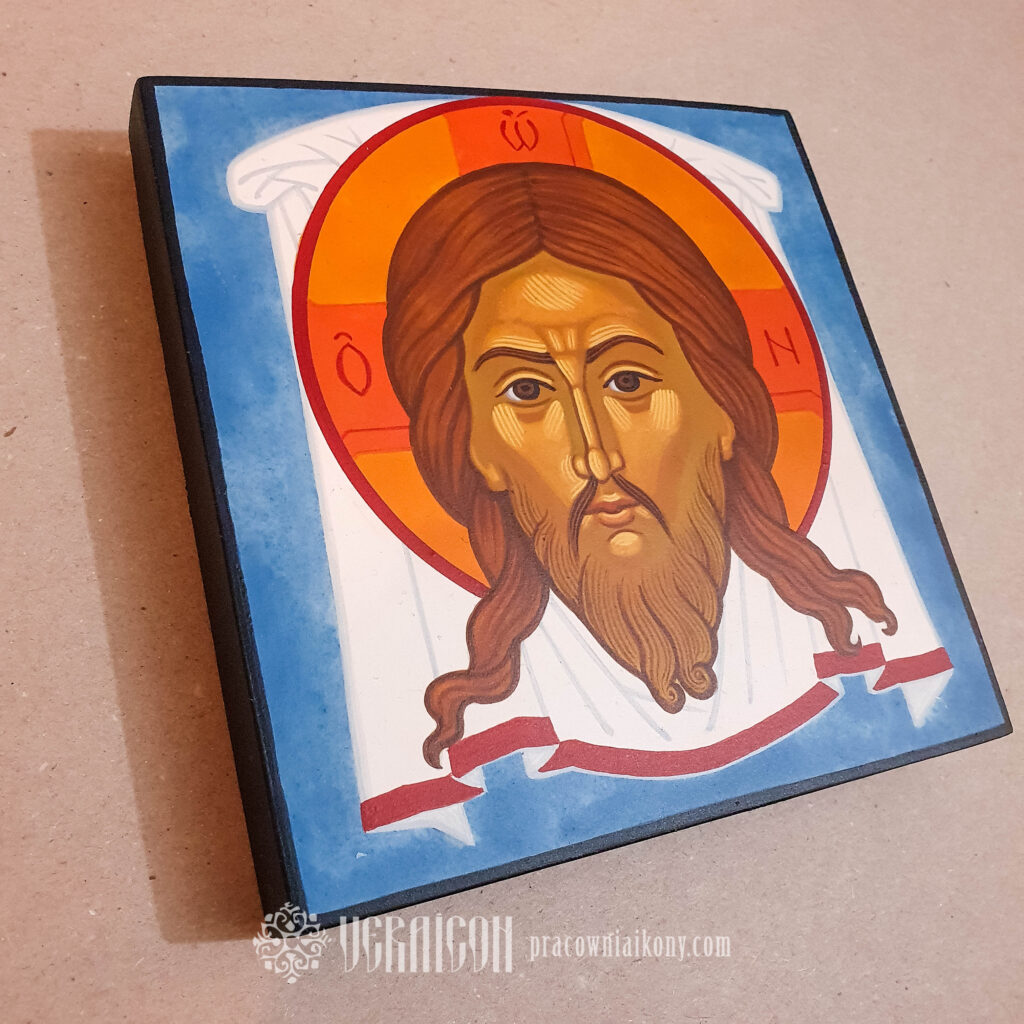
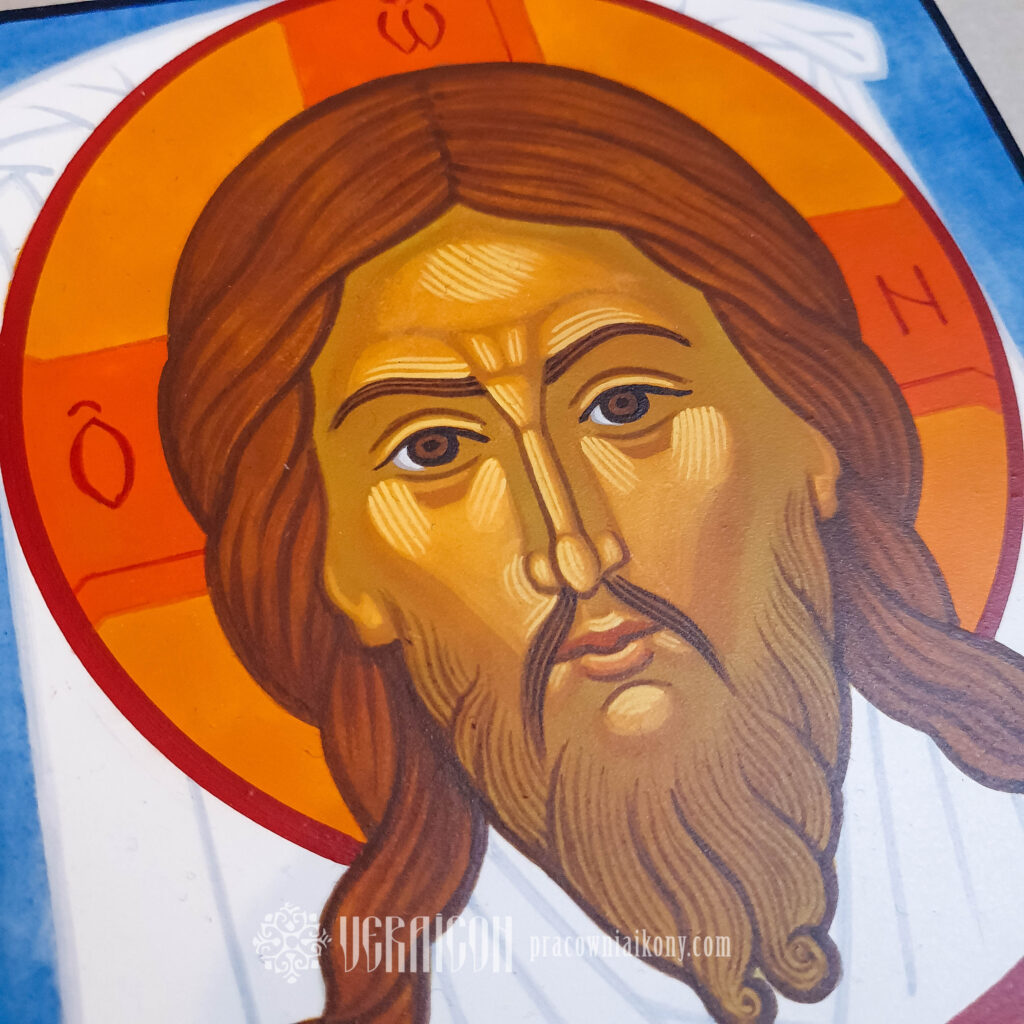
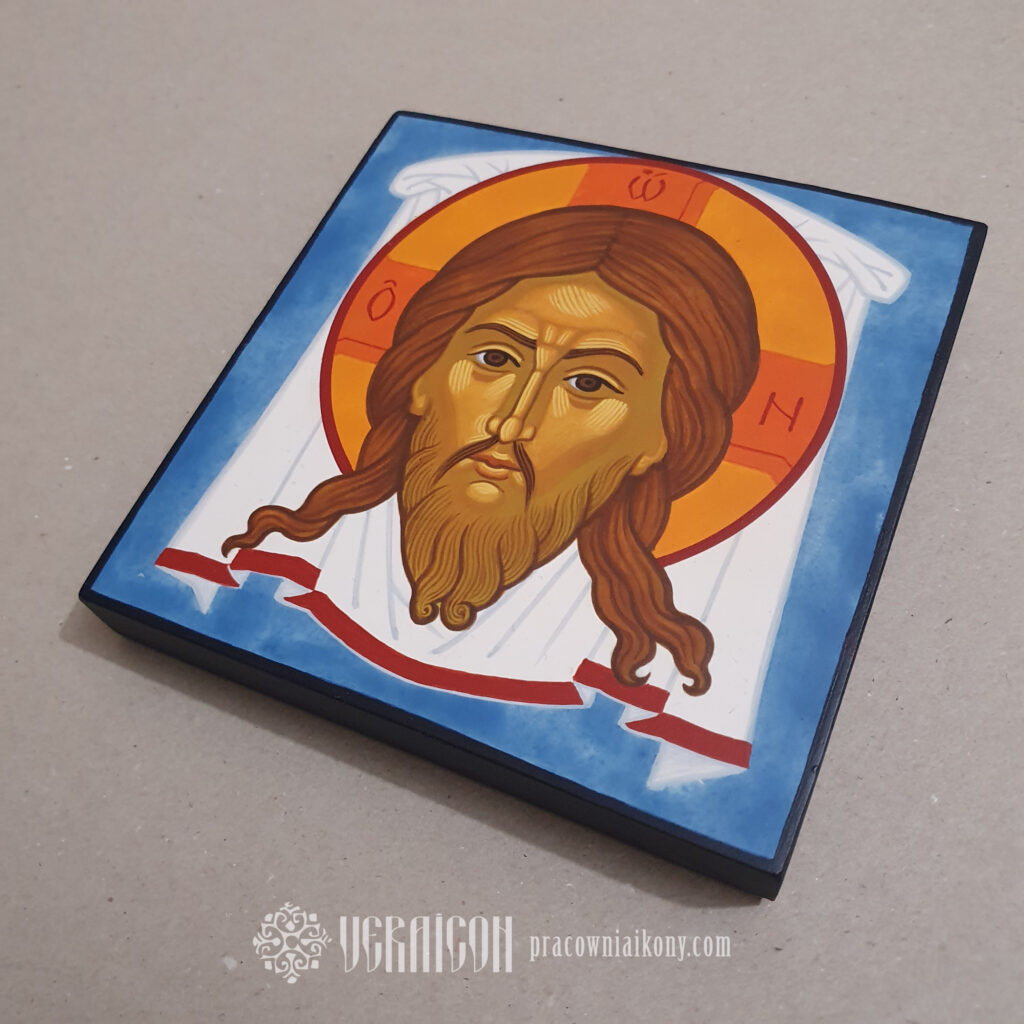
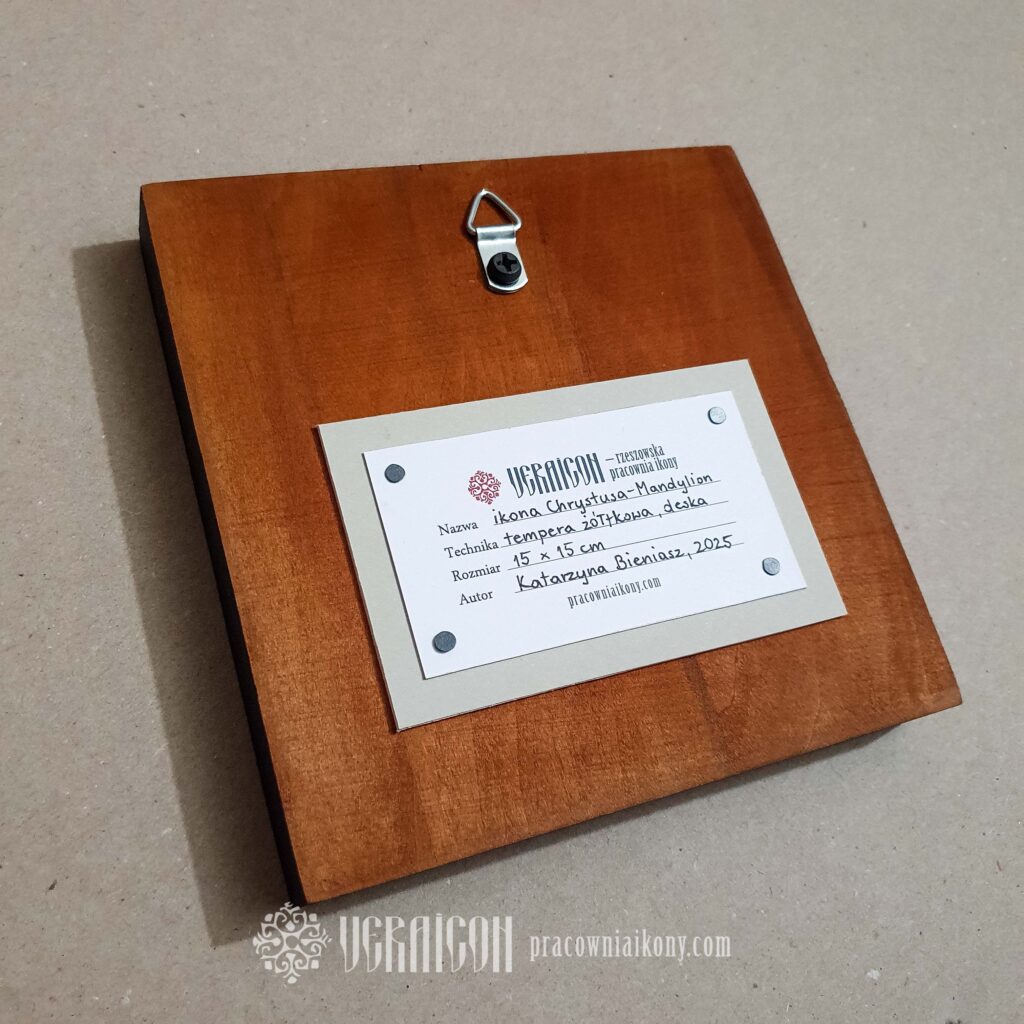
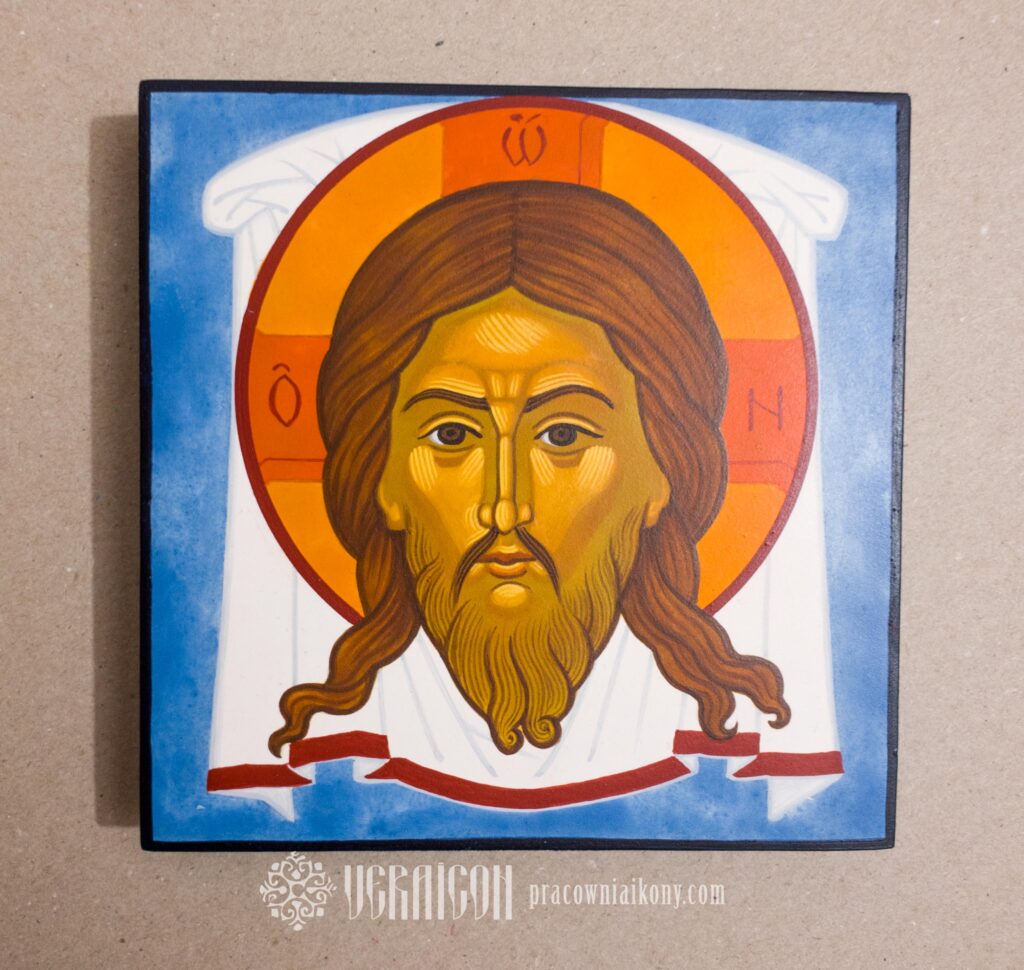
This miniature icon of the Mandylion (15 × 15 cm) presents the Face of Christ in a concentrated and ascetic manner. The white cloth, gently draped and symmetrically arranged, forms a luminous background for the image, emphasizing its character. The blue background, without gilding, gives the composition a cool and contemplative tone, directing attention solely to the face as the center of the theological message. The whole work is executed in a simplified and clear stylistic manner.
Egg tempera on a linden wood panel.
Size: 15 × 15 cm, 2025.
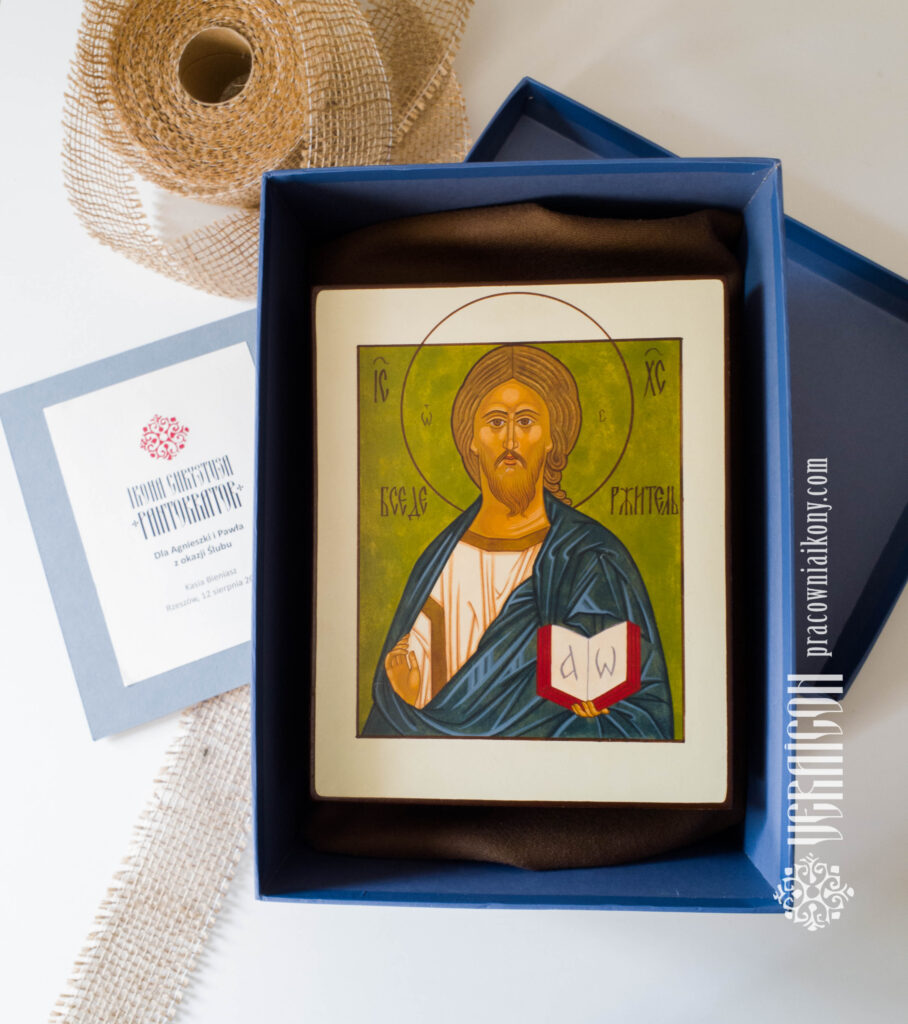
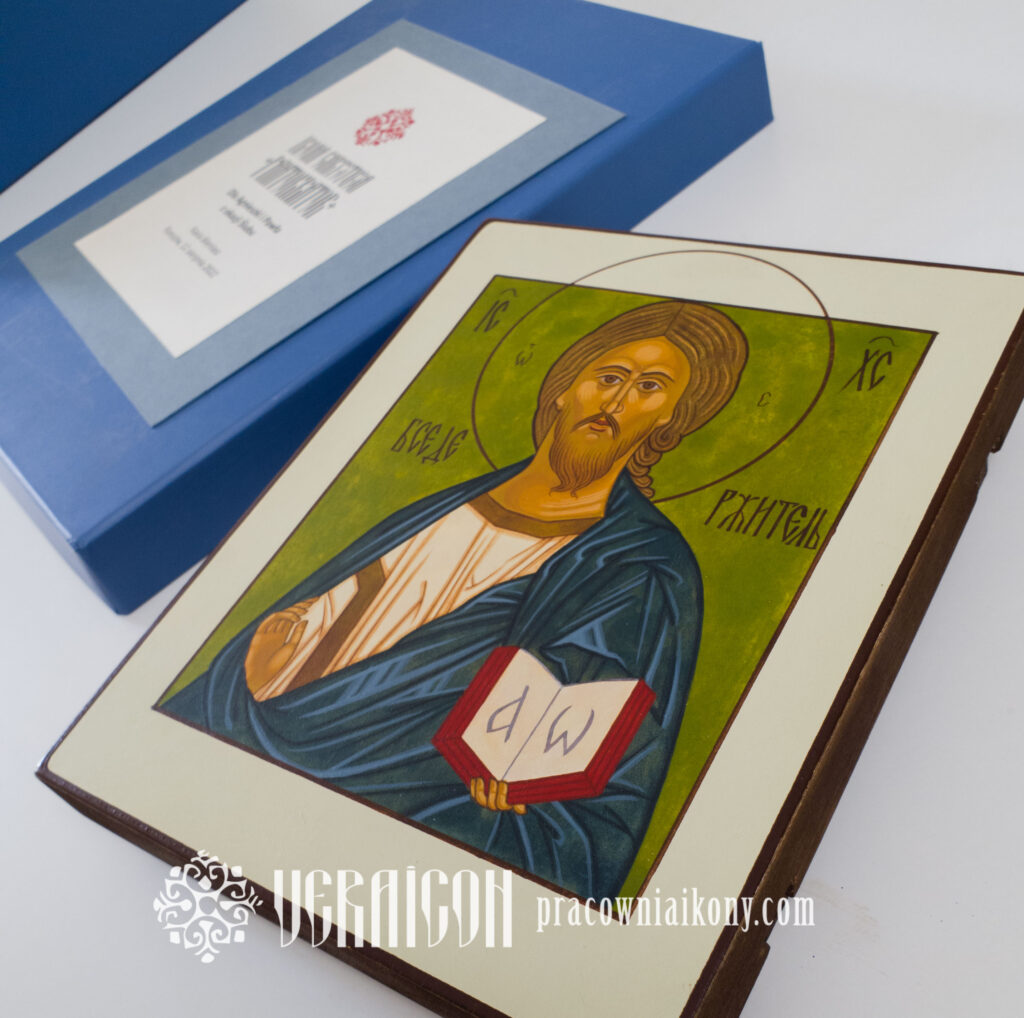
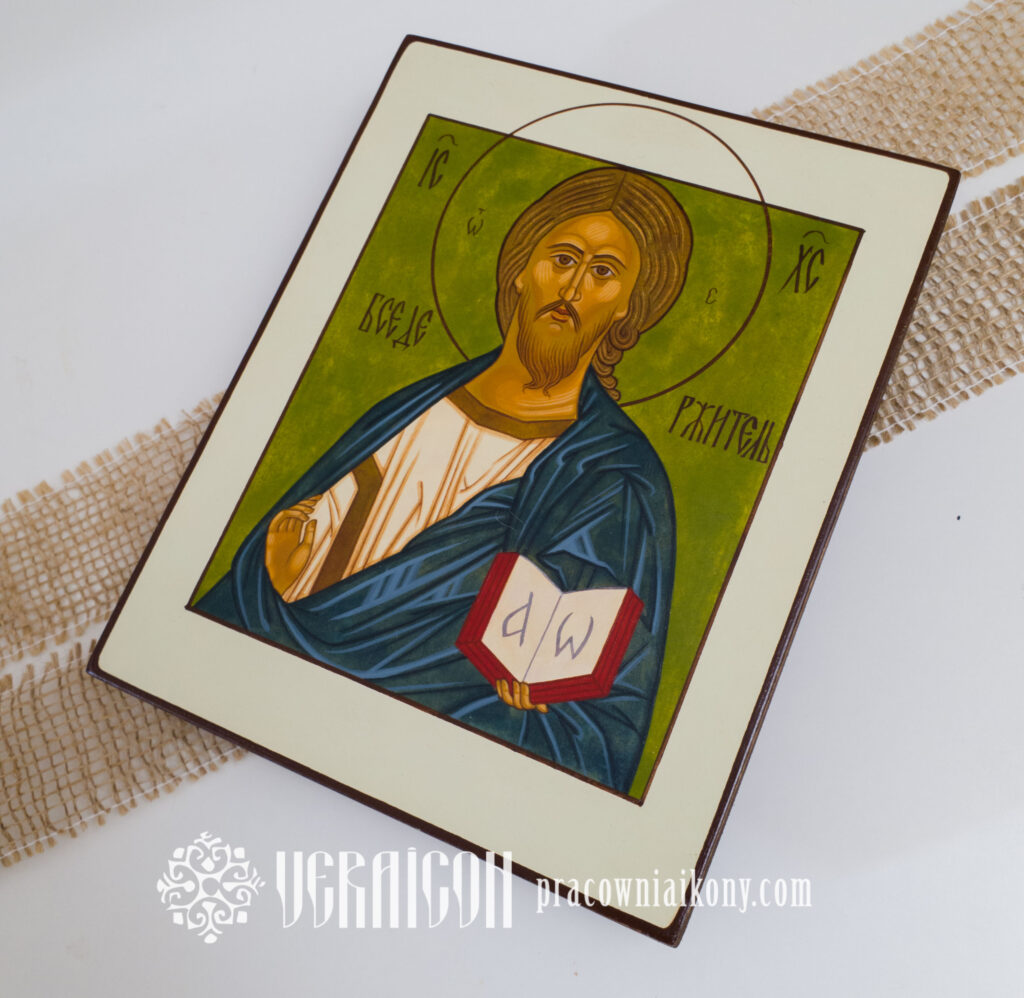
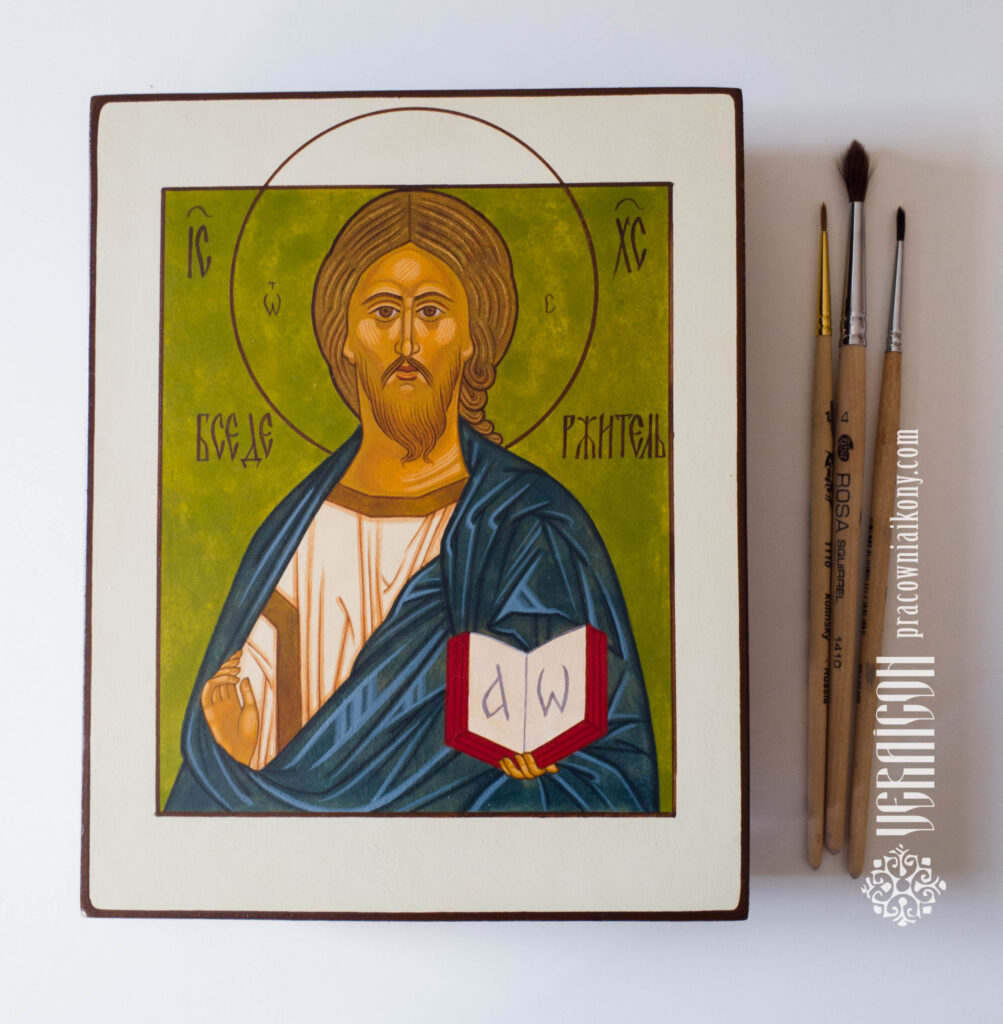
Christ Pantocrator
This miniature icon, rendered in a subdued palette of greens, beiges, and deep blue, dispenses with the traditional golden background, giving the composition a calm and natural character. Christ is shown frontally with a cruciform halo, holding the Gospel book in His left hand and blessing with His right. The details are simplified, the contours softer, and the overall composition adopts a minimalist aesthetic. The cool color palette emphasizes the spiritual gravity of the figure, creating a quiet and contemplative atmosphere.
Egg tempera on a linden wood panel.
Size: 20 × 16 cm, 2021.
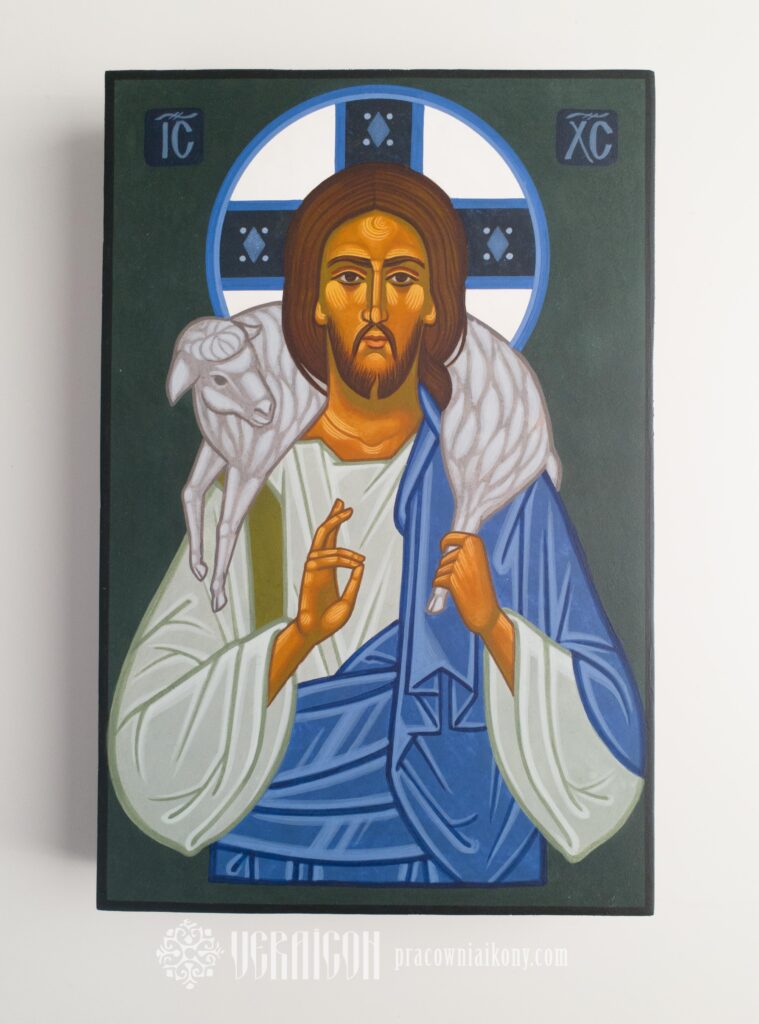
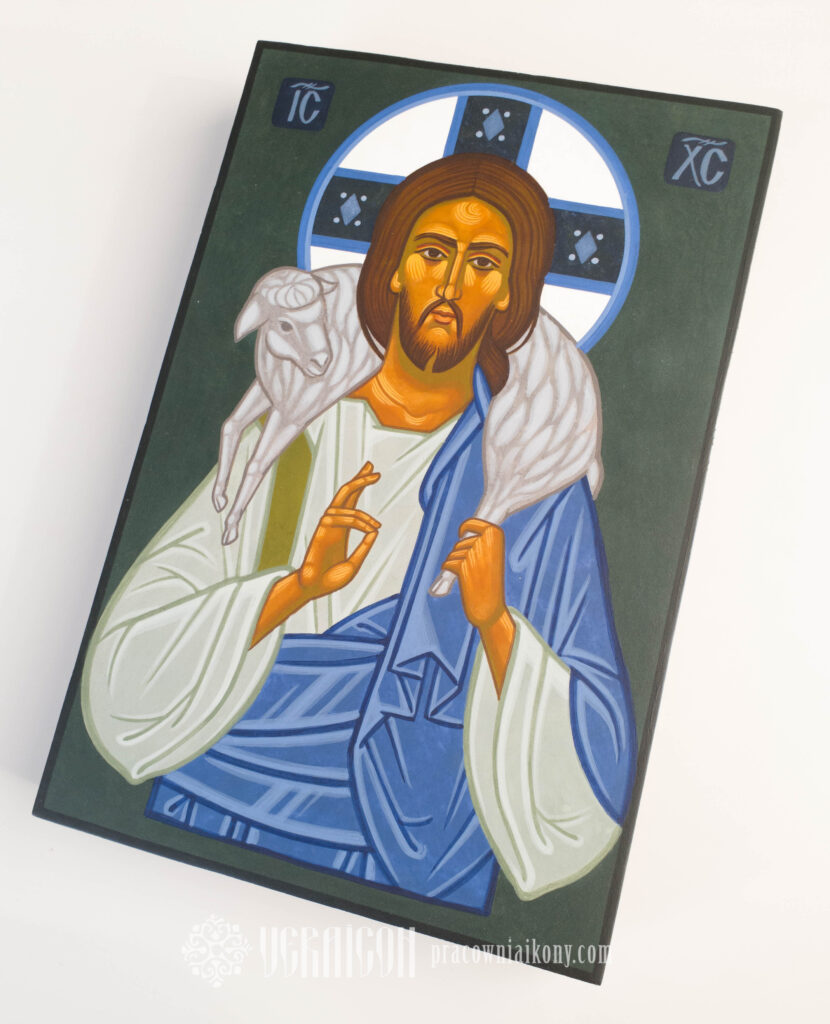
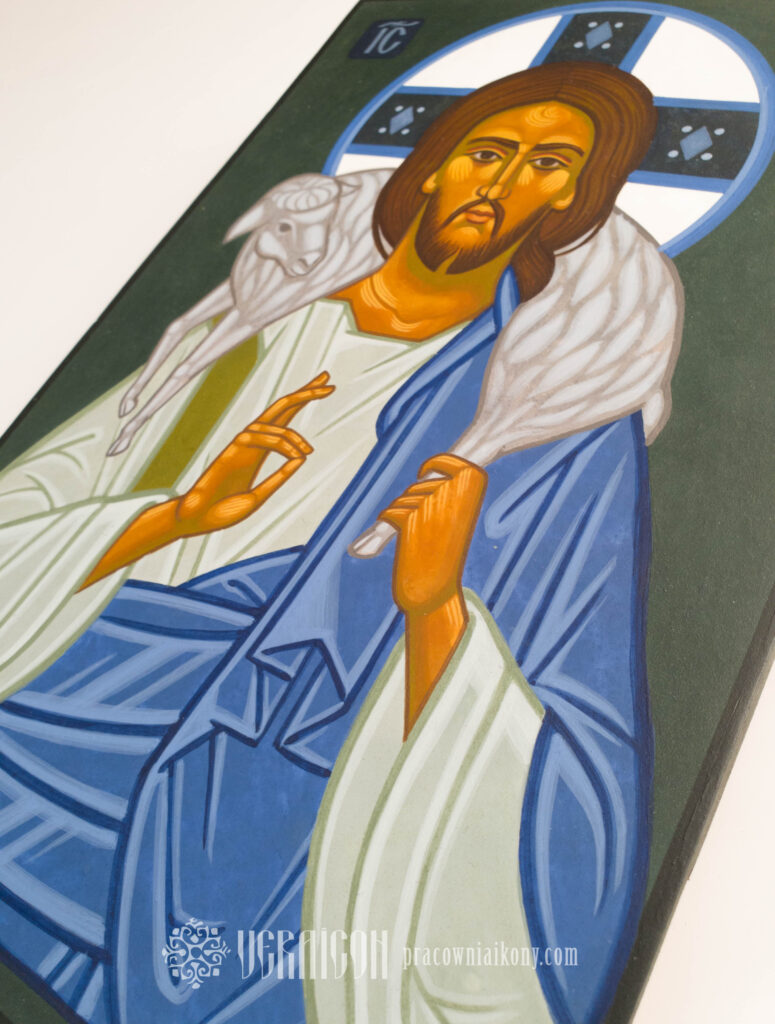
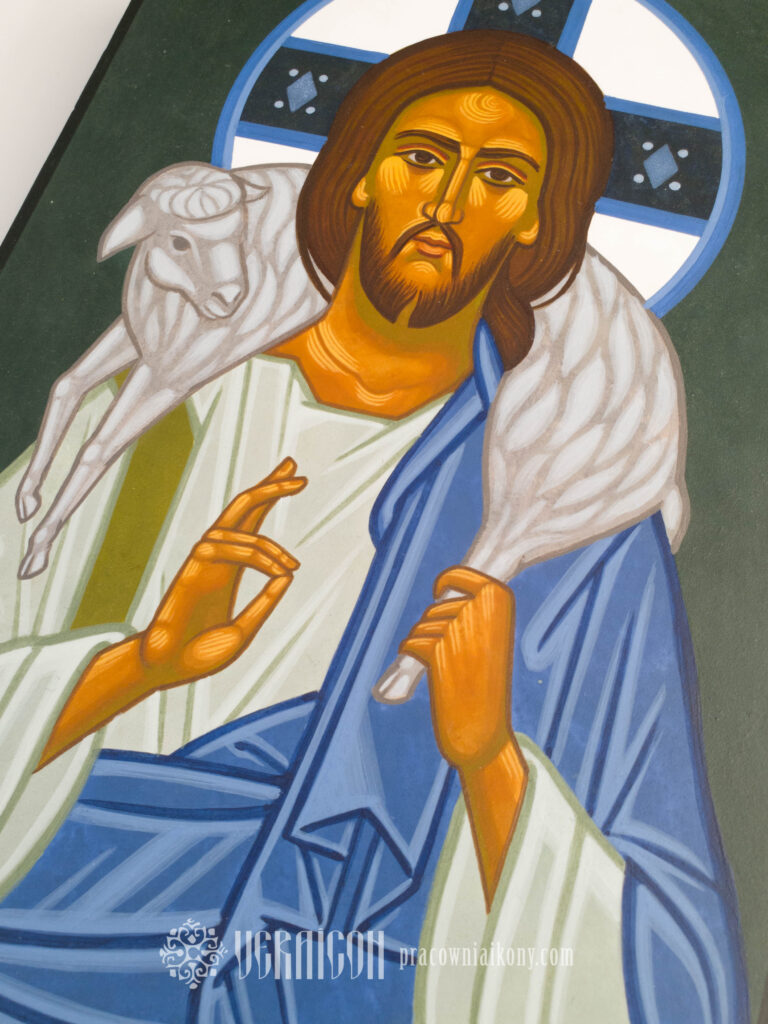
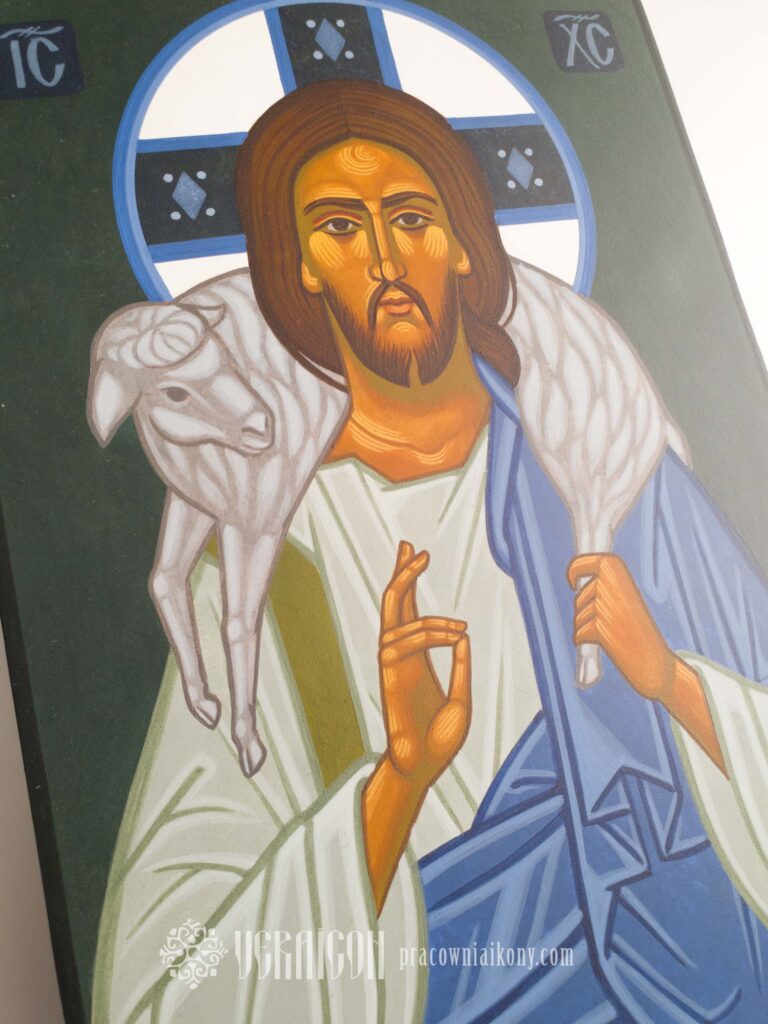
The Good Shepherd
The motif of the Good Shepherd has its roots in Sacred Scripture, especially in the Gospel according to Saint John (John 10:11: “I am the good shepherd”) and in Psalm 23 (“The Lord is my shepherd”). In Christian iconography it is one of the earliest representations of Christ. It already appeared in the art of the catacombs in the 3rd–4th centuries, where a young man carrying a sheep on his shoulders symbolized salvation and divine care.
Egg tempera on a linden wood panel.
Size: 20 × 30 cm, 2021/2026.