



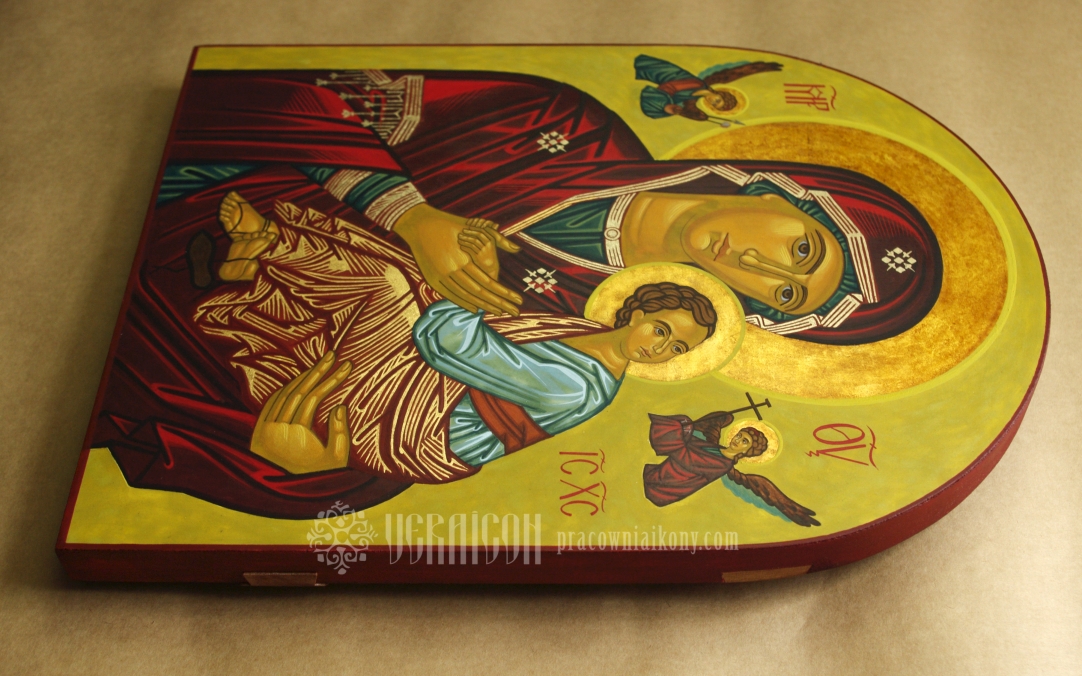
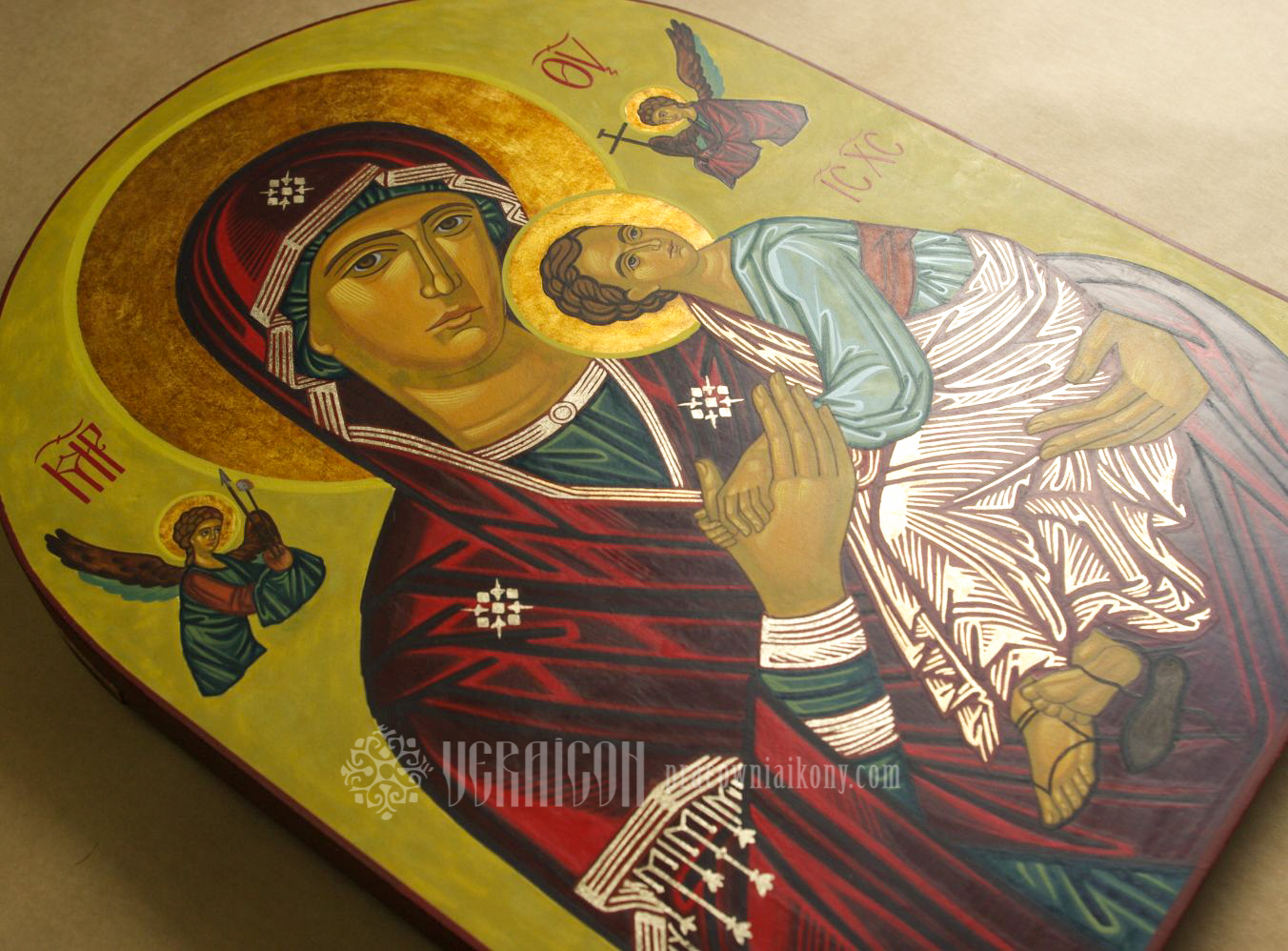
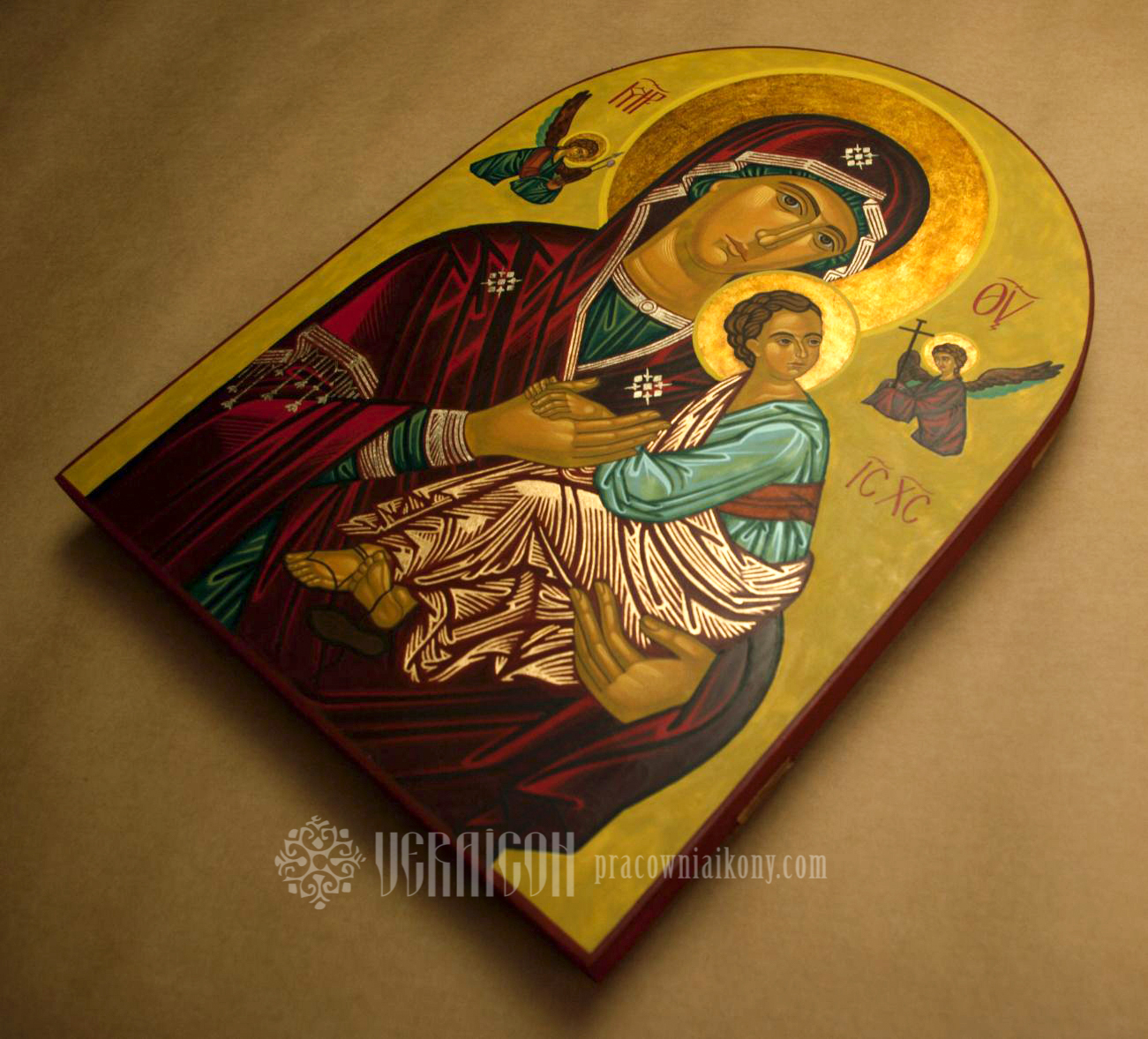
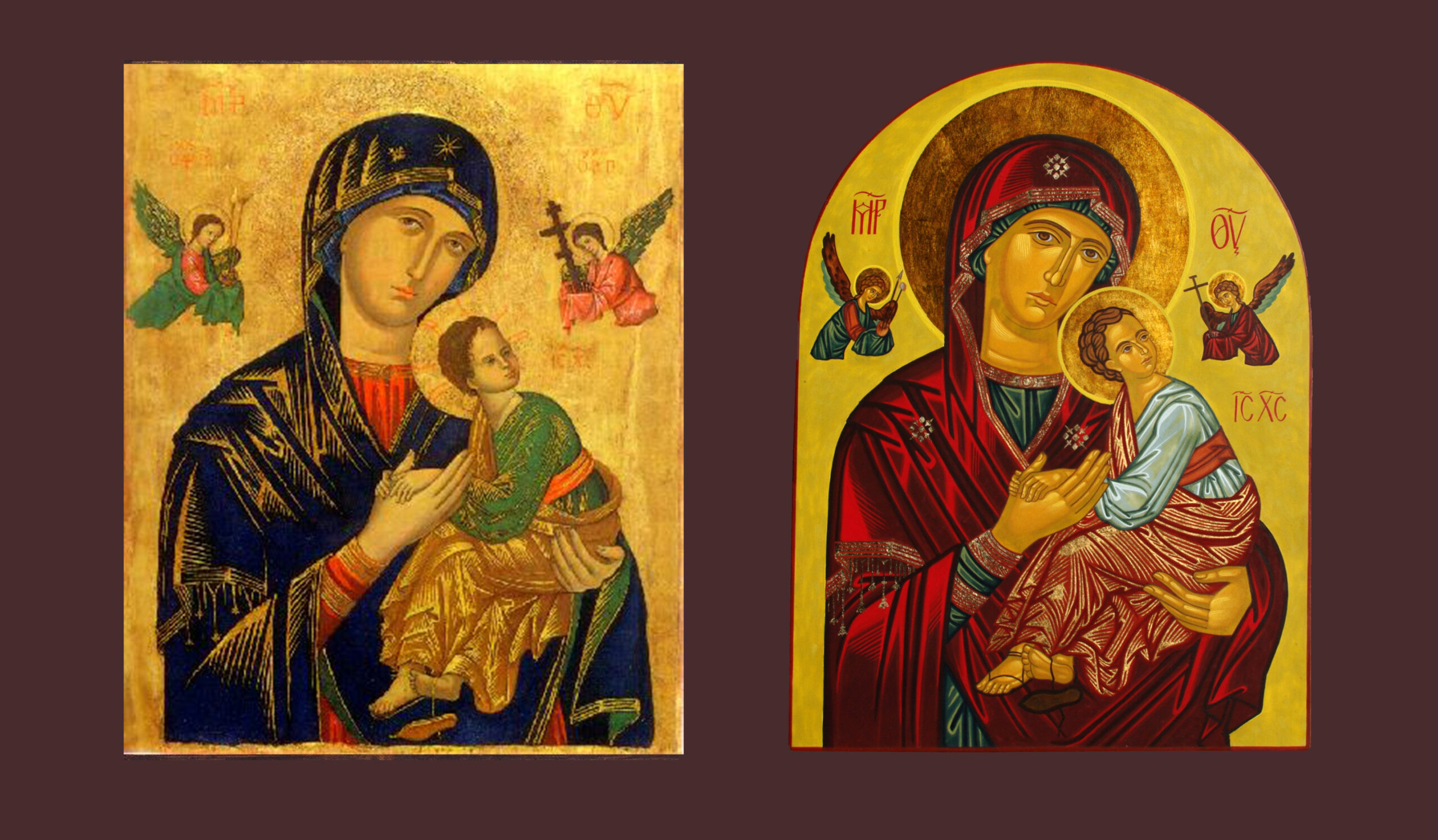
Our Lady of Perpetual Help
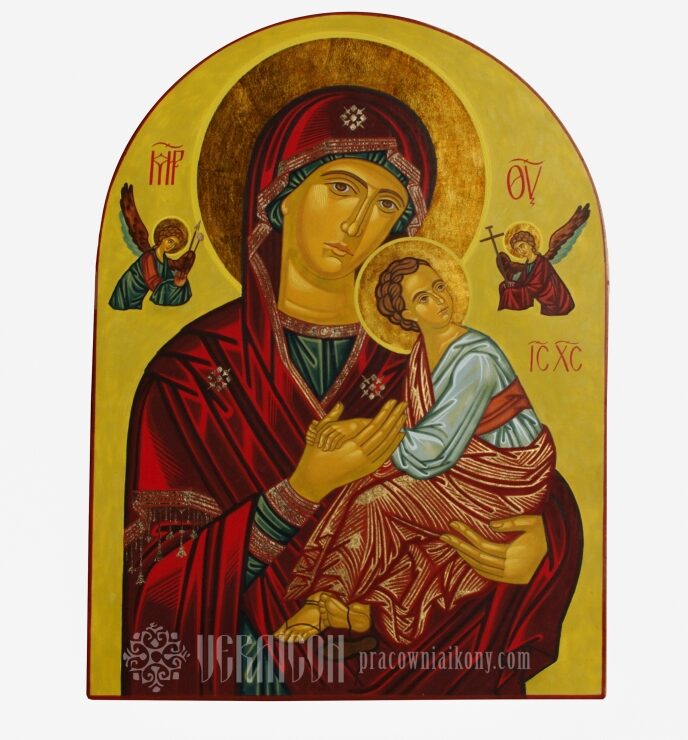
One of the most famous Marian images in the world. Several origins are suggested for this icon: Crete, Byzantium, or Mount Athos. The original may date back to the 9th or 12th century. According to legend, the icon was brought to Europe by a wealthy merchant. During a sea voyage, a storm arose, but through prayers before the image, the ship safely reached Rome. The icon was initially placed in the Church of Saint Matthew, and since the 19th century, it has been housed in the Church of the Redemptorists of Saint Alphonsus in Rome. In Orthodox iconography, this icon is also called the Mother of God of Sorrows or the Suffering Mother of God.
— In my interpretation, I chose an aesthetic close to the original form of the icon. This effect was achieved by referencing the color palette of 14th–15th century Greek Marian icons.
Egg tempera and gold leaf on a linden wood panel.
Size: 40 × 30 cm, 2020.
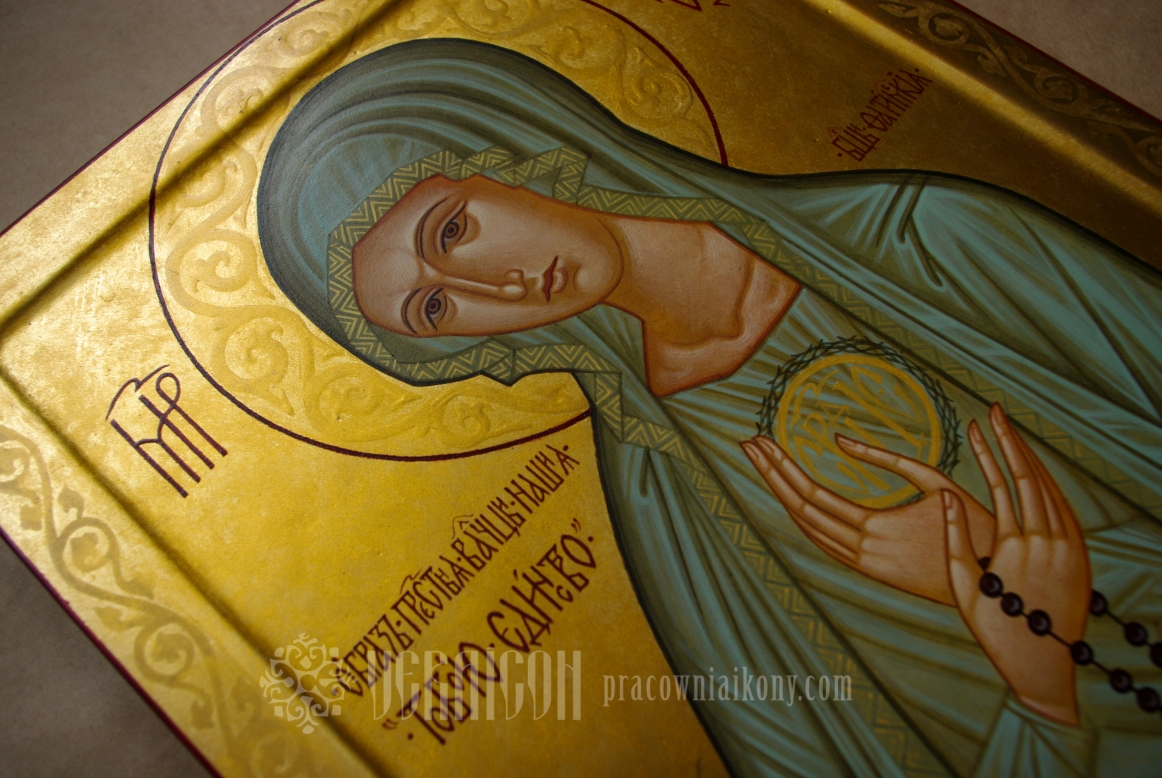

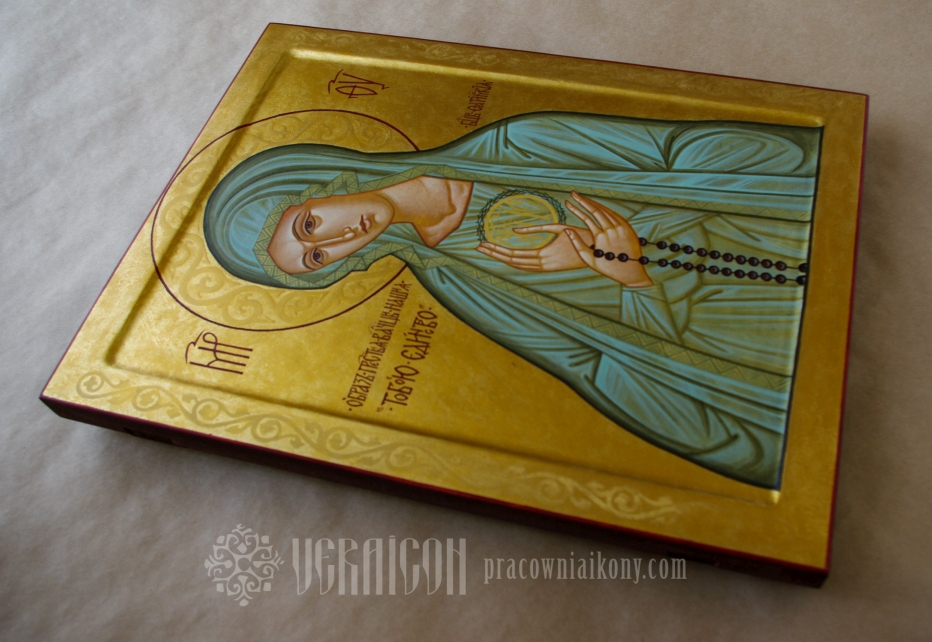
Our Lady of Fatima
An original copy of the icon of Our Lady of Fatima. The iconographic type of Our Lady of Fatima is based on the miraculous apparitions, the first of which, less widely known, took place in 1758. At the site where Mary appeared to a mute girl, a statue was found depicting the Mother of God in a white robe with hands folded in prayer, holding a rosary. The later apparition in 1917 is associated with the revelation of the Fatima secrets to three shepherd children. A chapel was initially built at the site of these miraculous encounters, later developing into a full sanctuary.
Egg tempera on a linden wood panel, with gold leaf.
Size: 40 × 30 cm, 2017.
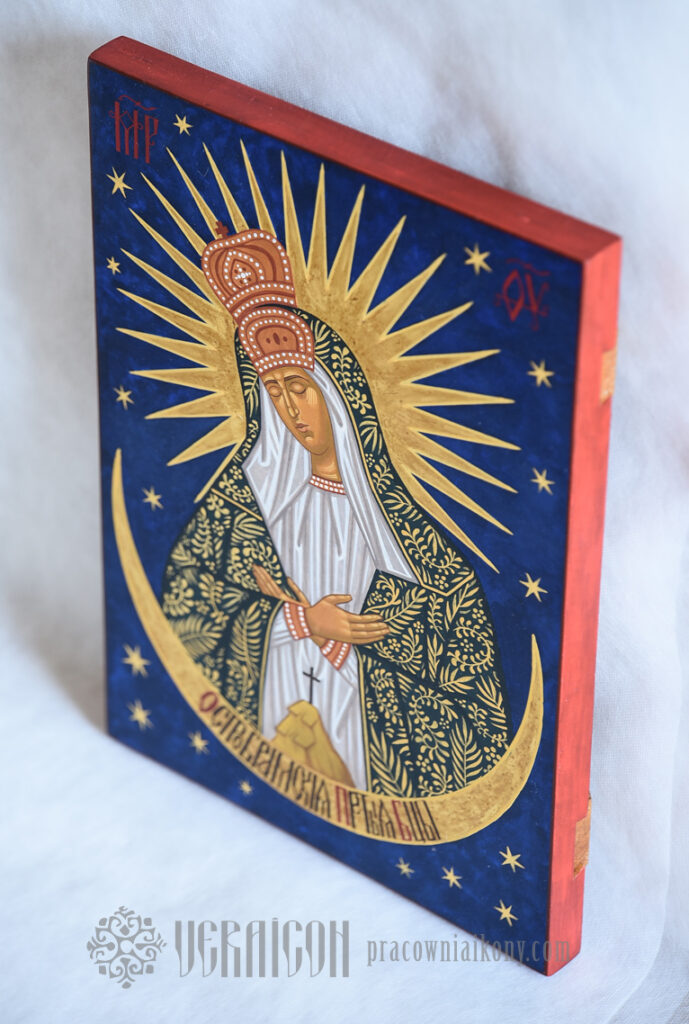
Our Lady of the Gate of Dawn
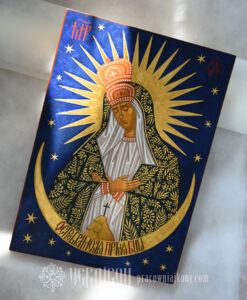
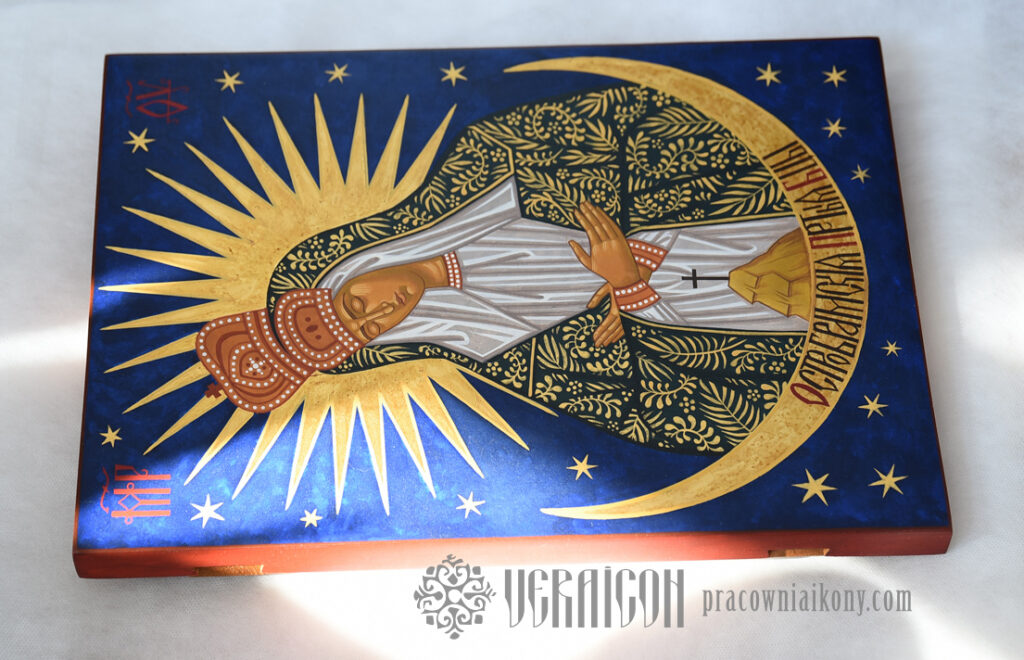
The image of the Madonna of Mercy is one of the most famous representations of the Mother of God. Its veneration began in Vilnius during the Moscow invasion of 1655, when the icon was placed on the exterior wall of the Gate of Dawn, giving it its name. Over time, the history of the miraculous image strengthened its cult and associated it with Polish patriotism, especially during the independence uprisings.
The image of Our Lady of the Gate of Dawn is technically a painting rather than a traditional icon. It was likely created in the 17th century using tempera on a wooden panel, with a style characteristic of the Baroque period.
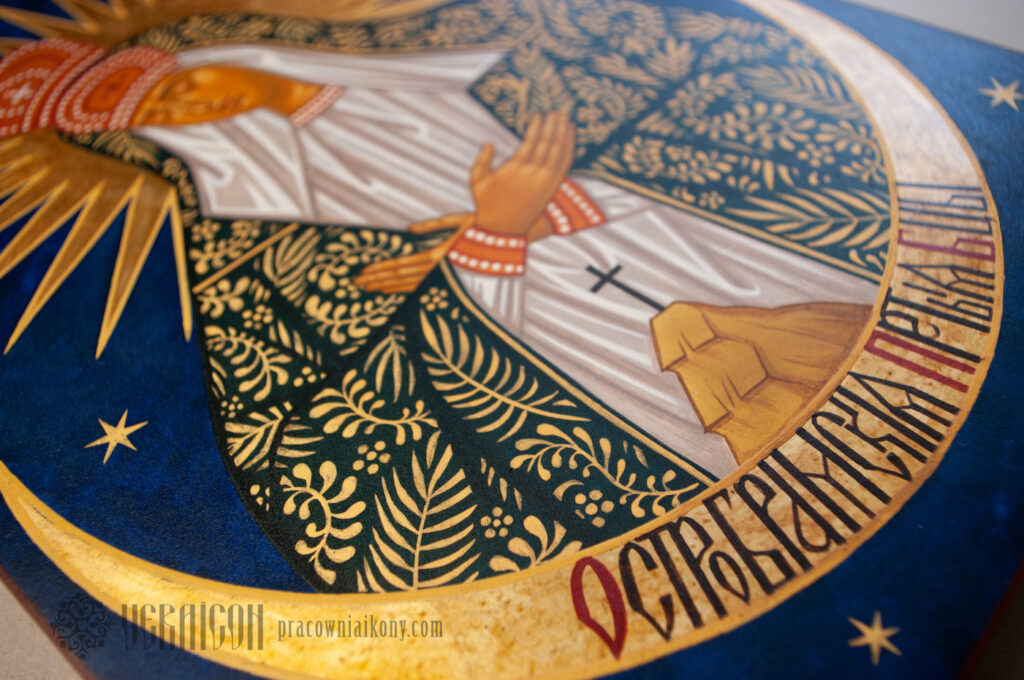
In creating this icon, I was inspired by a contemporary version made in the Russian Iconographic Workshop of Alipy of the Kiev Caves, particularly in its use of color and gilded ornamentation on the robe.
Egg tempera and gold leaf on a linden wood panel.
Size: 25 × 35 cm, 2021.


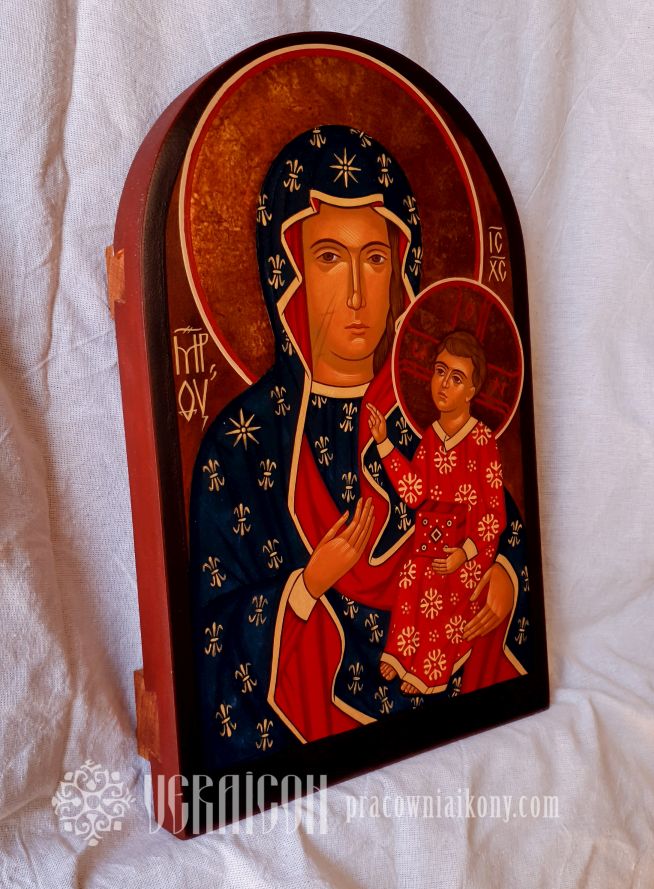

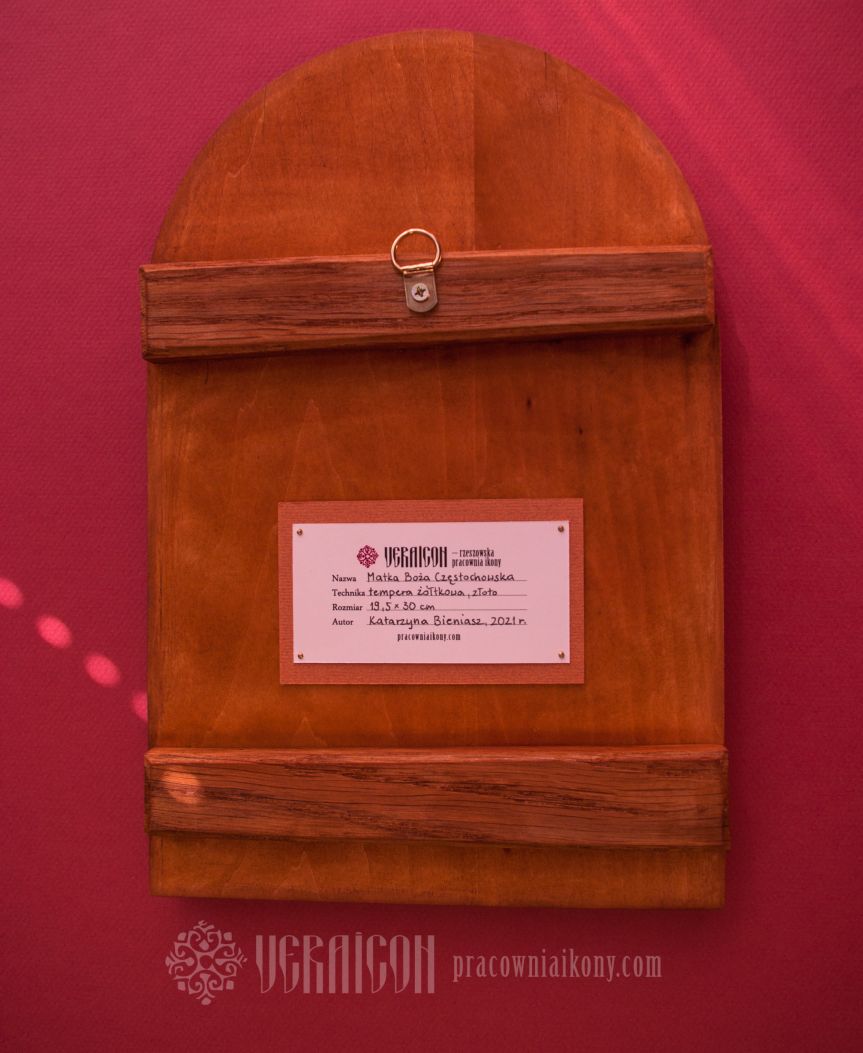
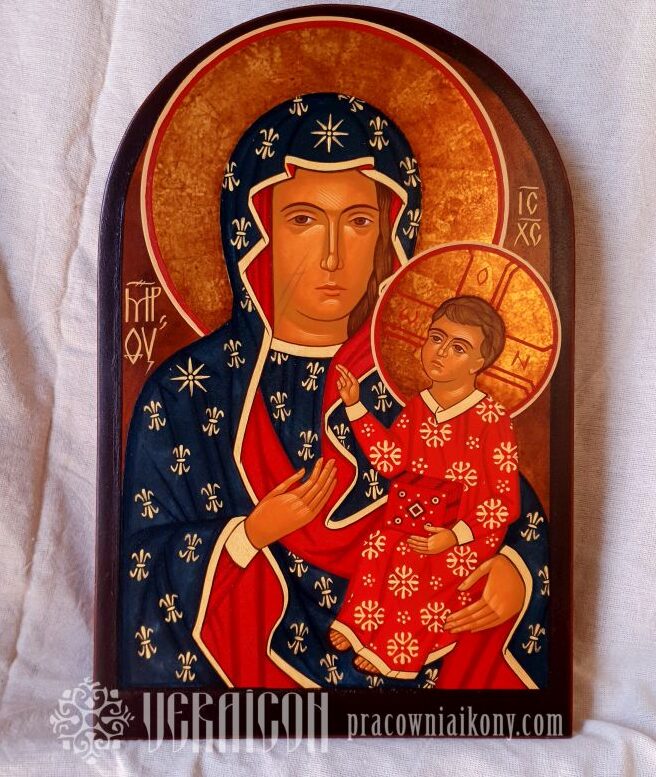
Our Lady of Częstochowa
The icon of Our Lady of Częstochowa faithfully reproduces the traditional Hodegetria type: Mary is depicted frontally, with the Child on her left arm, pointing with her right hand to Christ as the source of salvation. The characteristic dark skin tone is preserved, along with the gilded background and richly decorated robes adorned with Angevin lilies. Two scars are visible on Mary’s face – a mark of the icon’s history and a symbol of suffering.
This is an original rendition of the “Black Madonna,” reflecting both her current, recognizable appearance and hypotheses about her original character. This is how she might have looked after removing many layers of later overpainting…
Egg tempera, gold leaf, linden wood panel. Size: 20 × 30 cm, 2020.


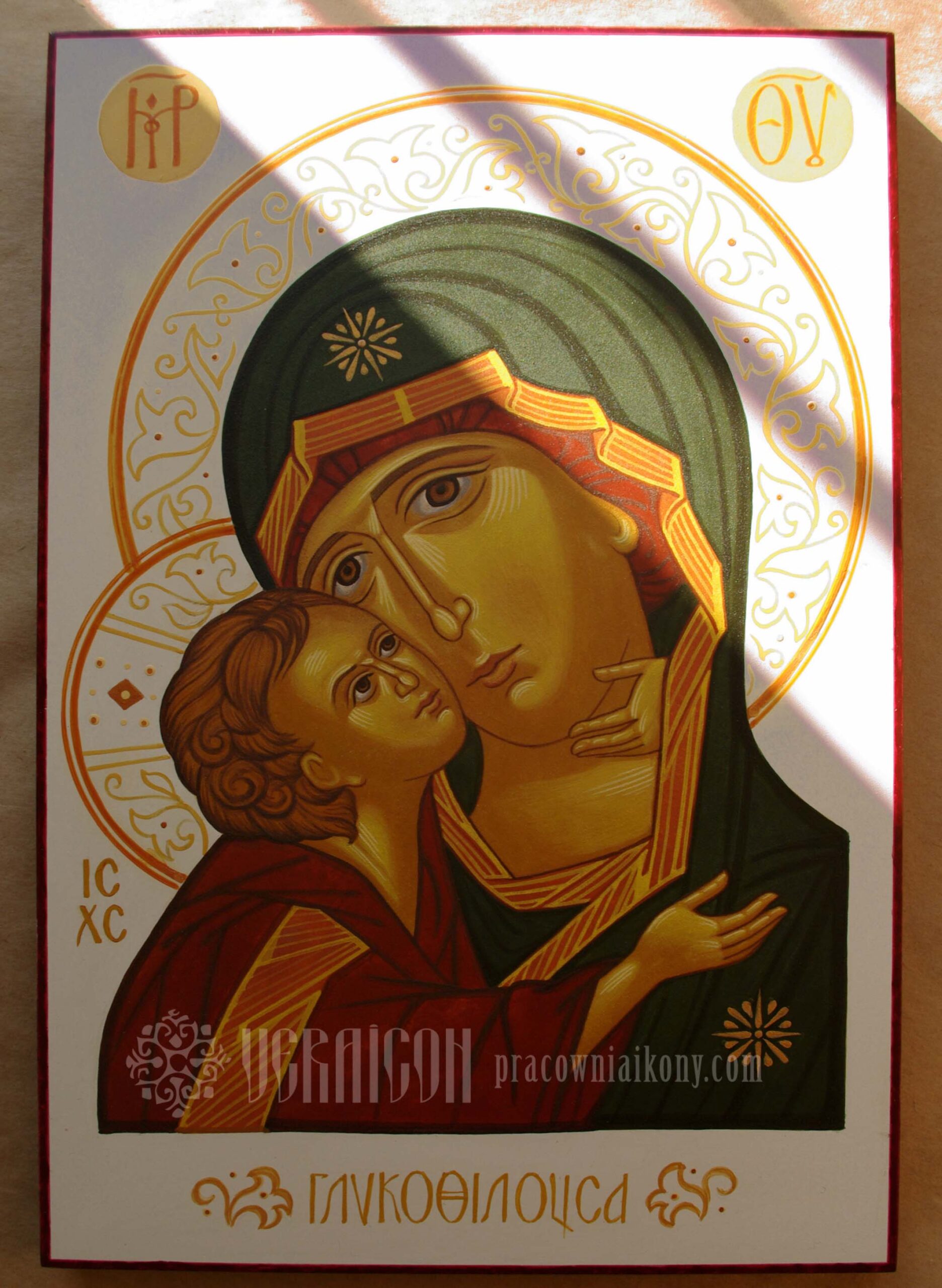

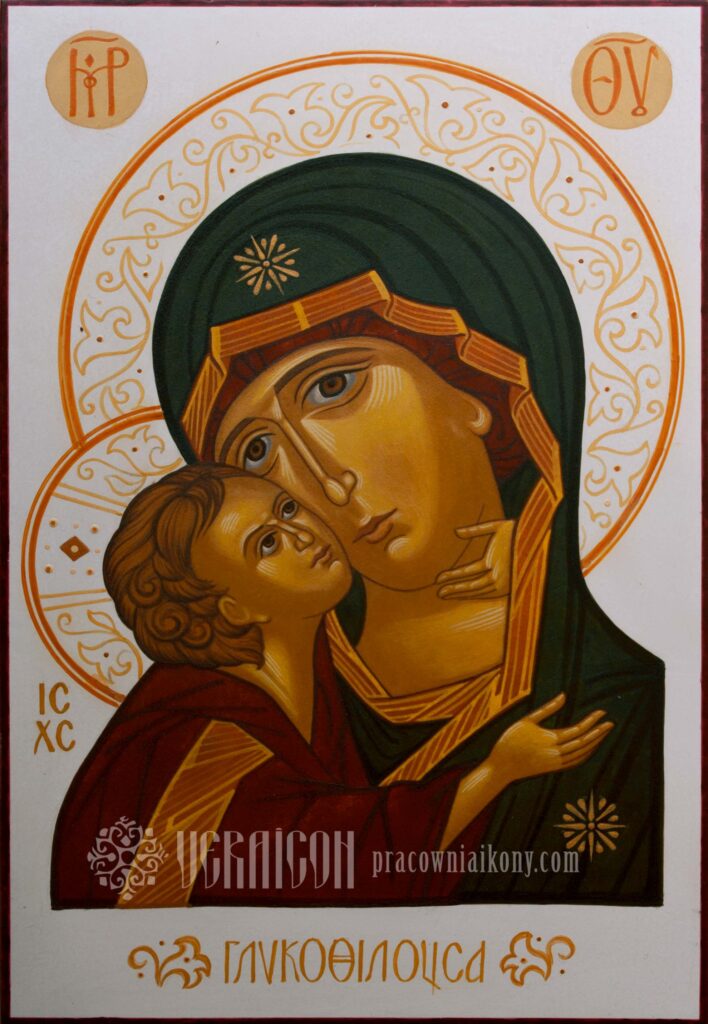
Our Lady of Tenderness
This iconographic motif is known as Eleusa – “The Tender” – or Glykophilousa, meaning “Sweetly Loving.” One of the most famous and oldest examples of this type is the icon from Vladimir (or actually from Vyshgorod) dating back to the 12th century. It is especially venerated in the East, and due to the miracles attributed to it, the Feast of the Vladimir Icon of the Mother of God is celebrated on June 23.
A defining feature of this motif is the gentle, trusting gesture of the Child, who presses His face to His Mother’s cheek and stretches His hand around her neck in an embrace. This work is inspired by the icon by M. Sheshukov.
Egg tempera, white pigment, mineral gold on linden wood panel. Size: 30 × 20 cm, 2016/2020.
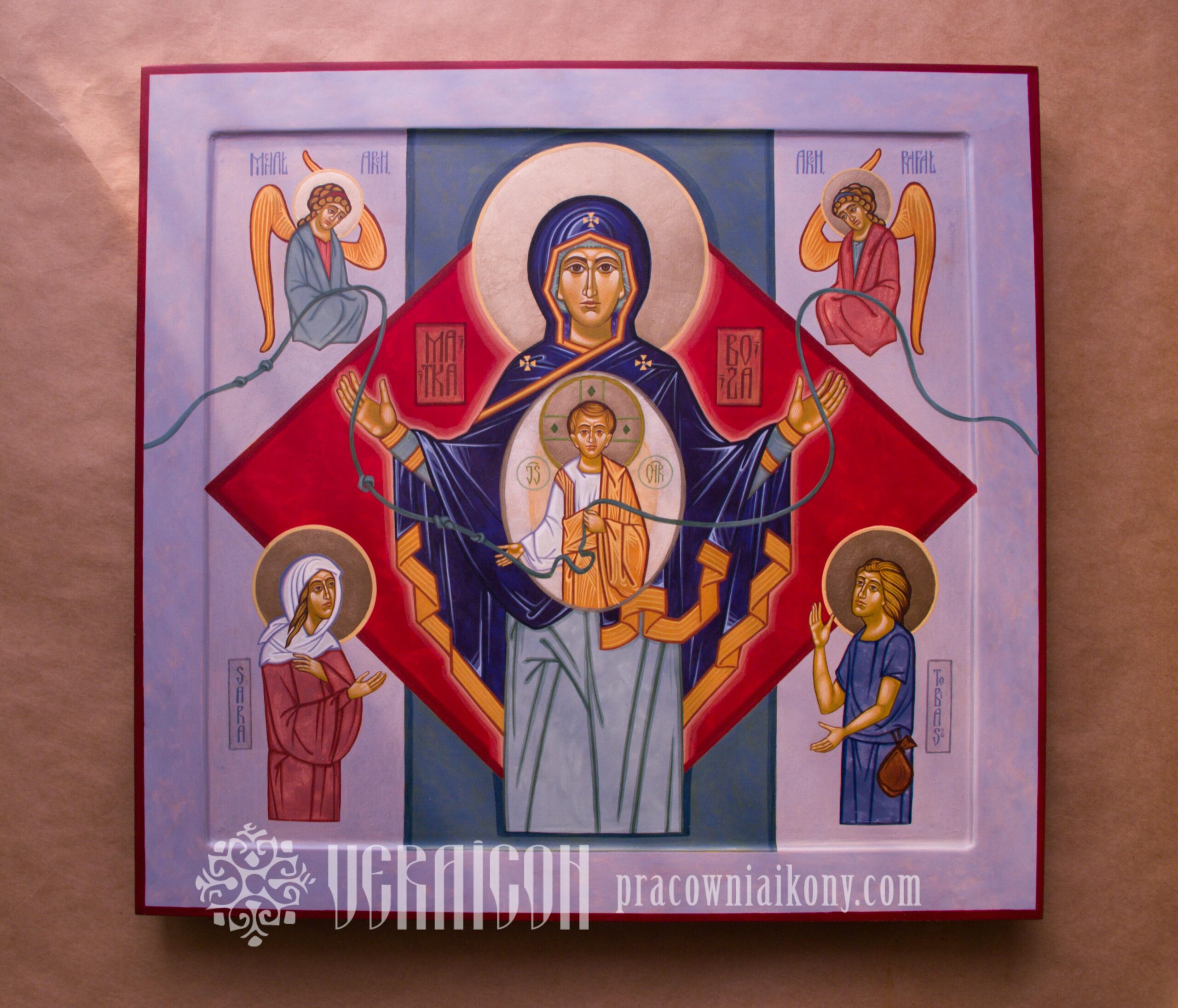
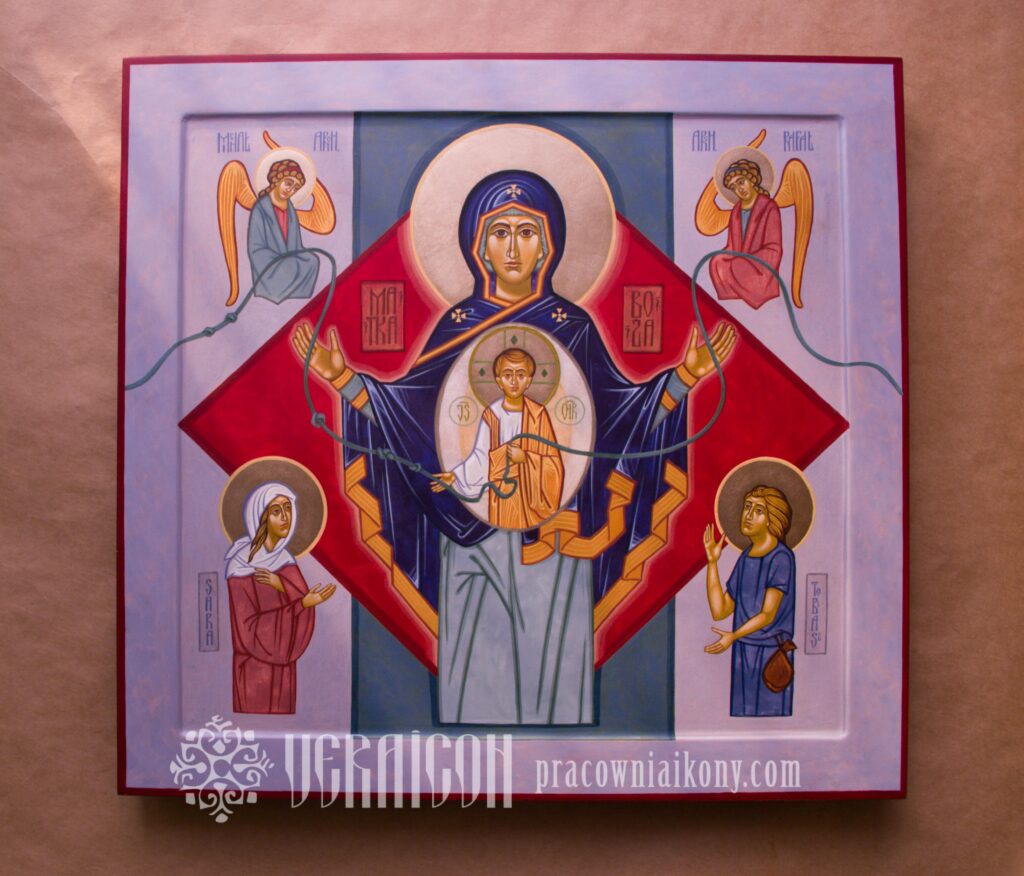
Our Lady Undoing the Knots
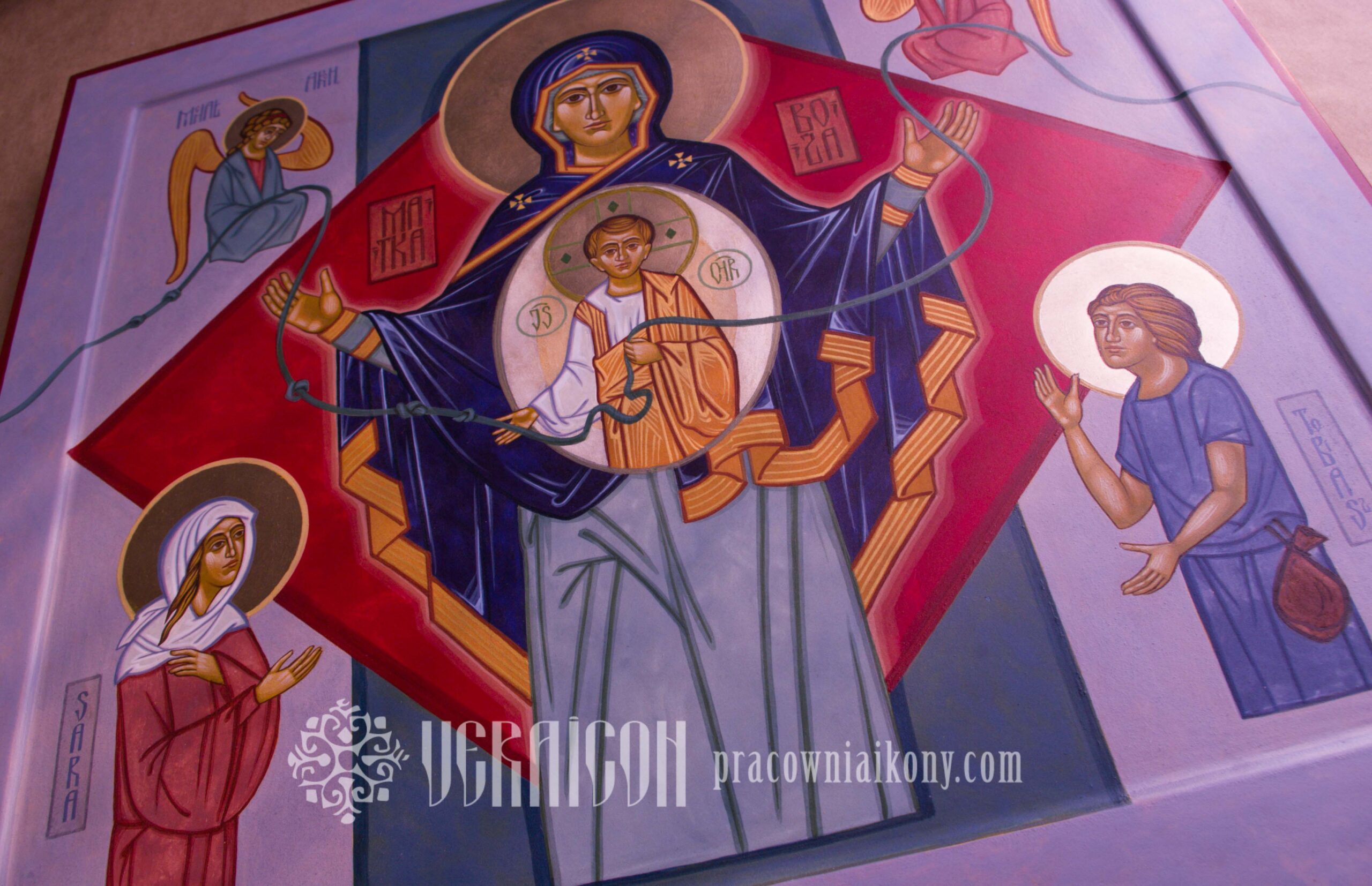
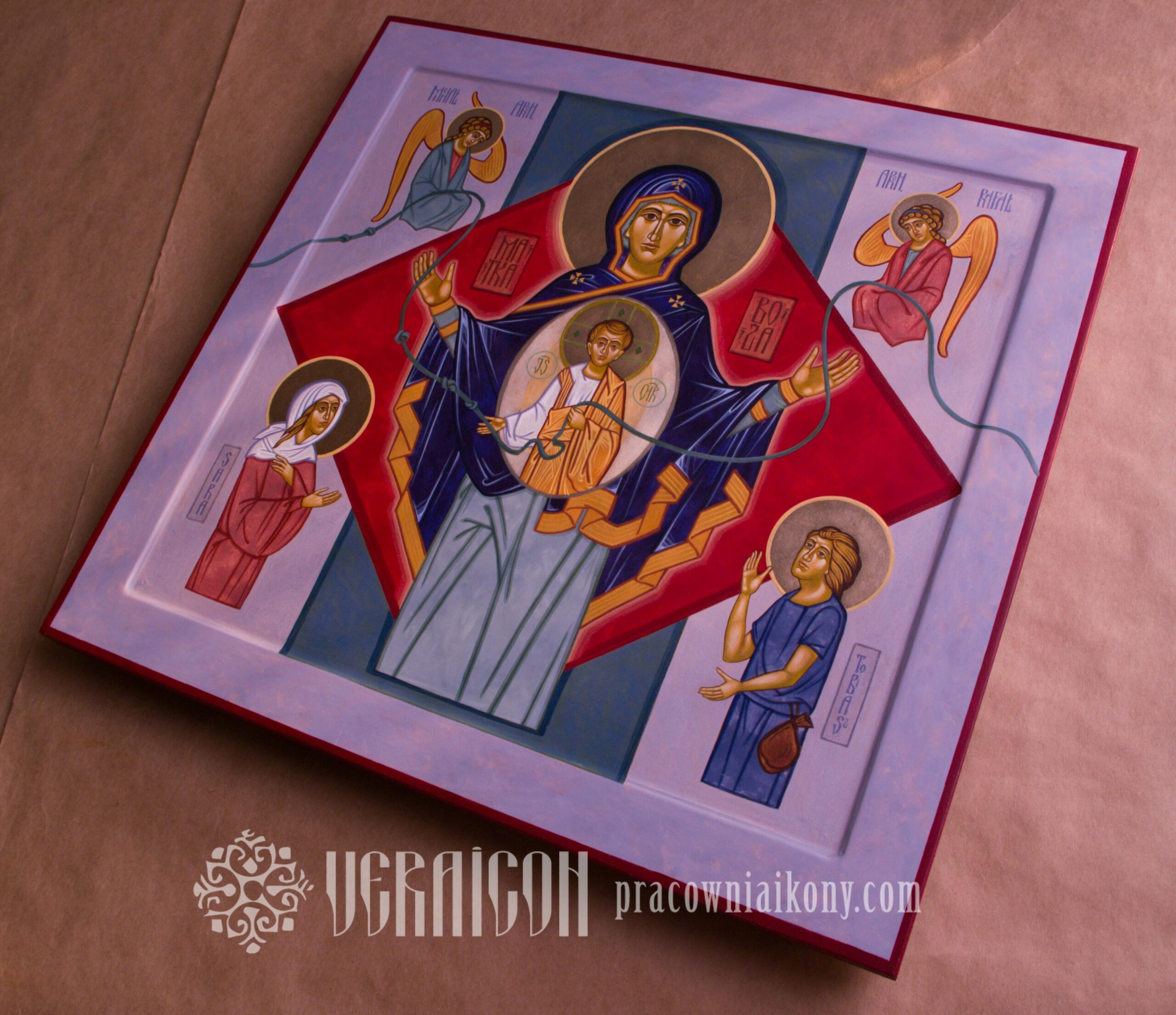
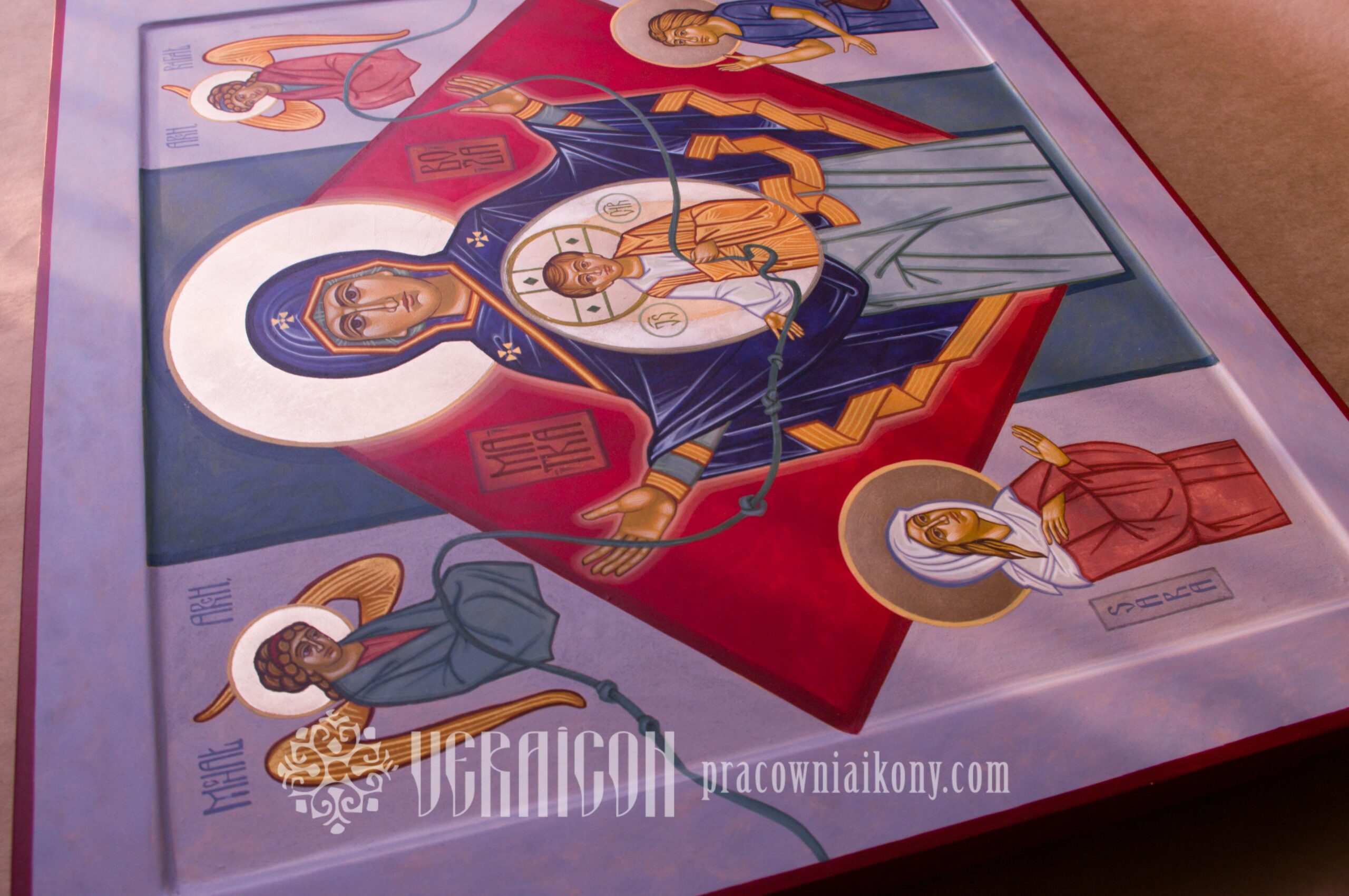
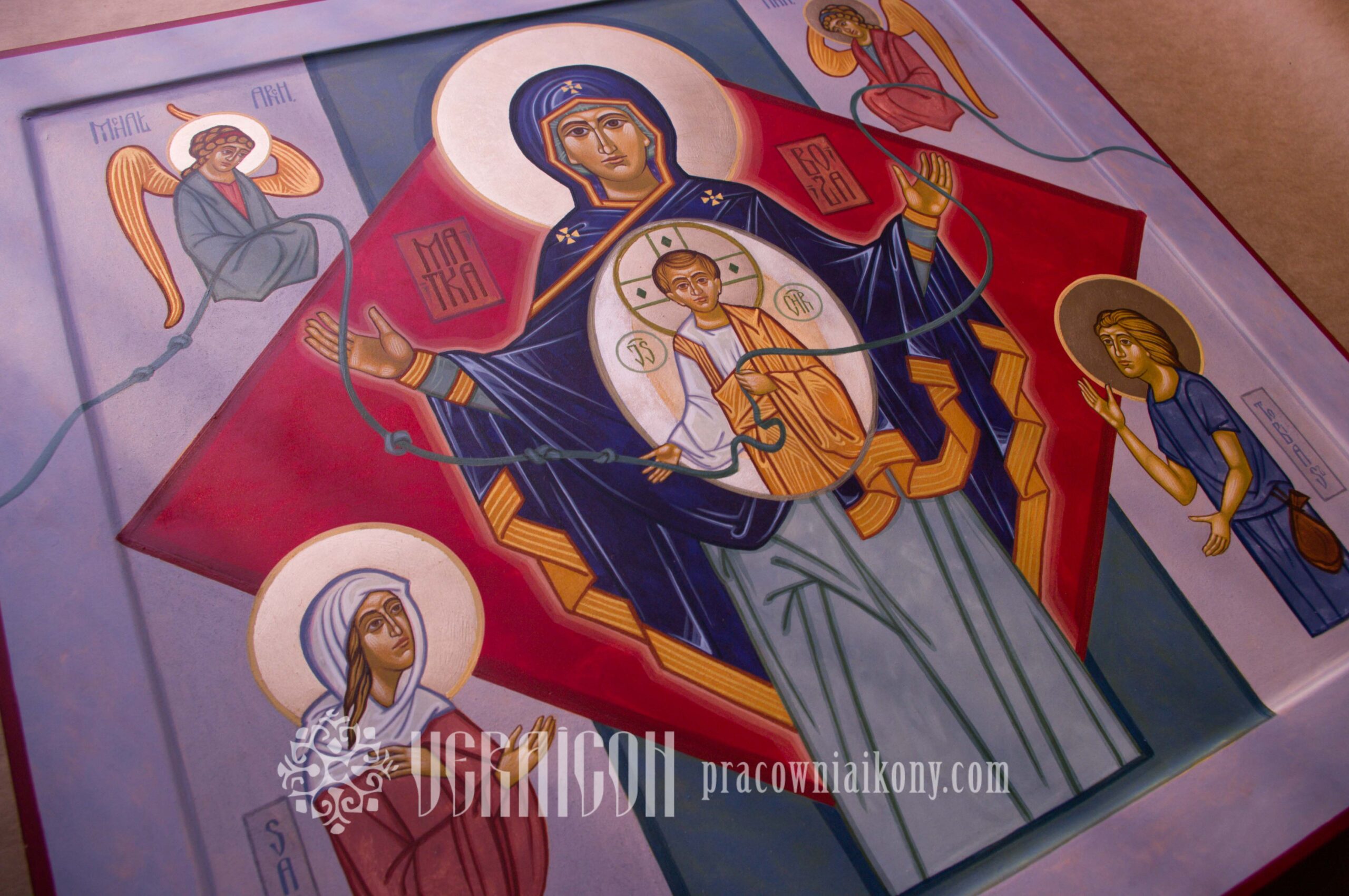
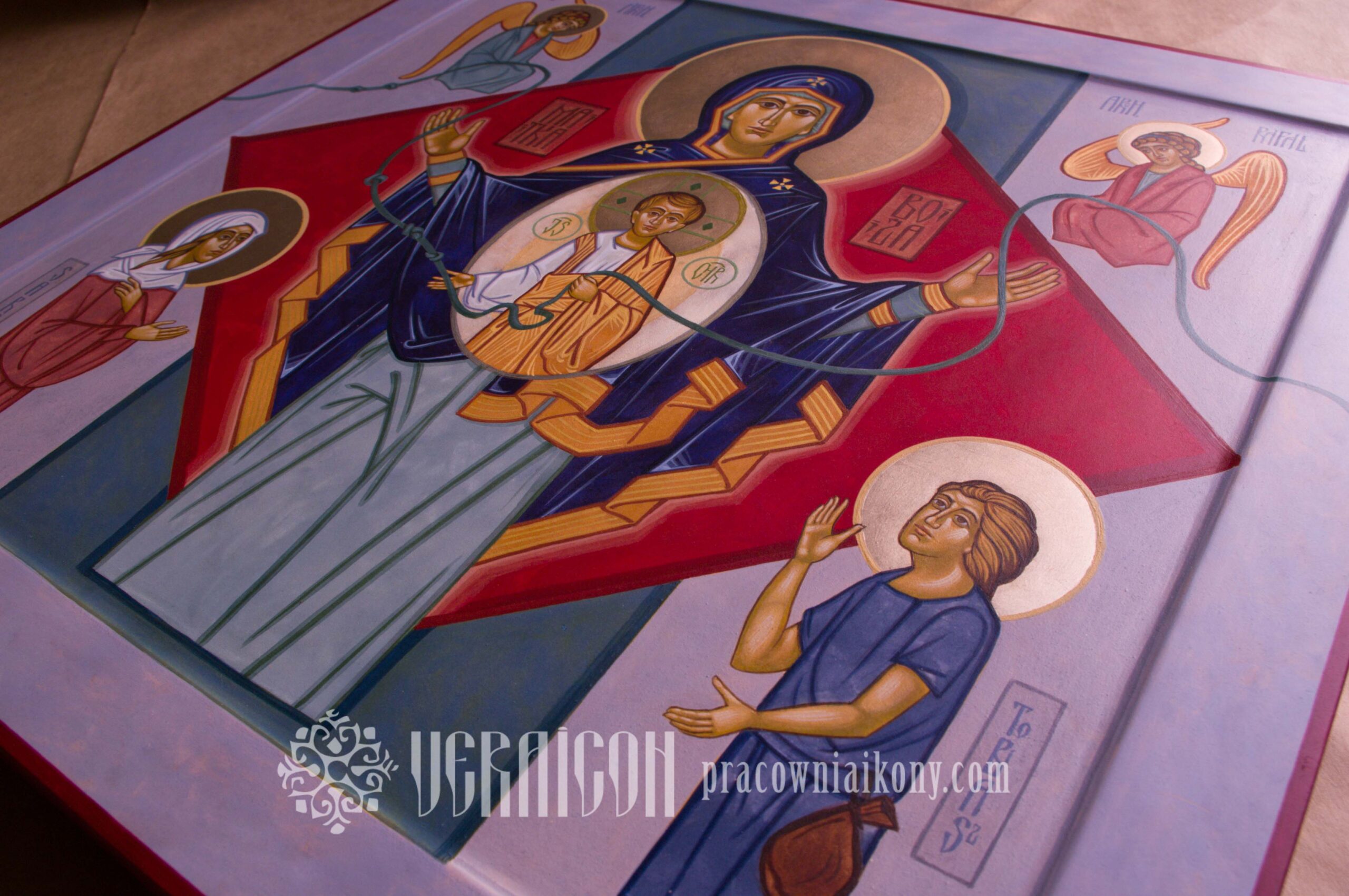
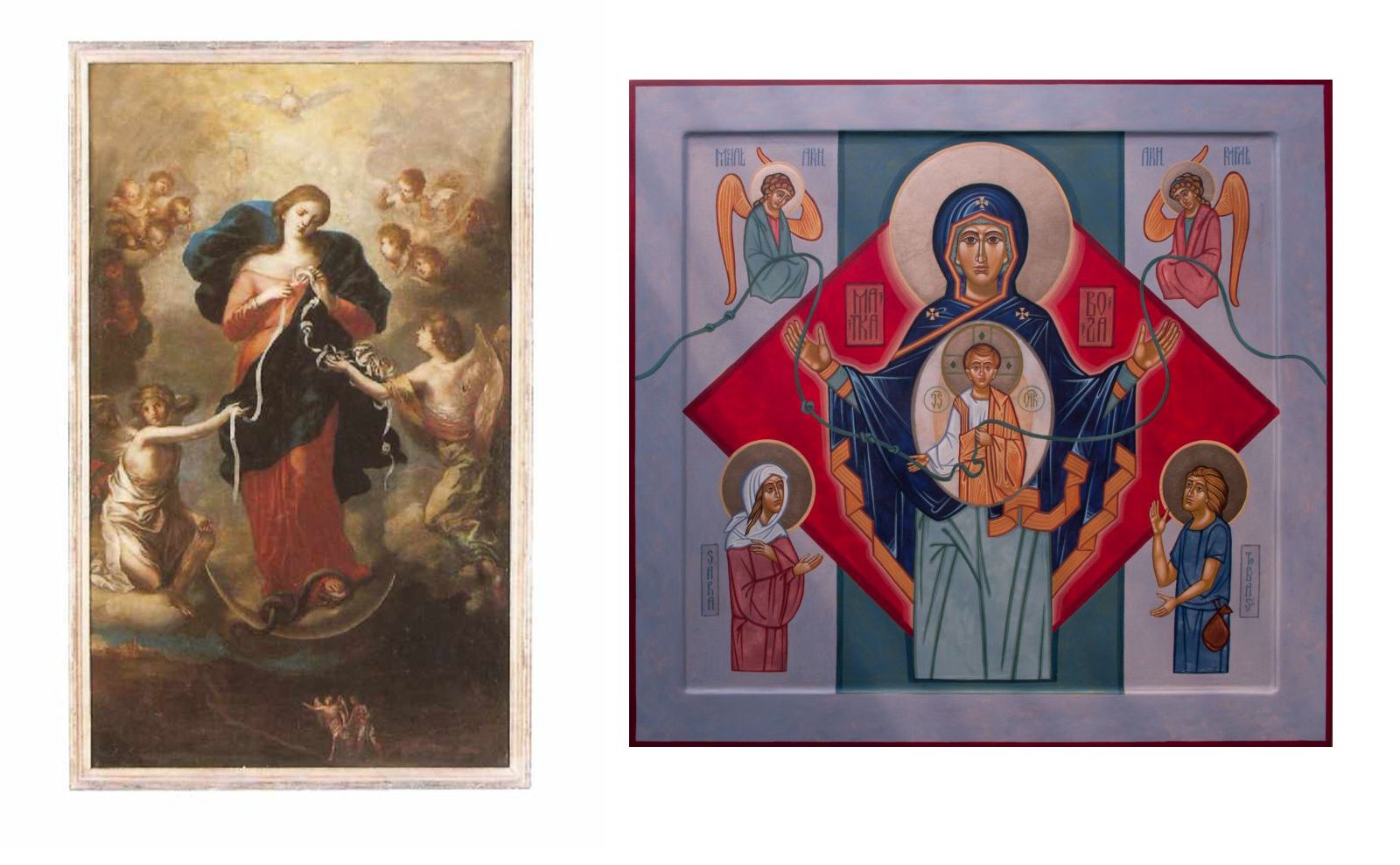
This is an interpretation of an iconographic motif drawn from the Catholic tradition; around 1700, Johann Georg Melchior Schmidtner painted an image under this title for the Church of St. Peter in Augsburg. Today, this depiction is particularly venerated in South America and has been gaining wider popularity, in part due to Pope Francis.
The composition shows the Virgin Mary with an oval medallion on her chest containing the figure of Emmanuel. Through Mary’s hands, the Archangels present a tangled ribbon to Christ – a symbol of human life full of doubts and sins. Christ then unties the knots, and the ribbon becomes smooth.
This icon was created on special commission in an expanded version. In addition to Mary, Christ, and the Archangels Michael and Raphael, the figures of Tobias and Sarah from the Old Testament were included. By referencing the story in the biblical Book of Tobit, the icon becomes a symbol of prayer for support in difficult family and marital relationships.
Egg tempera on linden wood panel, gold leaf. Size: 44 × 46.5 cm, 2019.
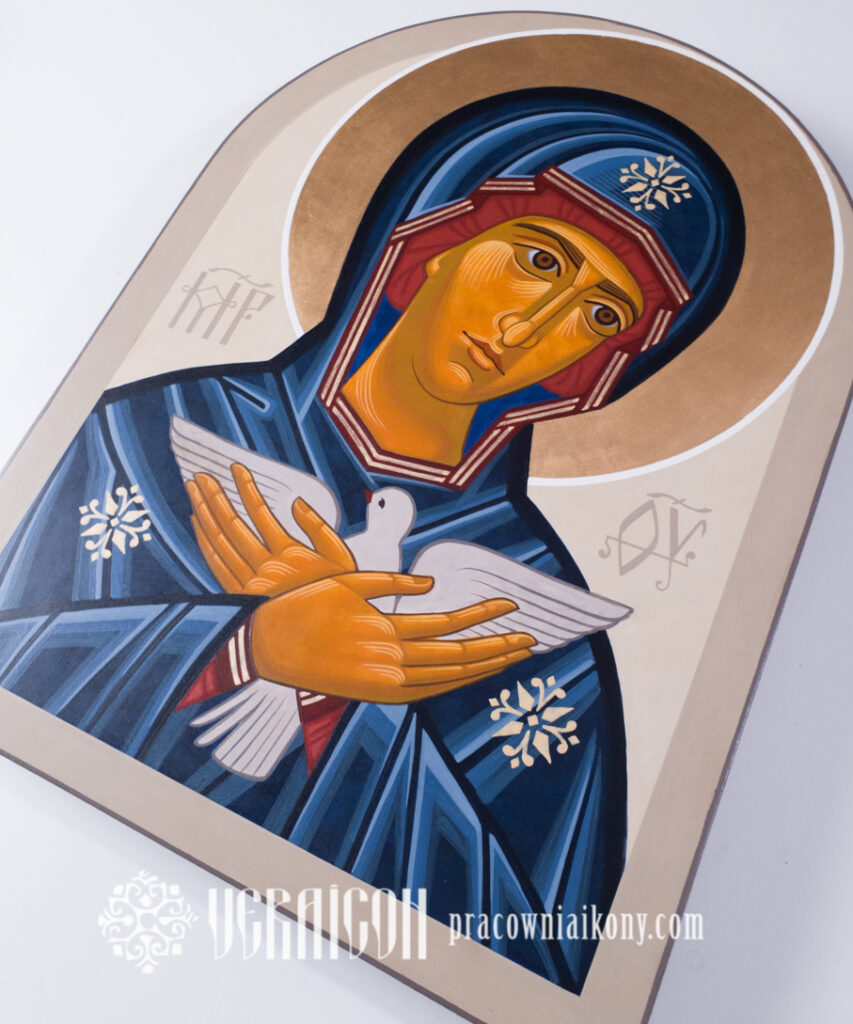
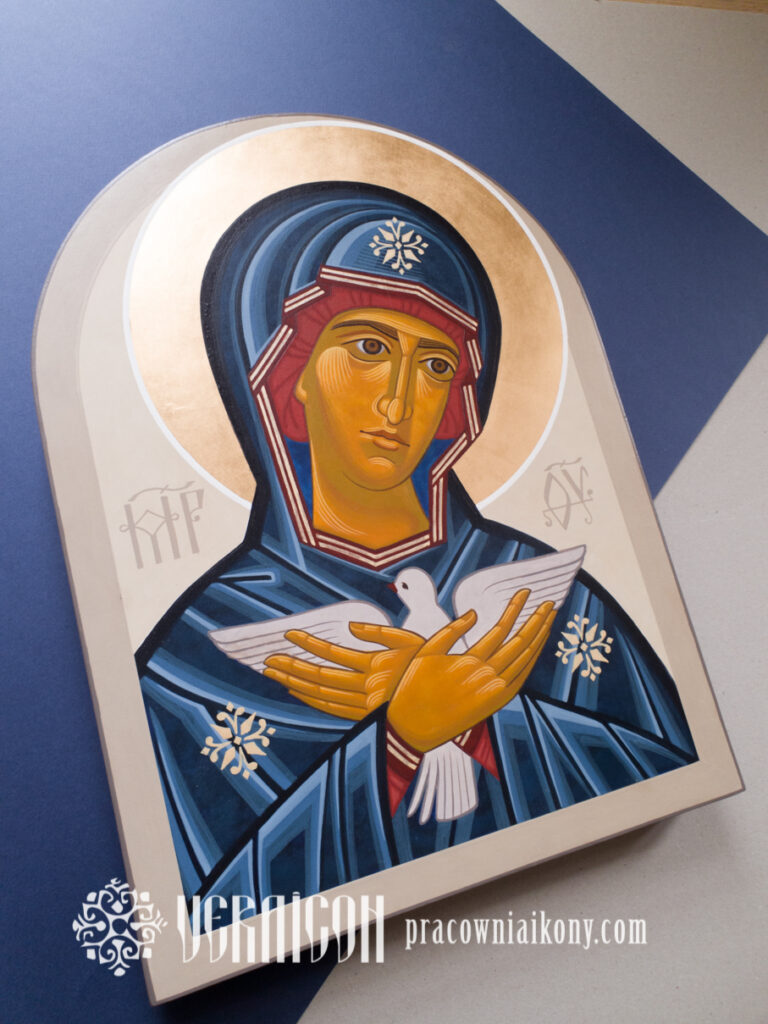
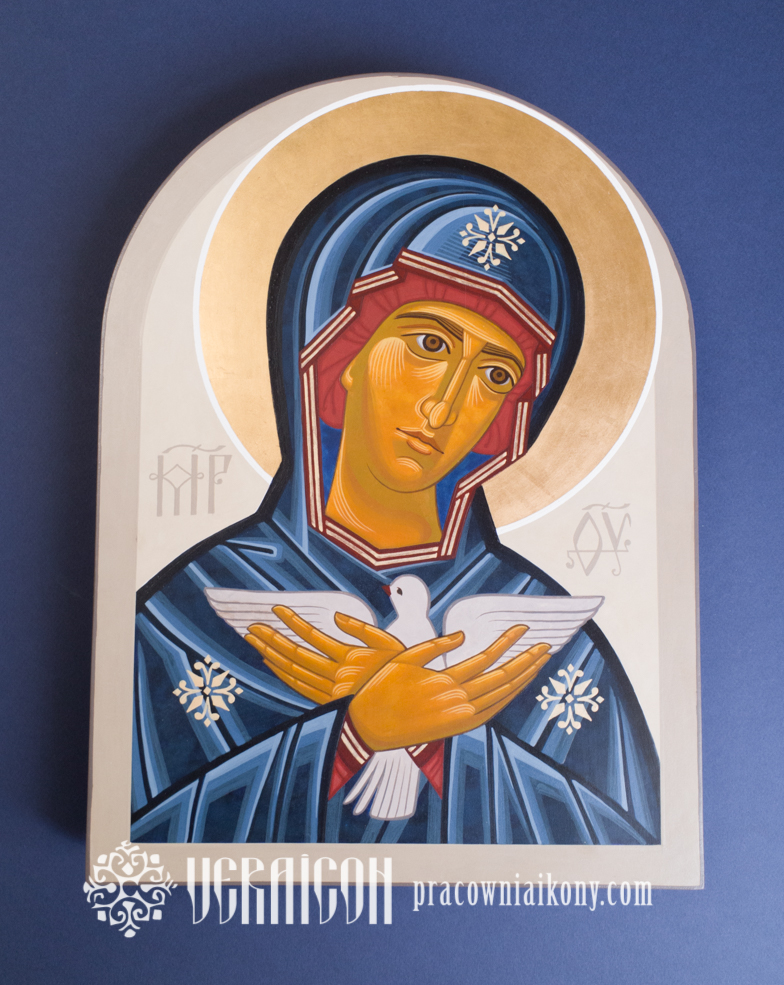
Pneumatophora
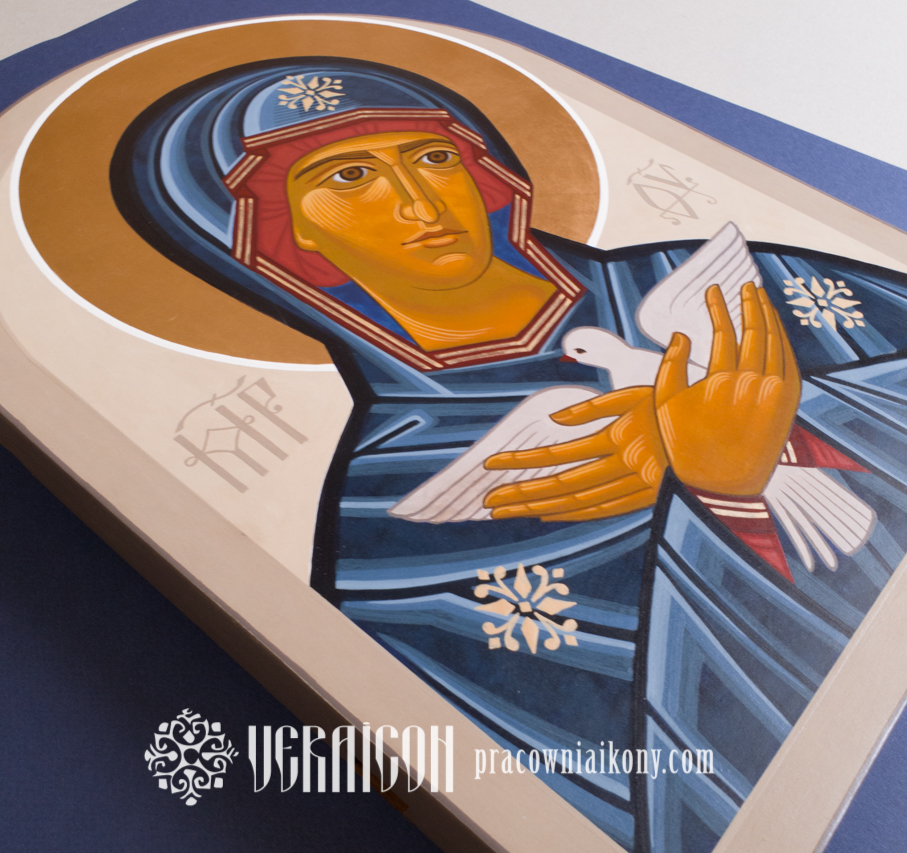
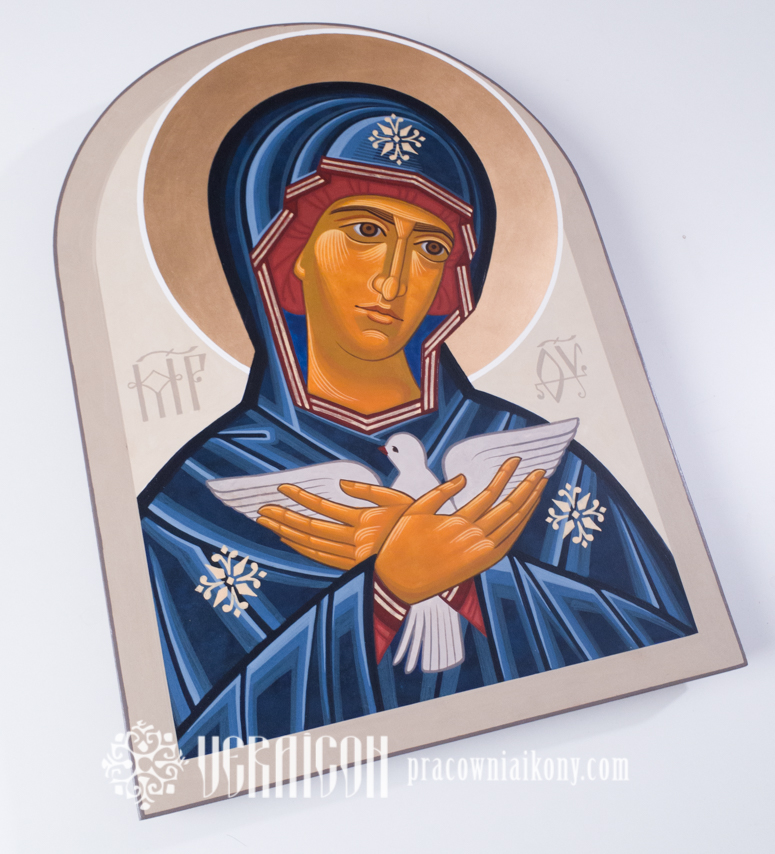
This original icon of the Mother of God Pneumatophora depicts Mary as the one who carries within her the mystery of the Holy Spirit’s action. The style of the icon combines a contemporary simplicity of composition with elements of traditional Byzantine aesthetics.
The work emphasizes the theological meaning of the title Pneumatophora – “She who bears the Spirit” – portraying Mary as the place of encounter between God and humanity and as the beginning of the mystery of the Incarnation.
Egg tempera, gold leaf on linden wood panel. Size: 30 × 20 cm, 2022.