

Saint John Cassian
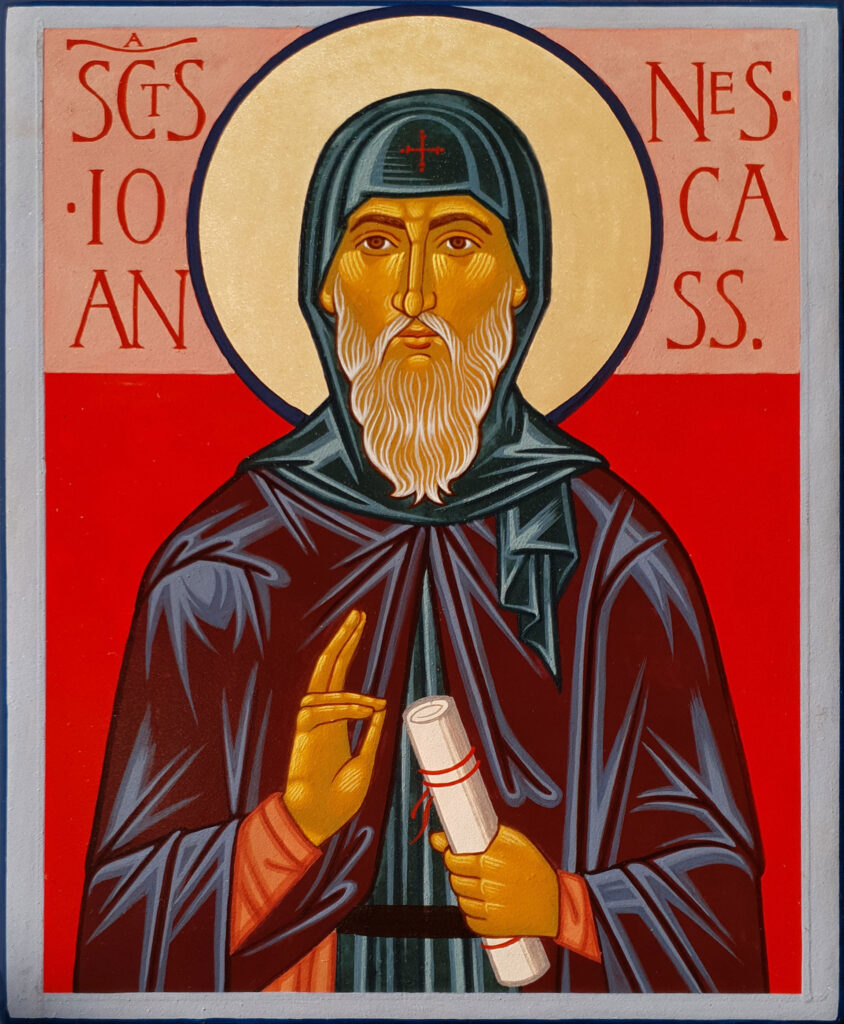
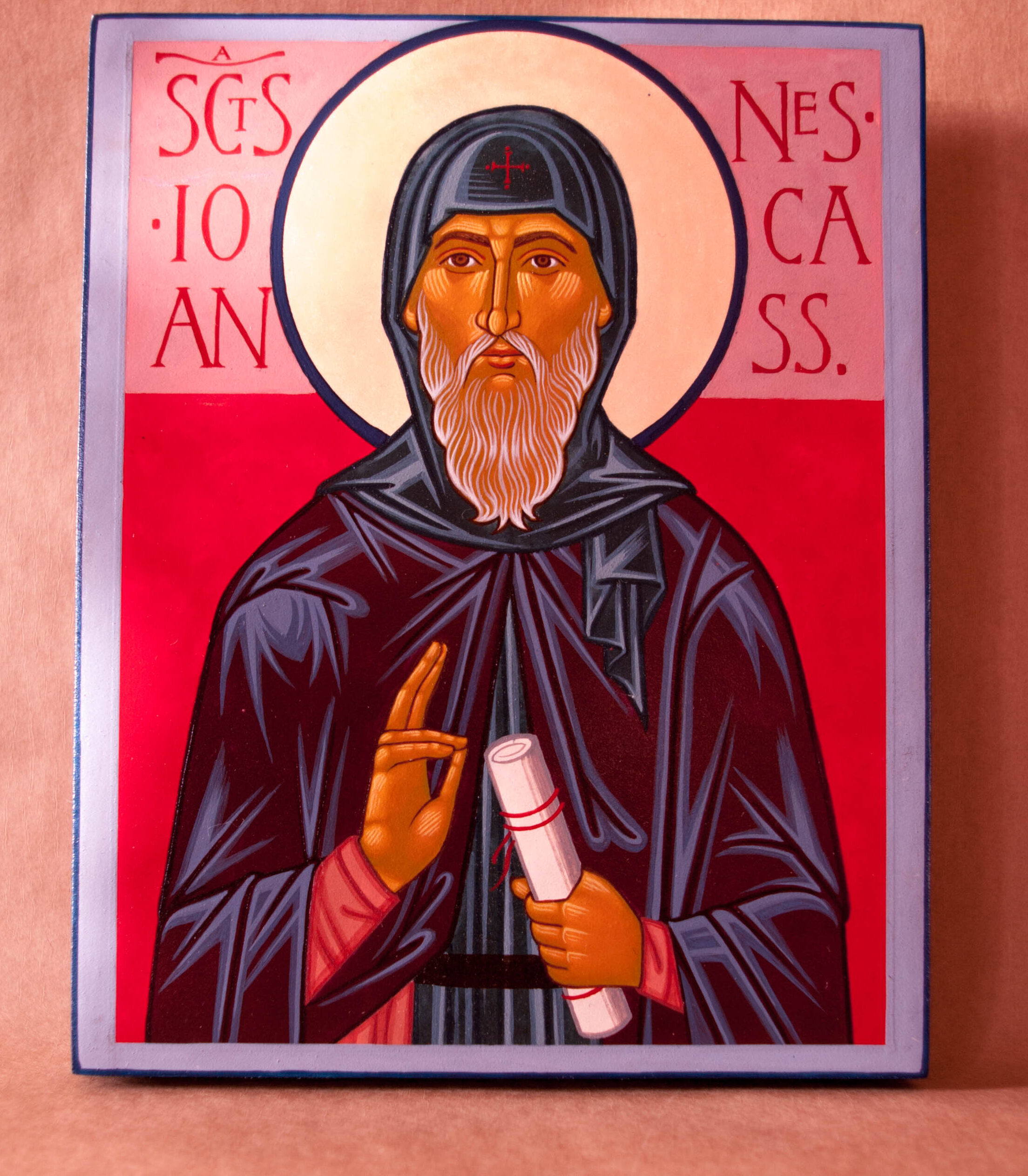
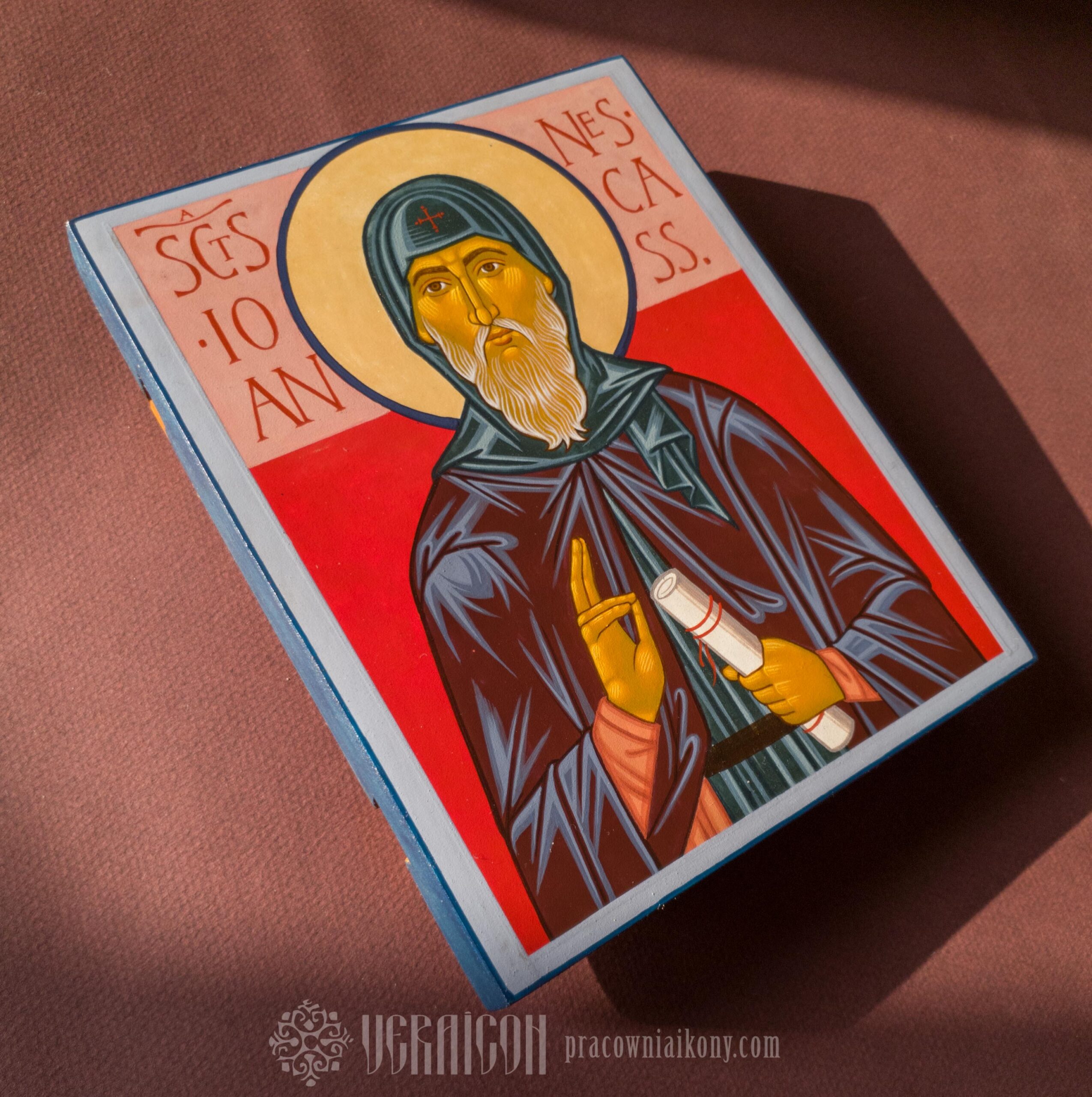
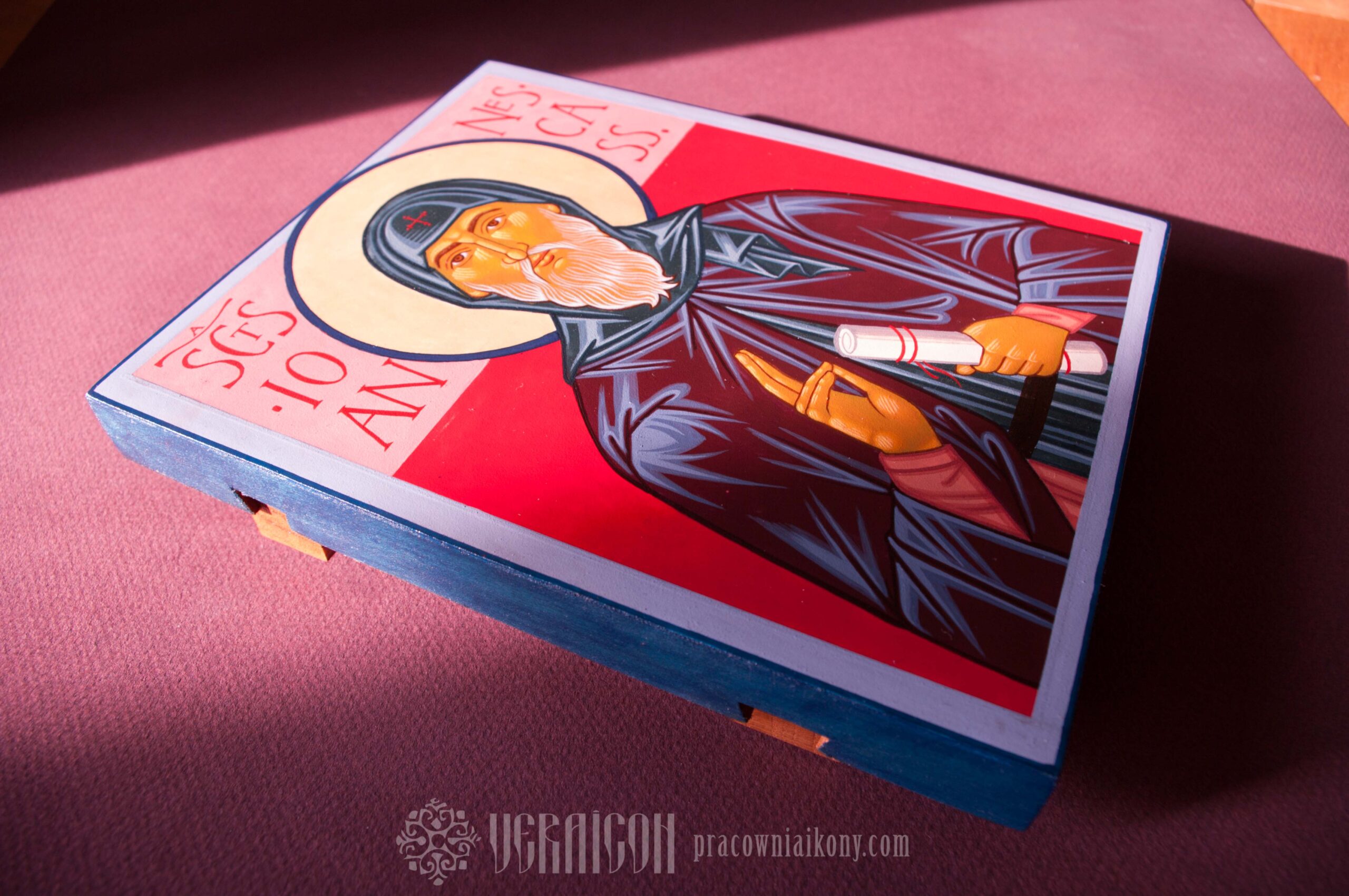
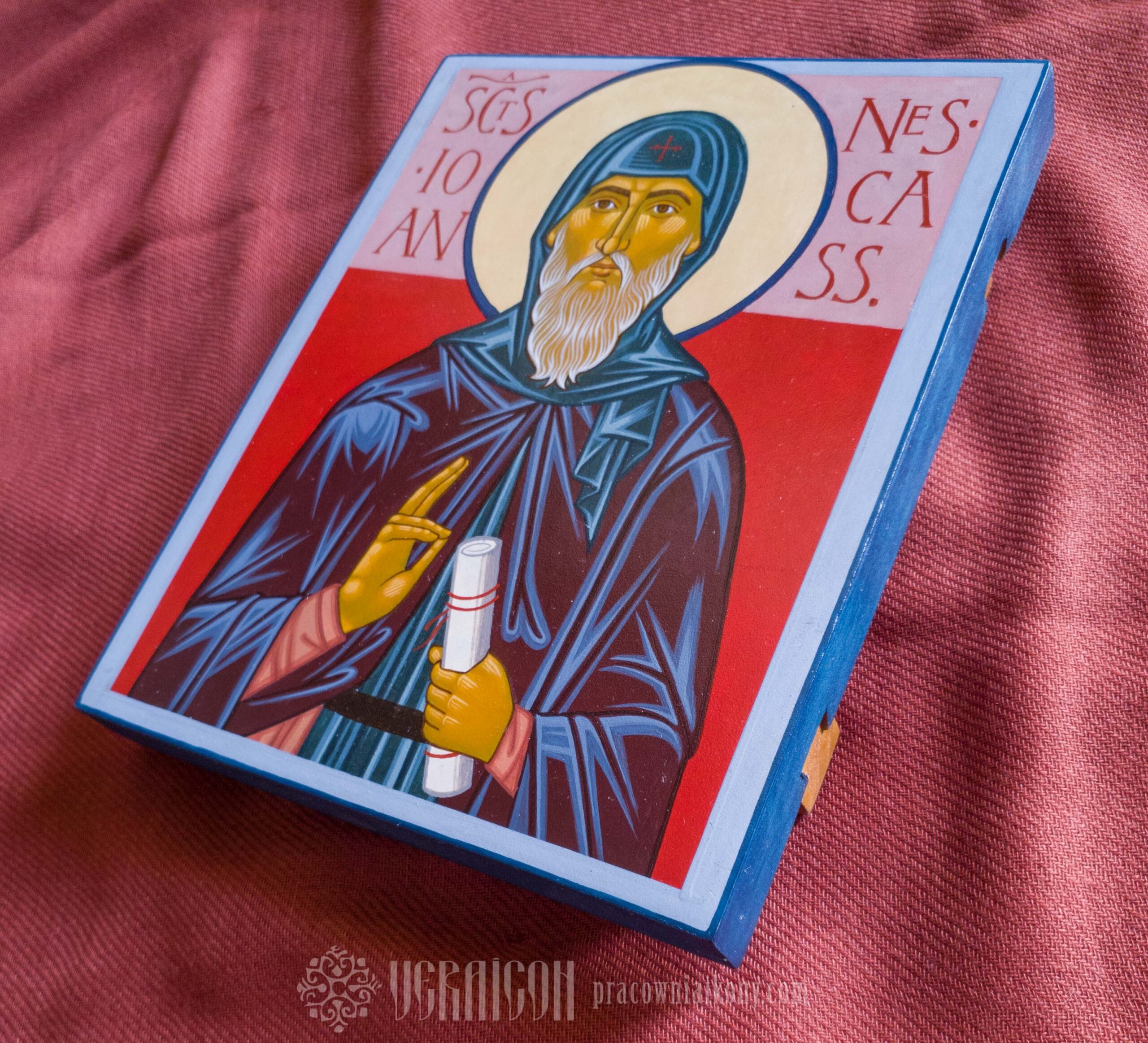
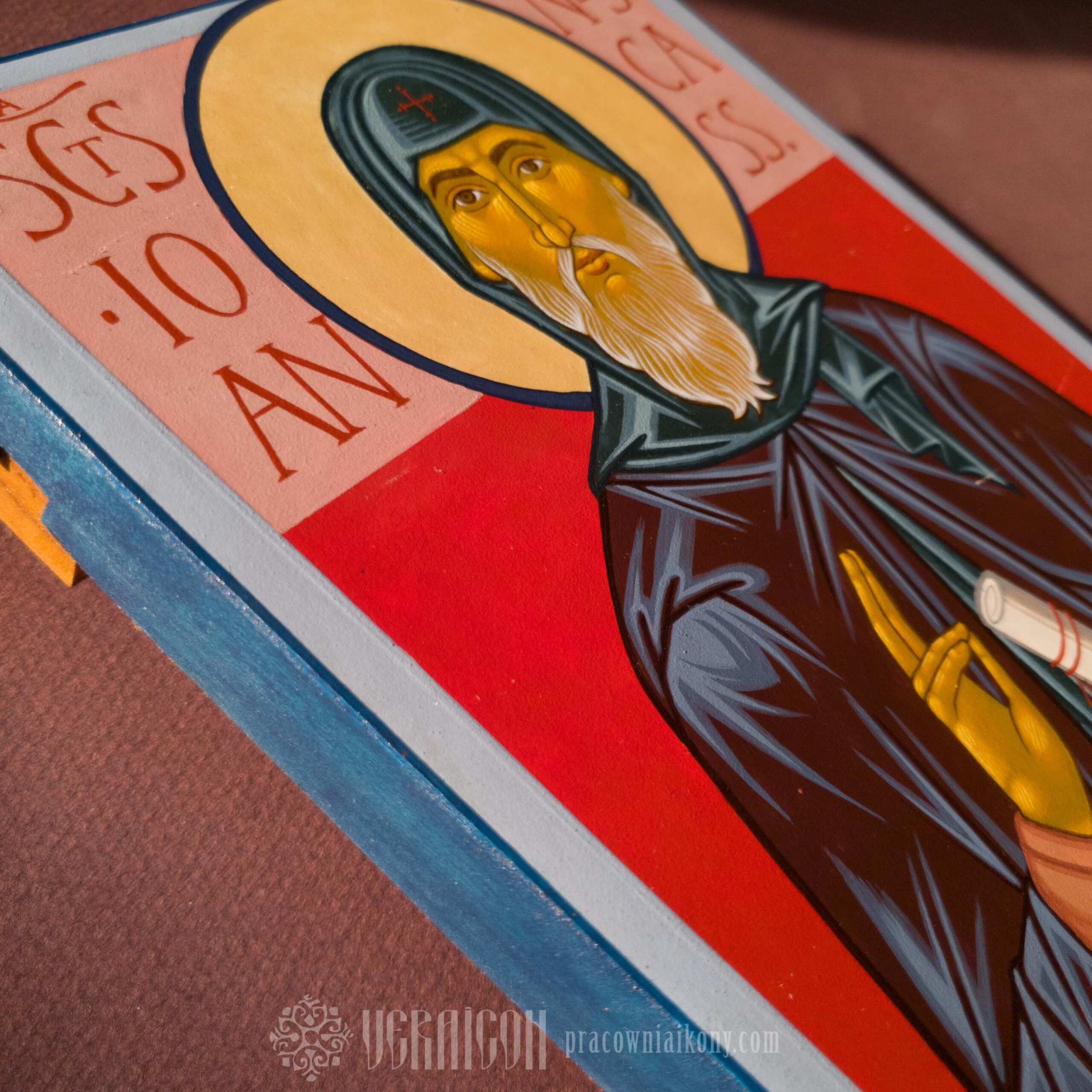
This small icon of St. John Cassian depicts the saint frontally, dressed in the dark habit of a monk. His face, with elongated features, a long grey beard, and a focused gaze, emphasizes his spiritual maturity and a life devoted to prayer and contemplation. In his hand he holds a scroll – a symbol of his teaching and writings on monastic life.
The strong, contrasting color palette – combinations of red, deep purple, and blue – gives the icon clarity and dynamism, highlighting the saint’s spiritual energy and authority. The small format preserves its devotional character, while the intense colors draw the viewer’s attention and enhance the expressiveness of the image.
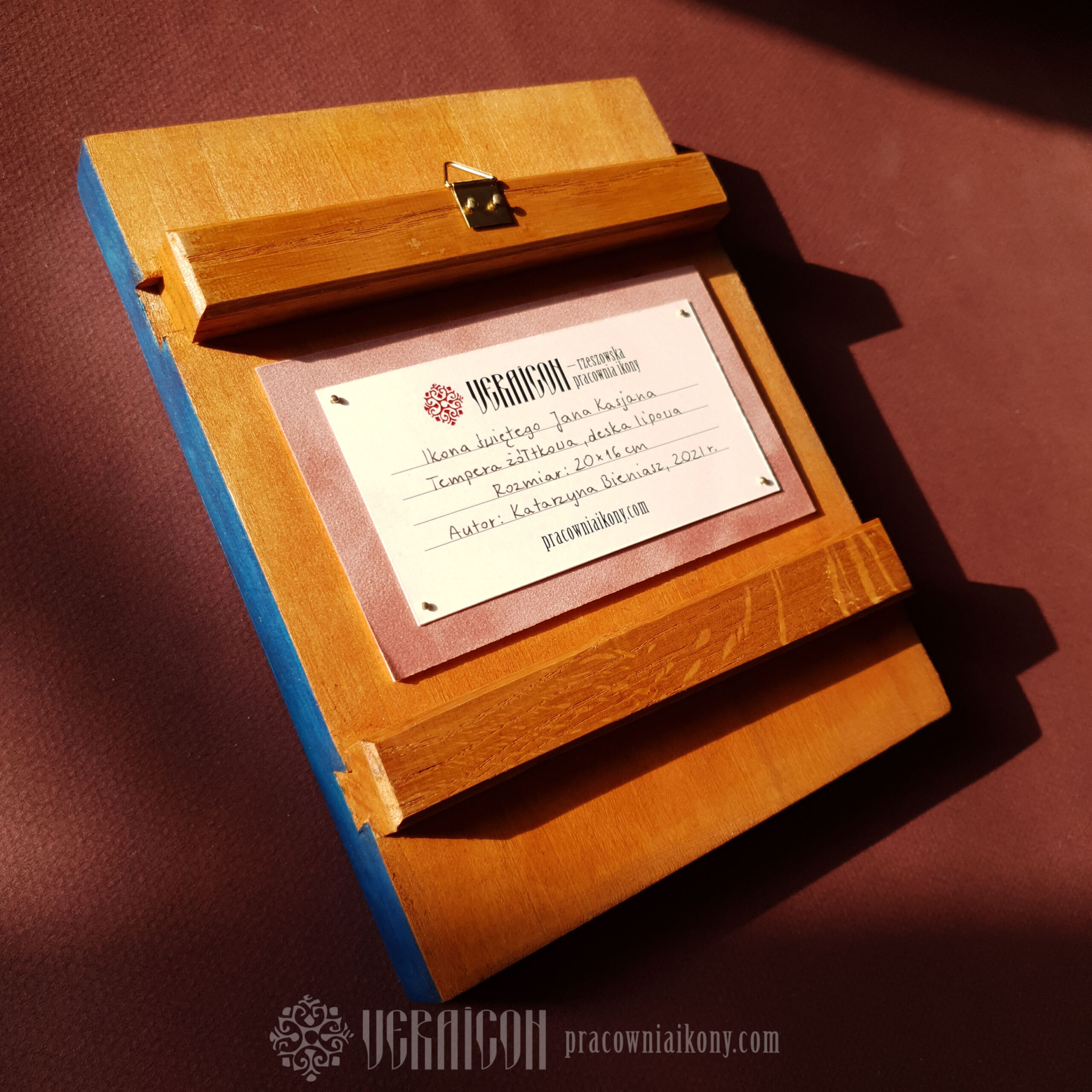
Technique: egg tempera on wood panel. Size: 16 × 20 cm, 2021.


Saint Joseph the Betrothed
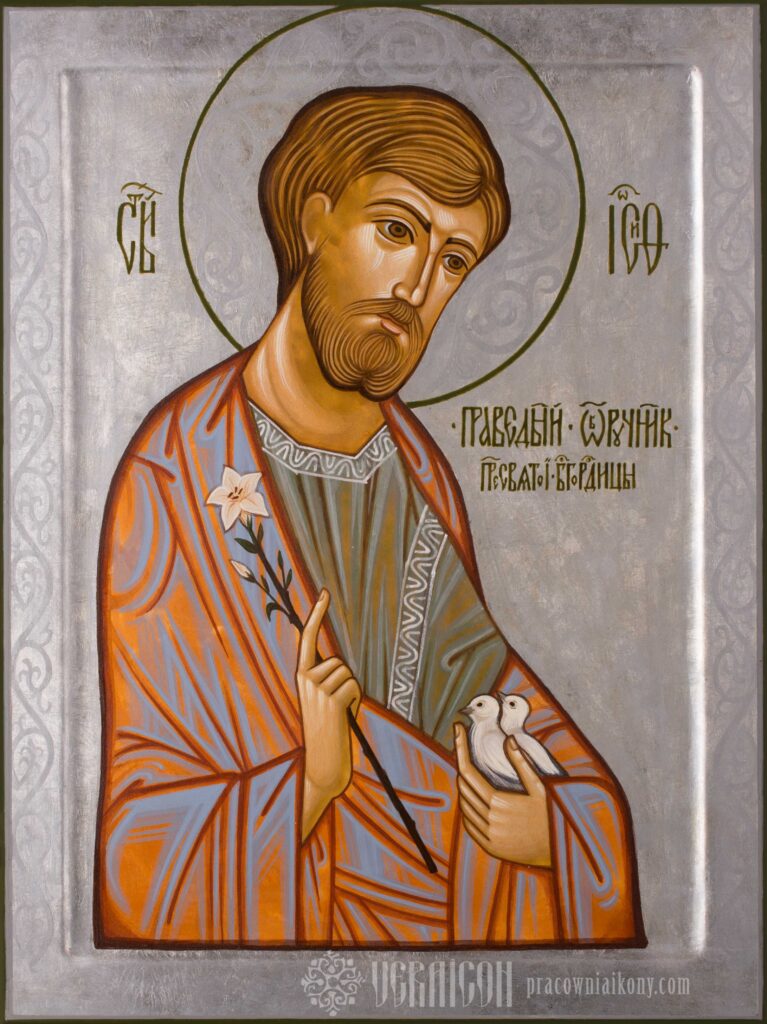
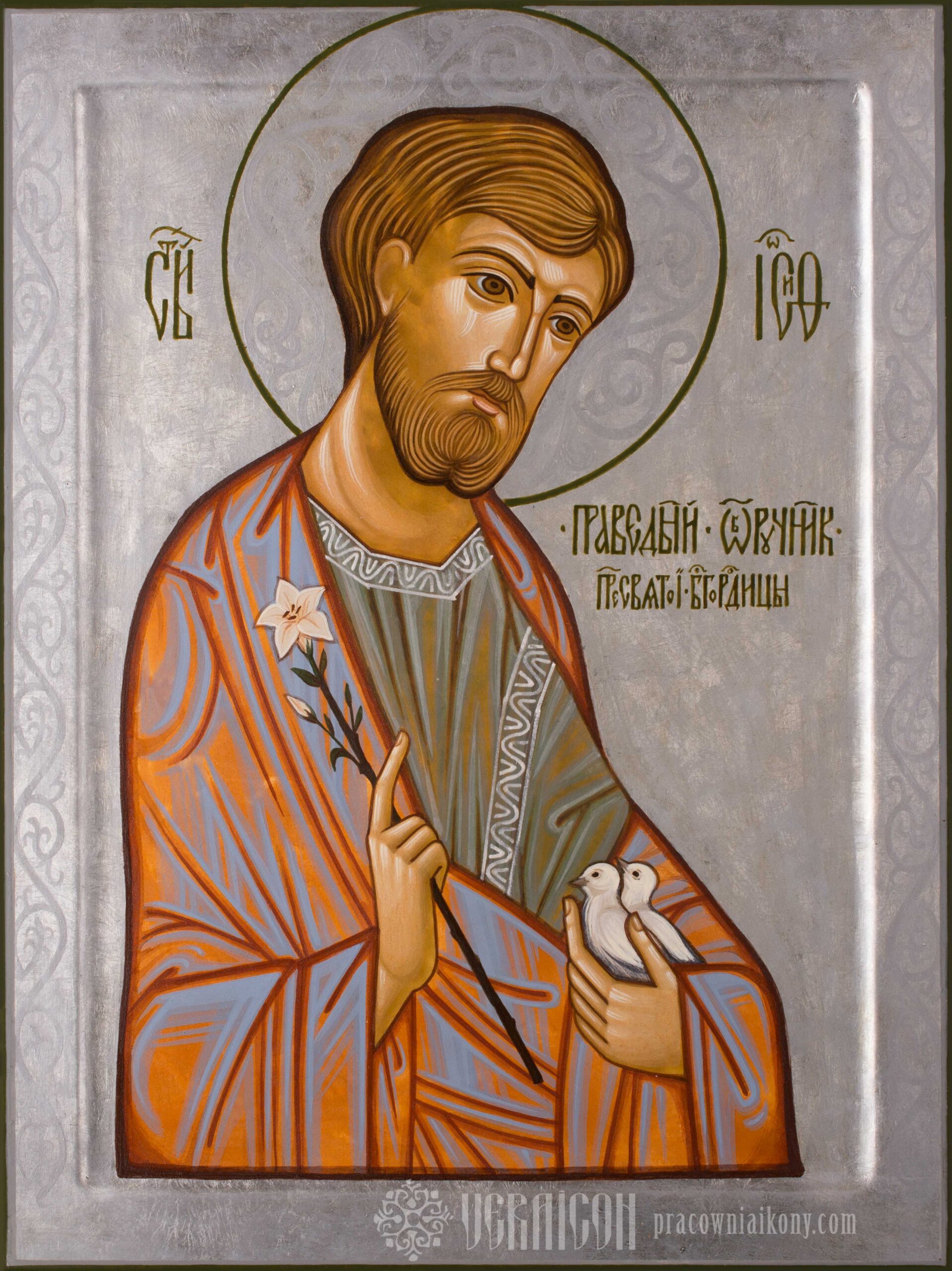
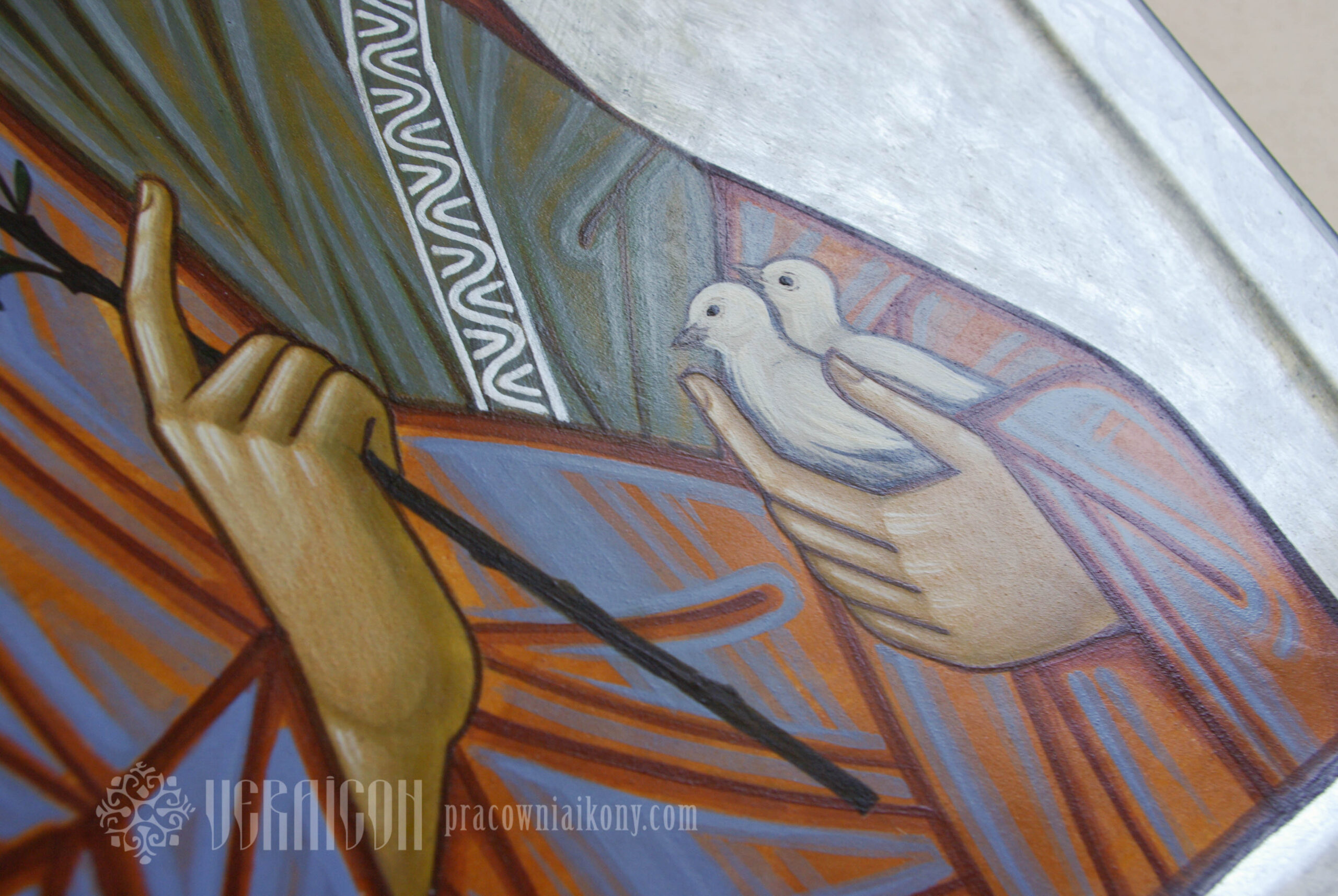
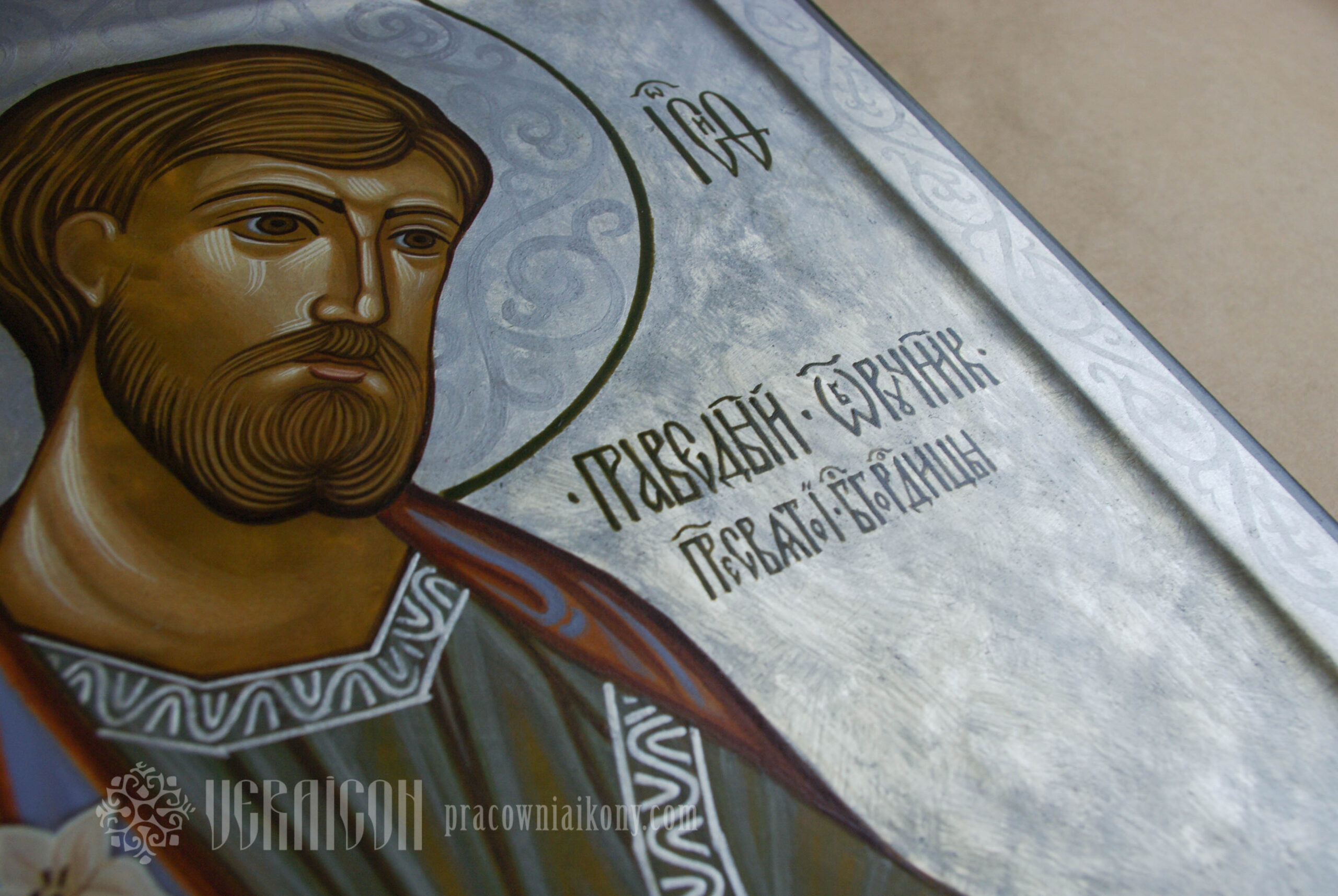
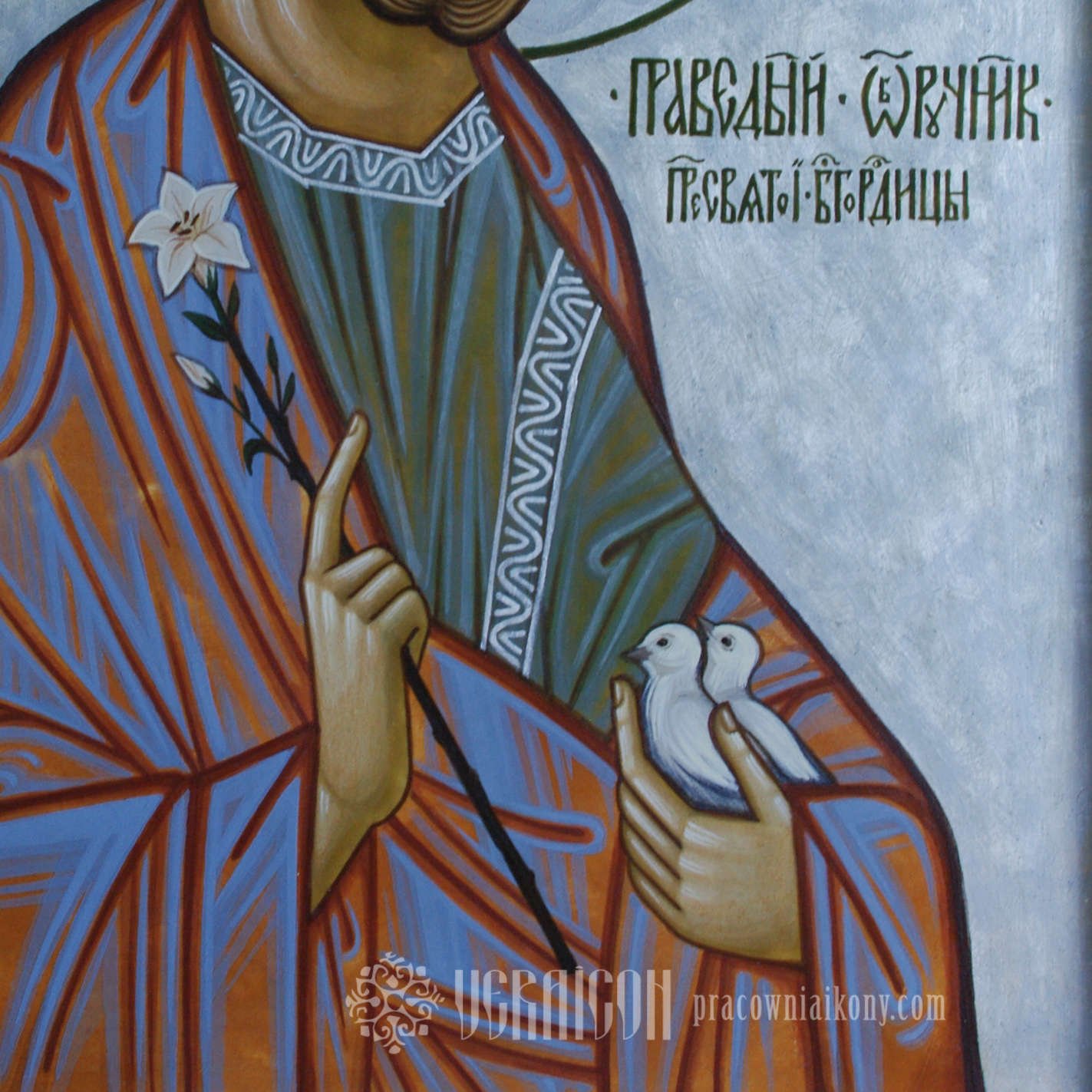
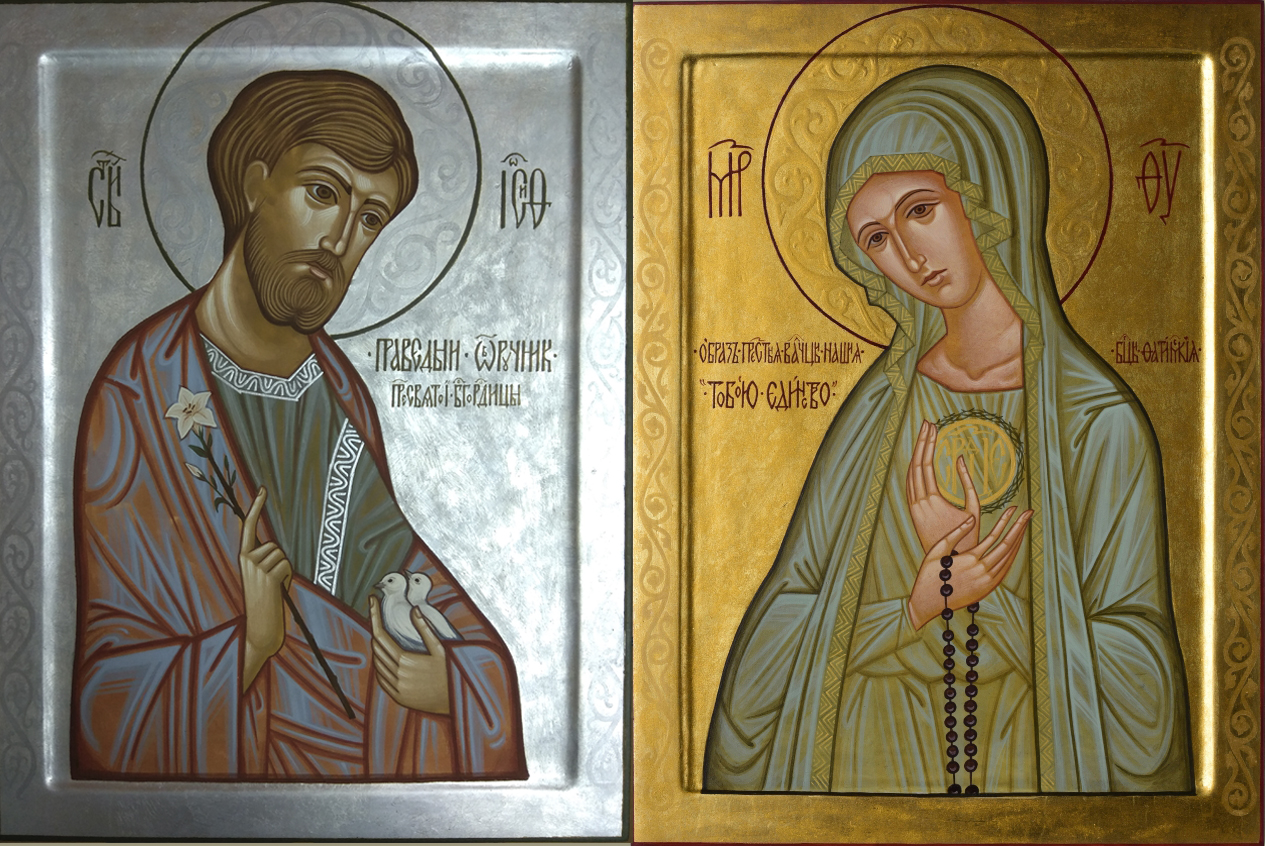
The icon of St. Joseph was created as a complement to the icon of Our Lady of Fatima, together forming a harmonious compositional ensemble.
St. Joseph of Nazareth is venerated in the Eastern Church as the “Righteous” and the “Betrothed.” He is the patron of families, fathers, expectant mothers, as well as workers and the poor. He is most often depicted in icons of the Holy Family or with the Christ Child on his arm. In compositions focusing solely on St. Joseph, symbolic elements such as lilies, doves, or carpenter’s tools often appear.
Egg tempera on wood panel, silver leaf. Size: 40 × 30 cm, 2018.
Saint Joseph with the Jesus Child
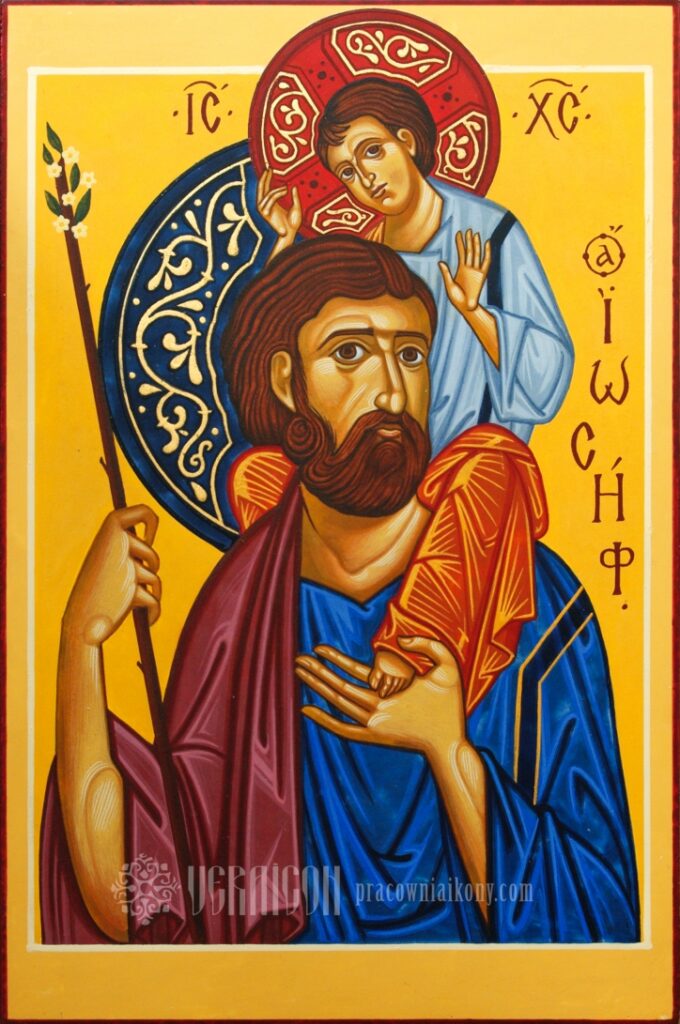
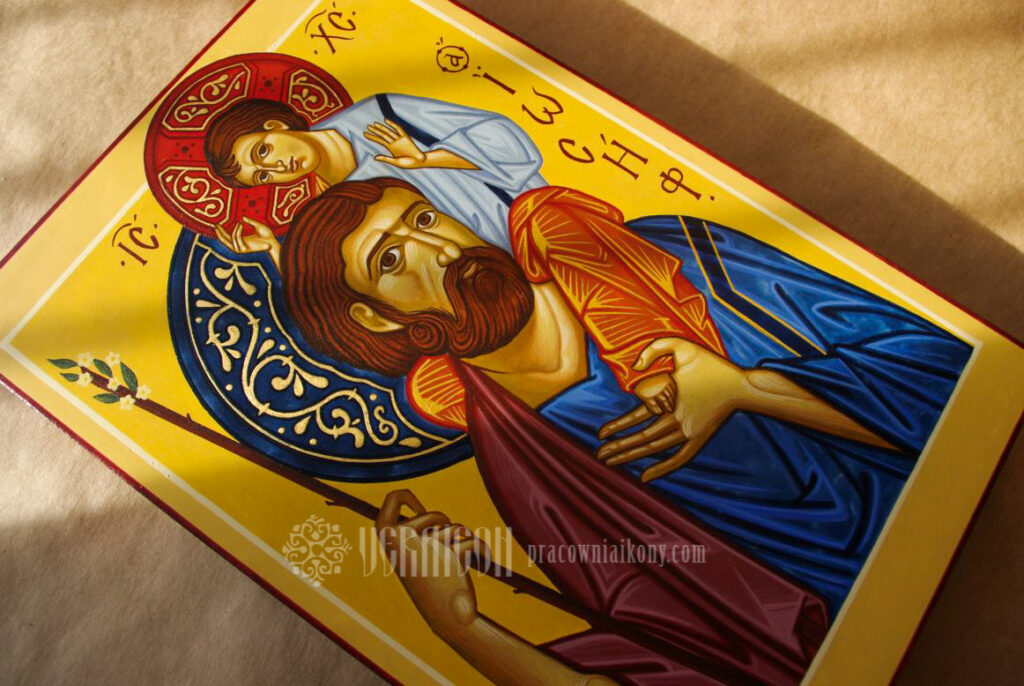
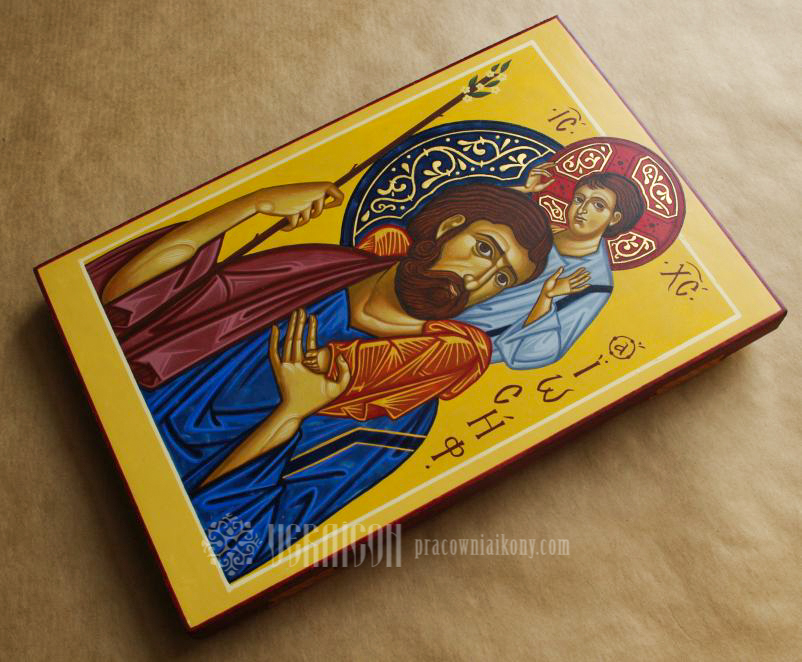
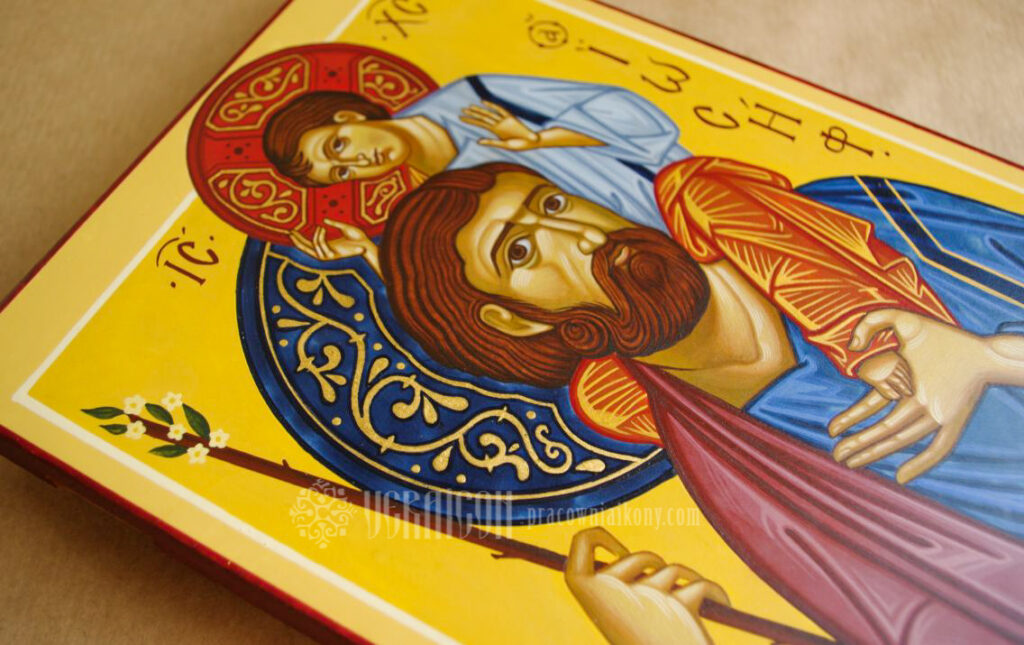
The icon depicts St. Joseph holding the Jesus Child on his arms. Emmanuel – the term used for Christ in his youthful representation – raises his right hand in a gesture of blessing. St. Joseph supports Him gently, resting the Child’s foot in his hand, a symbolic gesture of care, protection, and acceptance of the growing child’s path.
In his right hand, Joseph holds a staff with its tip adorned with small flowers. This references the apocryphal story of Mary’s betrothal, in which she was to choose a spouse indicated by God. Joseph’s branch miraculously blossomed, revealing him as the worthy husband.
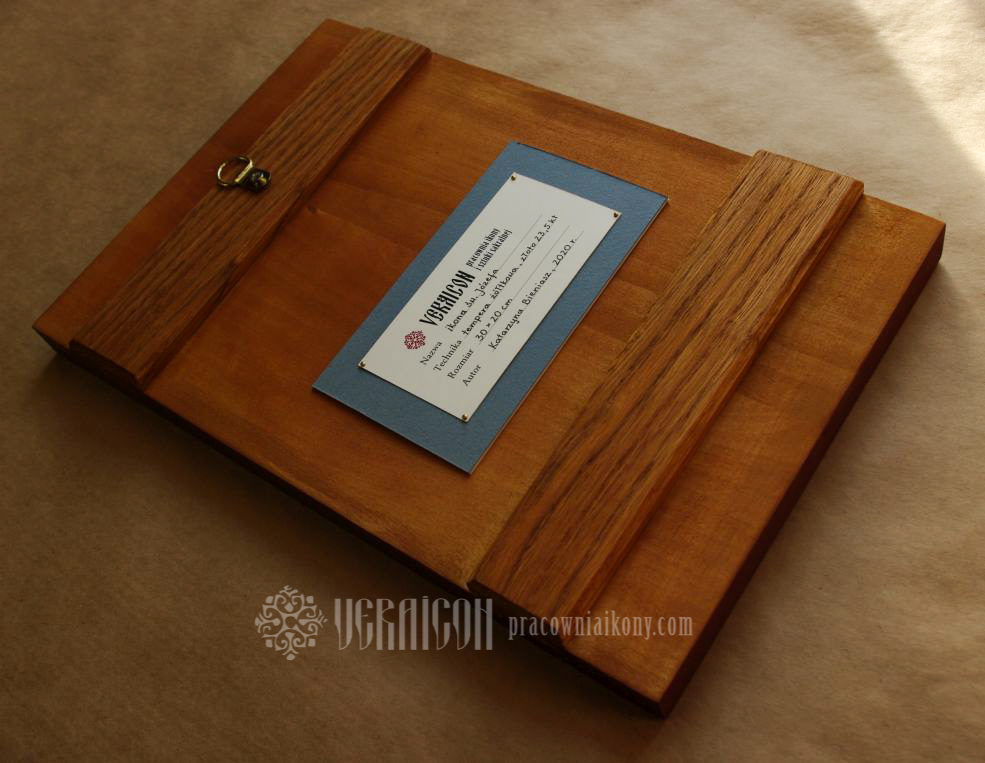
Egg tempera, gold leaf on wood panel. Size: 30 × 20 cm, 2020.
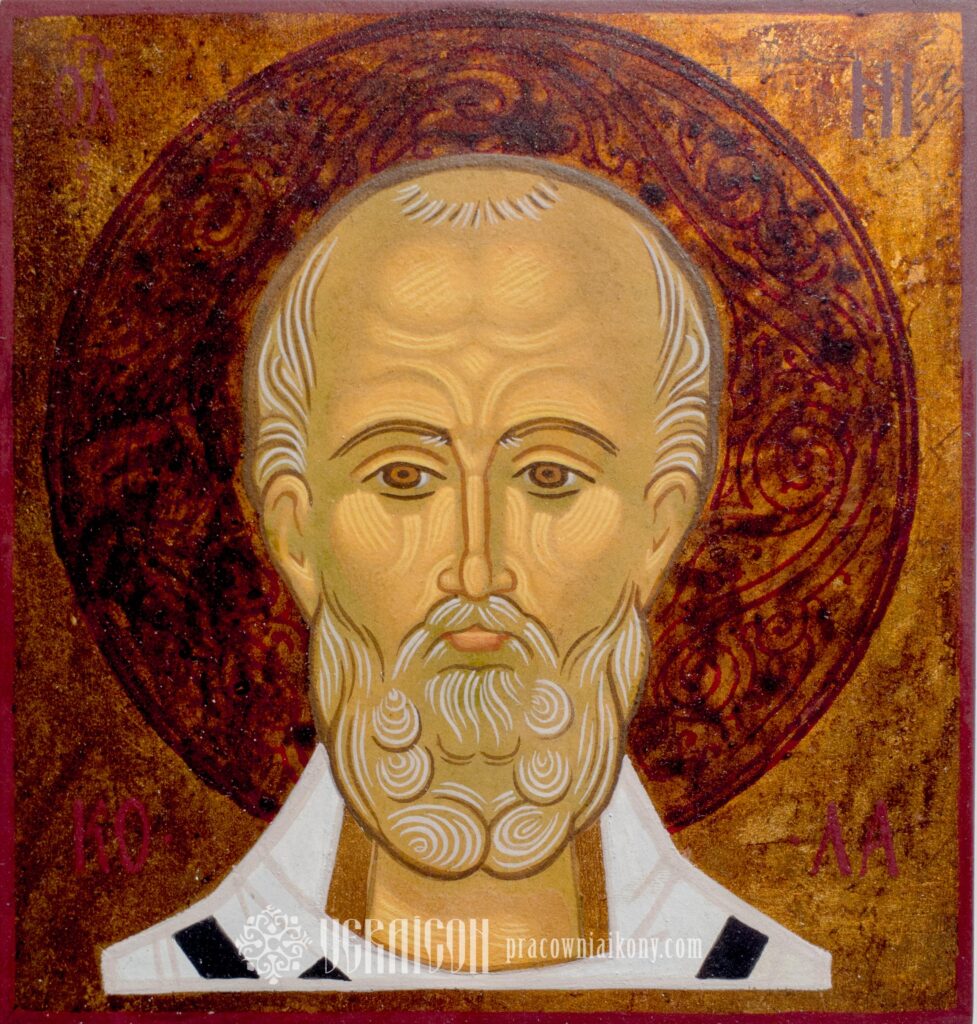
Saint Nicholas
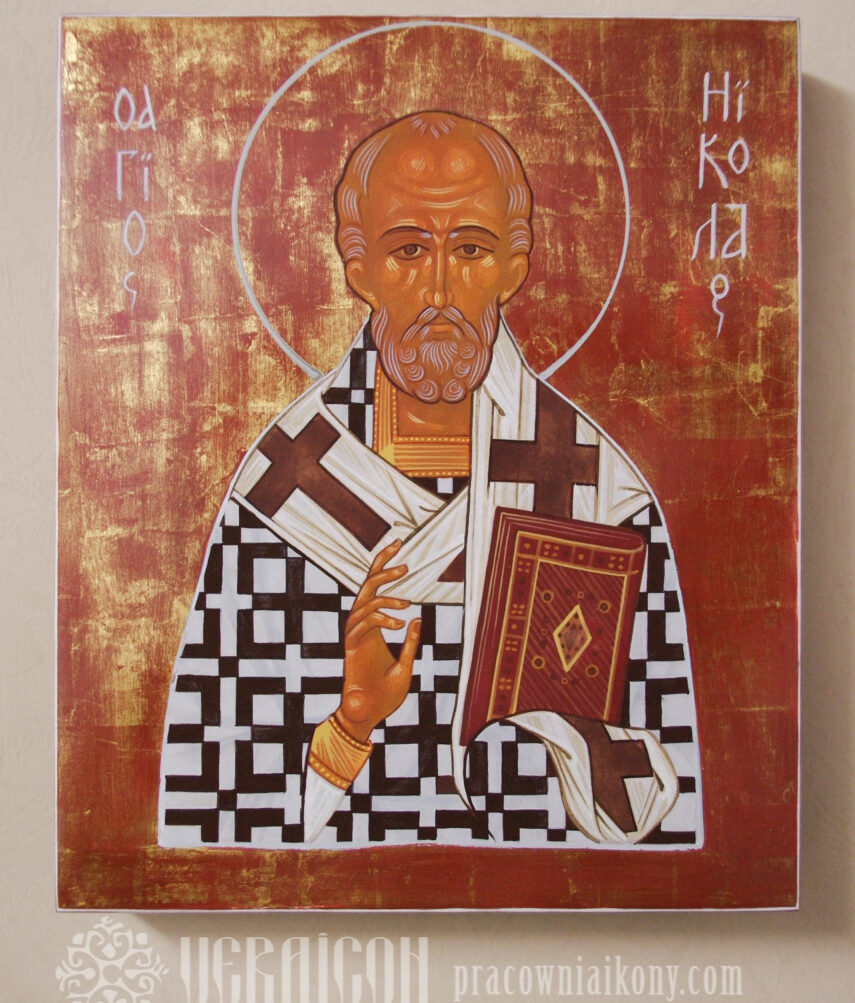
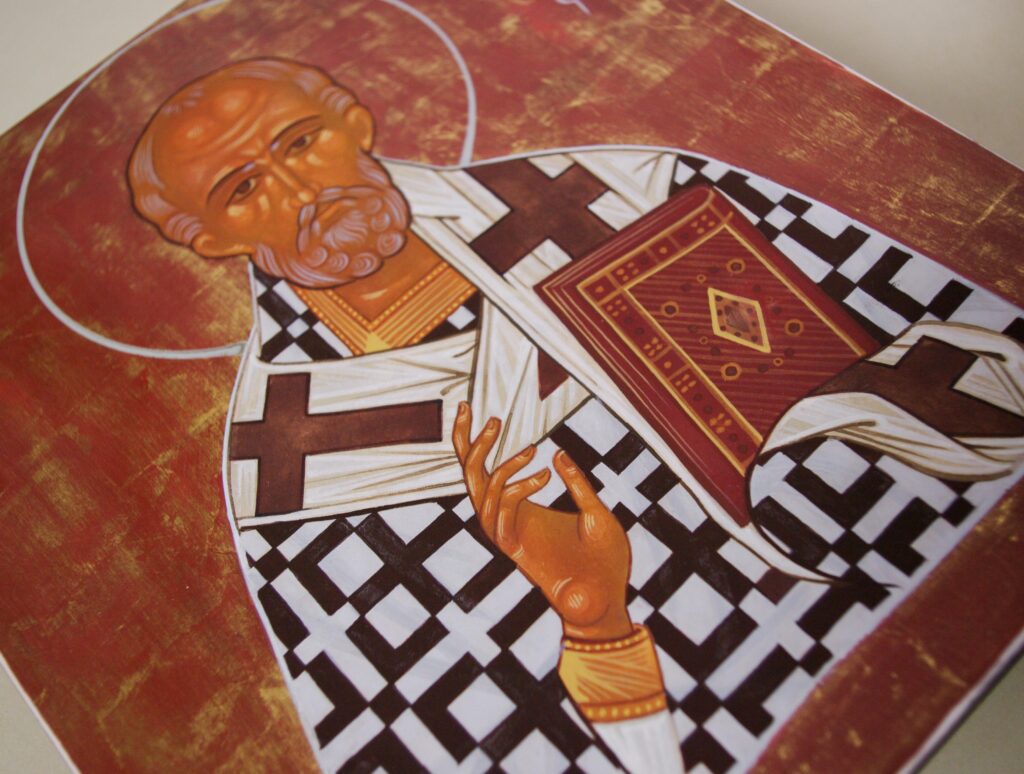
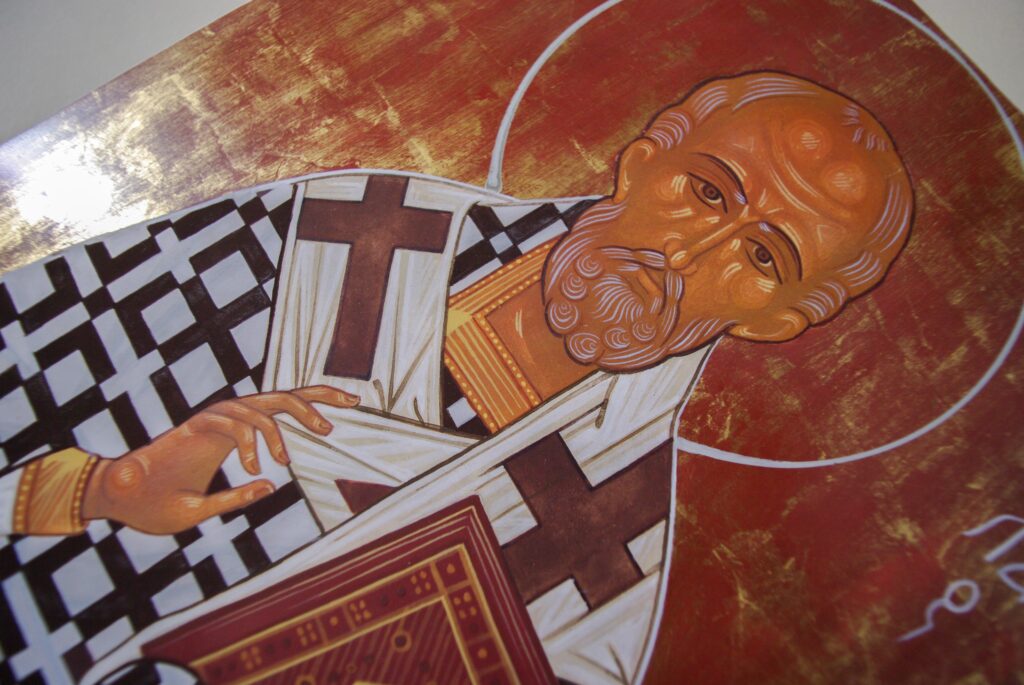
The inscription on both sides of the figure (Άγιος Νικόλαος) means “Saint Nicholas” in Greek. The characteristic white robe, decorated with a pattern of black equal-armed crosses, represents a bishop’s vestment from the Byzantine Empire. Over it is draped the omophorion – a wide band with crosses worn around the neck – which signified episcopal dignity and symbolized the story of the lost sheep that Christ took upon His shoulders and carried to the Father’s house.
The saint holds a closed book in his left hand, a traditional attribute for Church Fathers, authors of religious texts, Evangelists, and teaching saints. The hand covered by the garment expresses respect; according to Byzantine court etiquette, valuable objects could not be touched with bare hands, especially in the presence of the emperor.
Egg tempera on wood panel, gold leaf. Size: 20 × 25 cm, 2016.
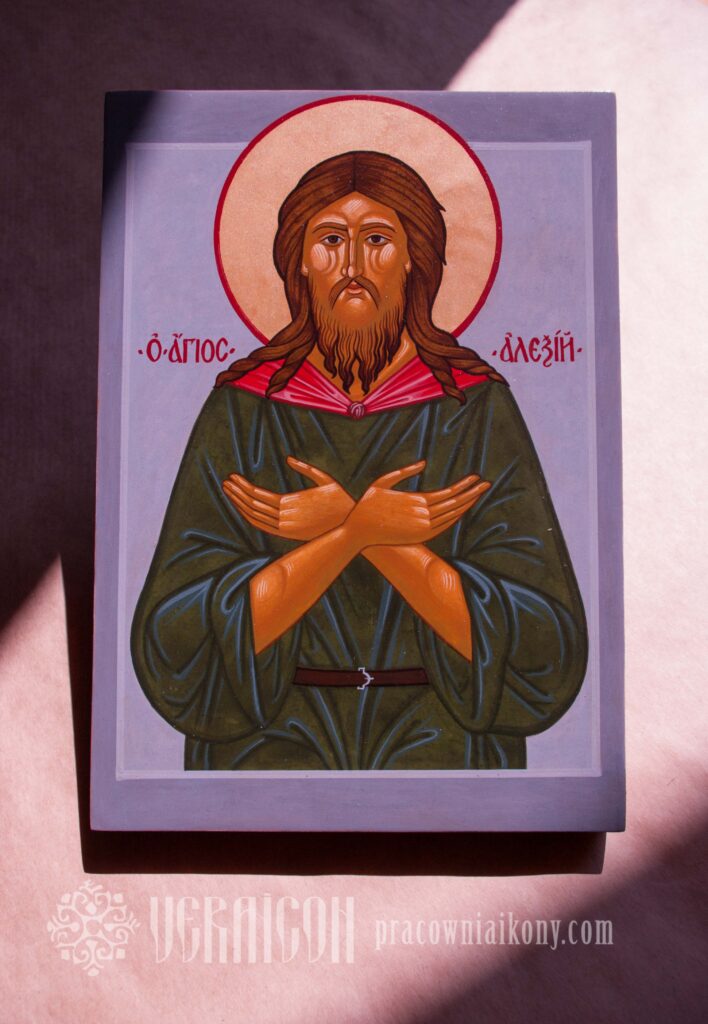
Saint Alexius
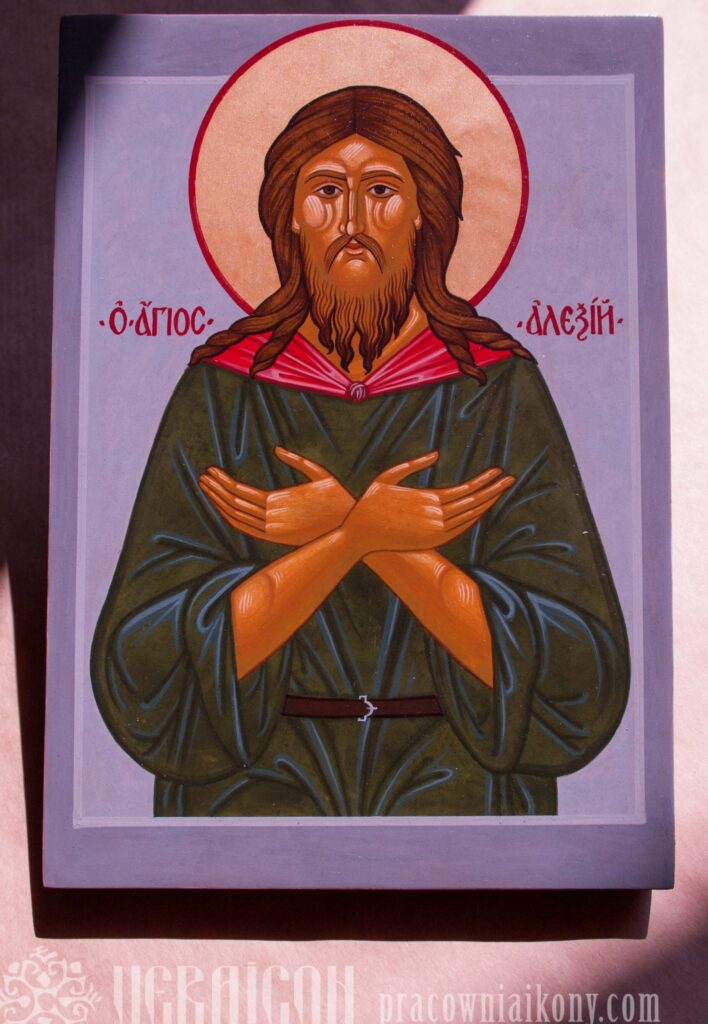
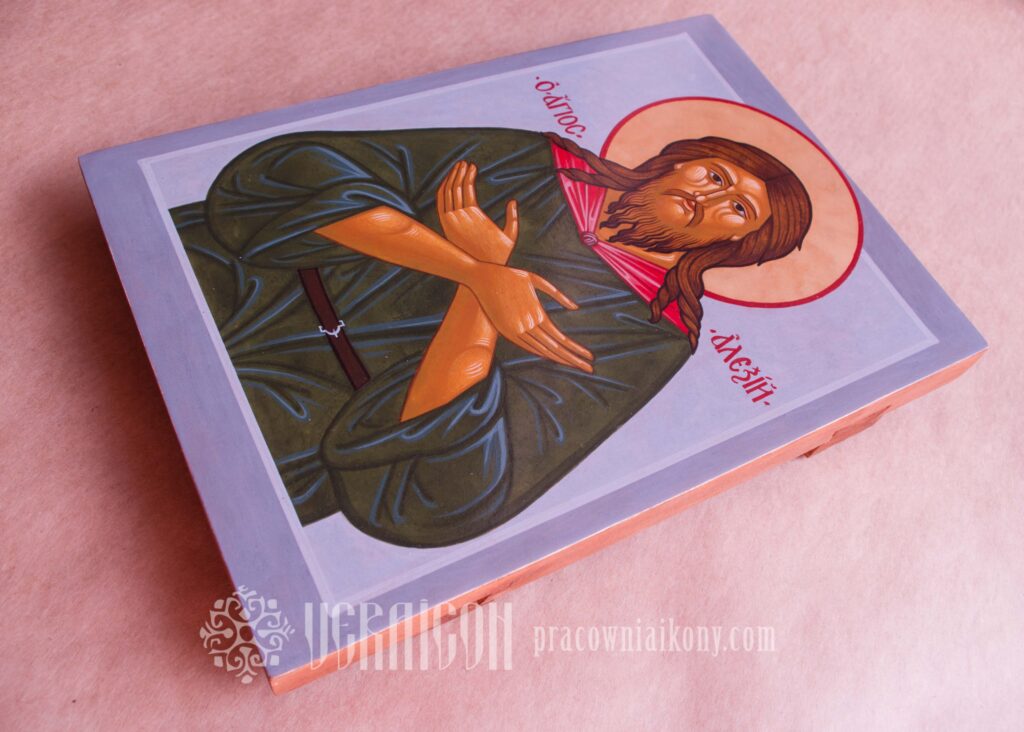
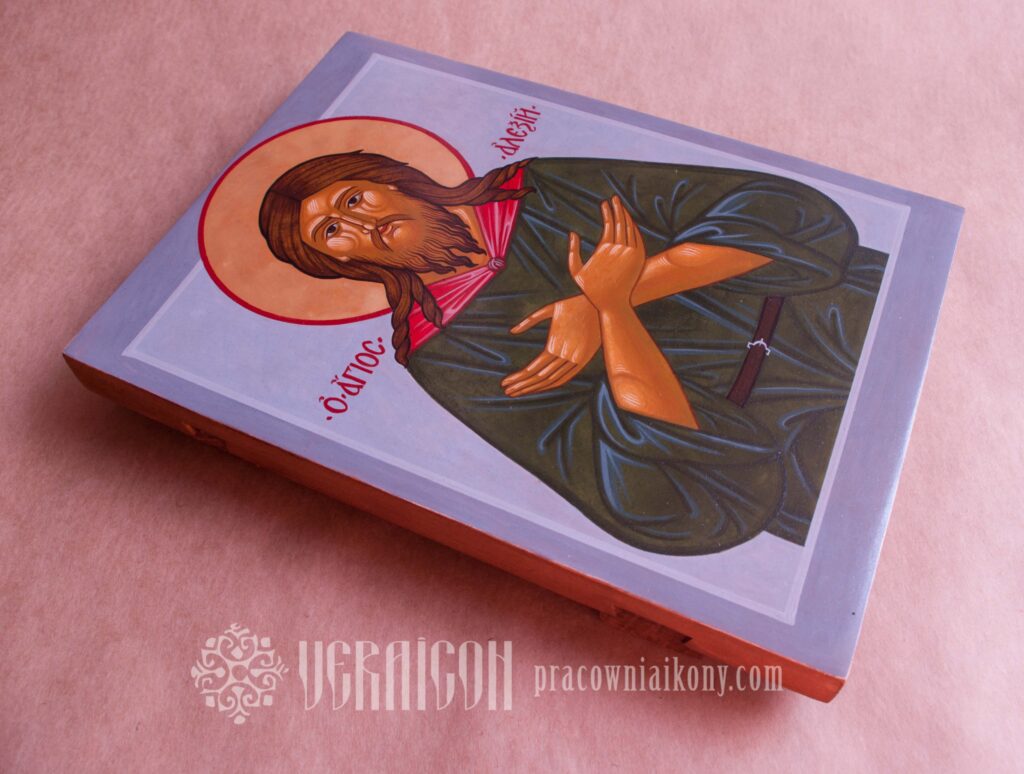
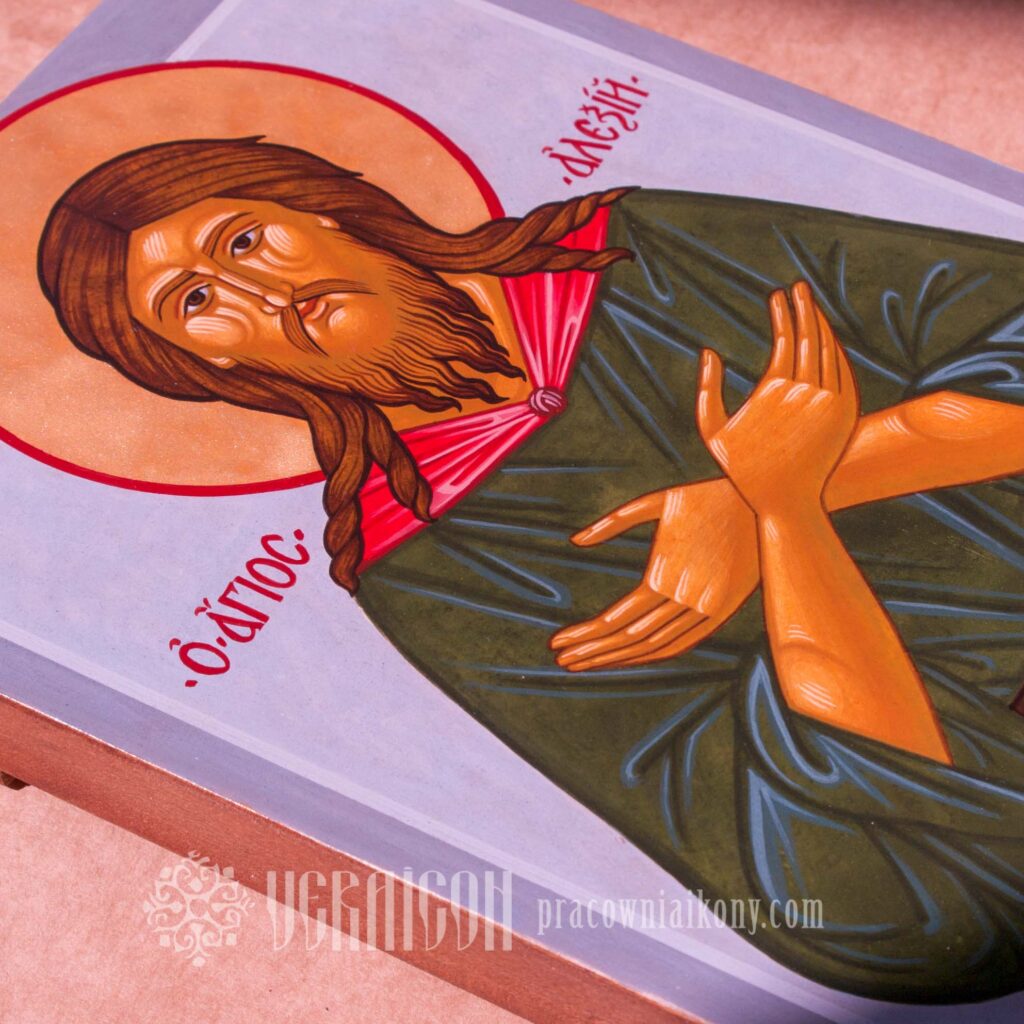
The icon depicts Saint Alexius the Confessor (his name in Greek means “Defender”), known from medieval legends recounting his life. Born into a wealthy Roman family, he fled his home to live as a beggar. He led an ascetic life and died unrecognized at the doorstep of his own house.
Alexius is venerated as a saint in both the Eastern and Western Churches and is known as the “Man of God” and the “Blessed Fool for Christ.” He is the patron of the poor, travelers, pilgrims, and fishermen.
Egg tempera on wood panel. Size: 25 × 18 cm, 2020.




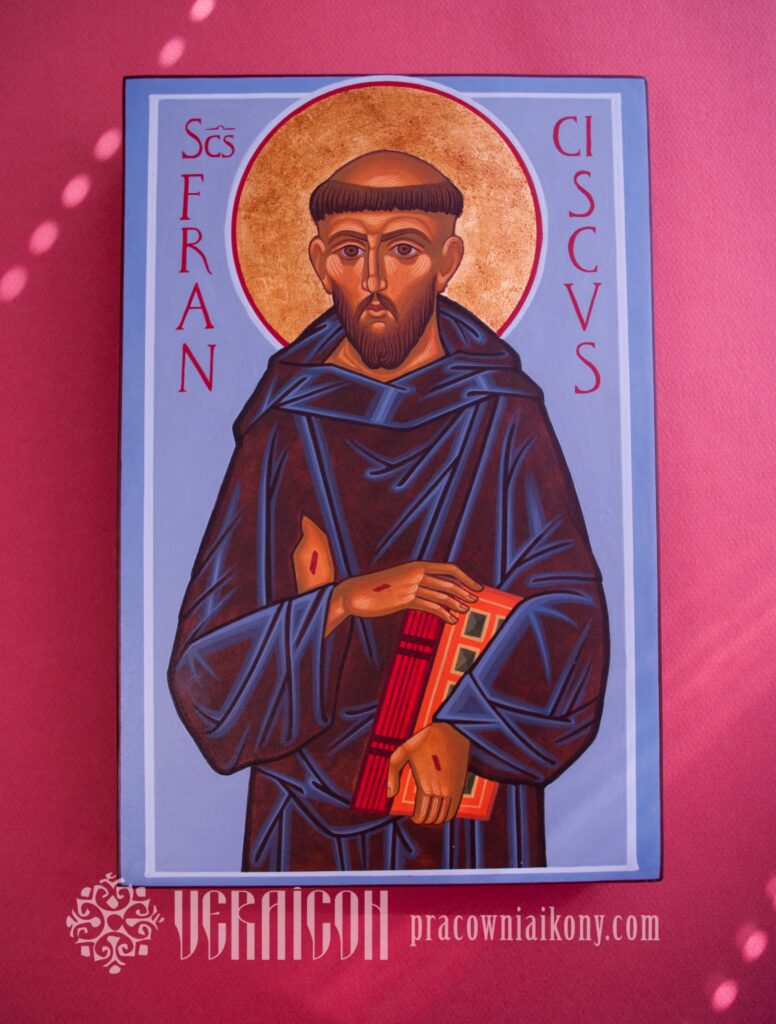
Saint Francis
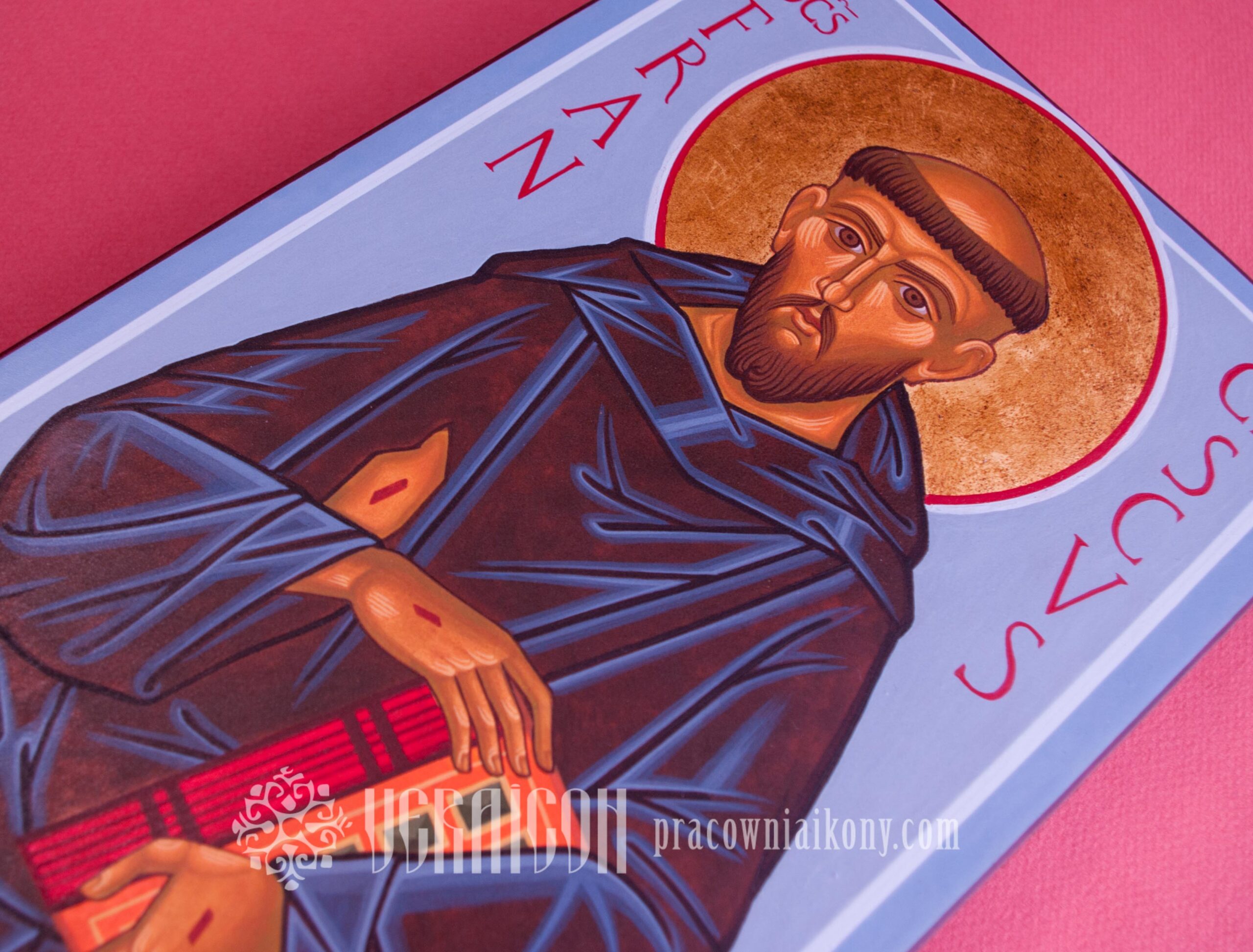
Saint Francis of Assisi is a universally known figure, with a widely venerated cult in the Catholic Church. Born Giovanni di Pietro di Bernardone in Italy at the turn of the 12th and 13th centuries, he came from a wealthy noble family. At a relatively young age, after many life experiences, he turned toward conversion and asceticism. He founded the Franciscan and Poor Clare orders. Saint Francis is the patron of actors, prisoners, ornithologists, and environmentalists.
There are many depictions of the saint. The only historically reliable image is considered to be his portrait by Cimabue on the fresco in the Basilica of St. Francis. In creating this icon, I drew inspiration from several representations, adapting the motifs to best convey the essence of Franciscan spirituality.
Egg tempera, gold leaf on wood panel. Size: 25 × 17 cm, 2020.


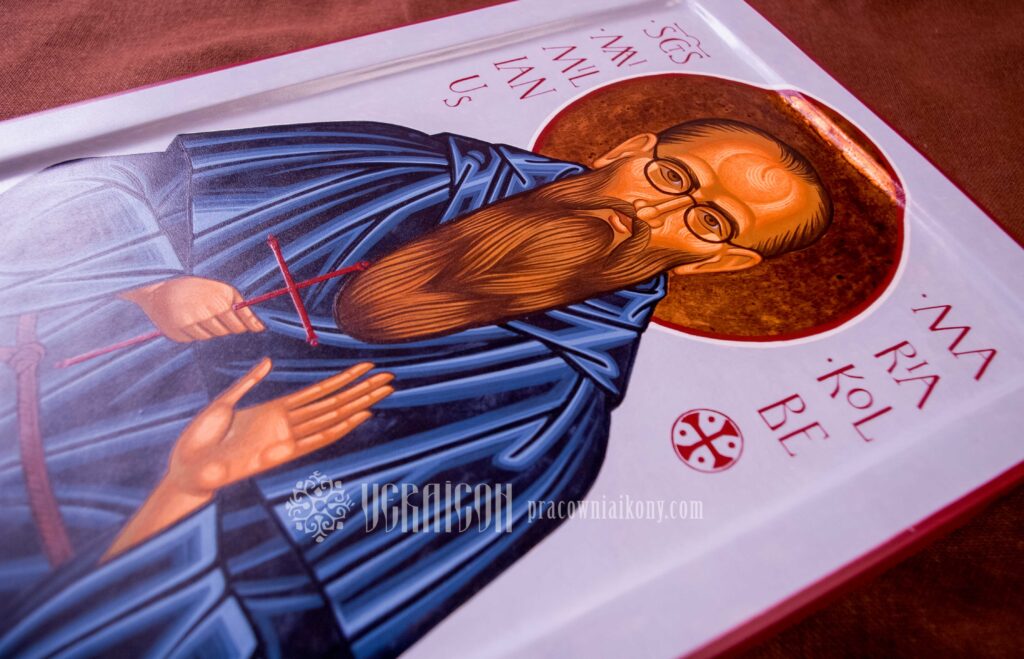
Saint Maximilian
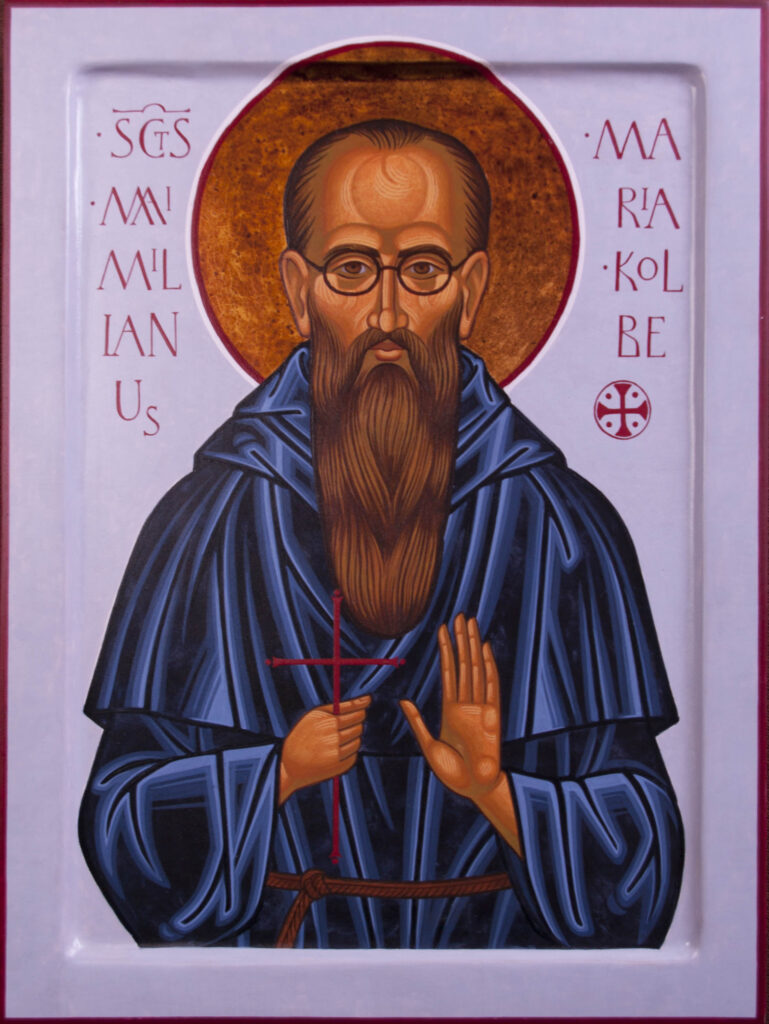
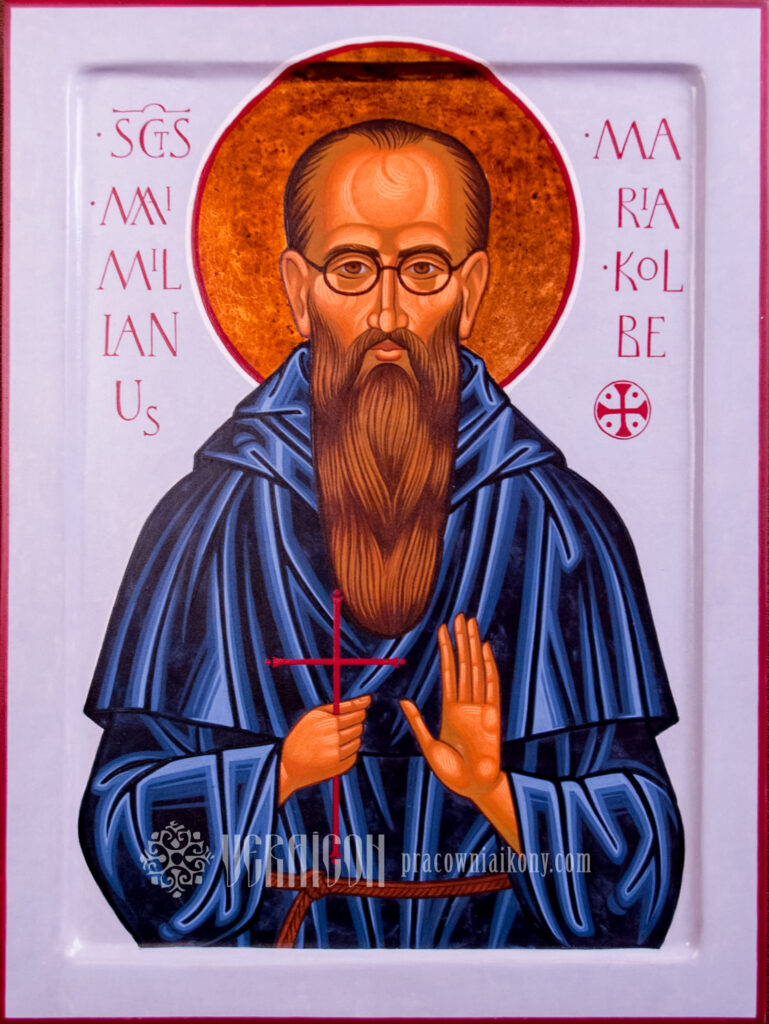
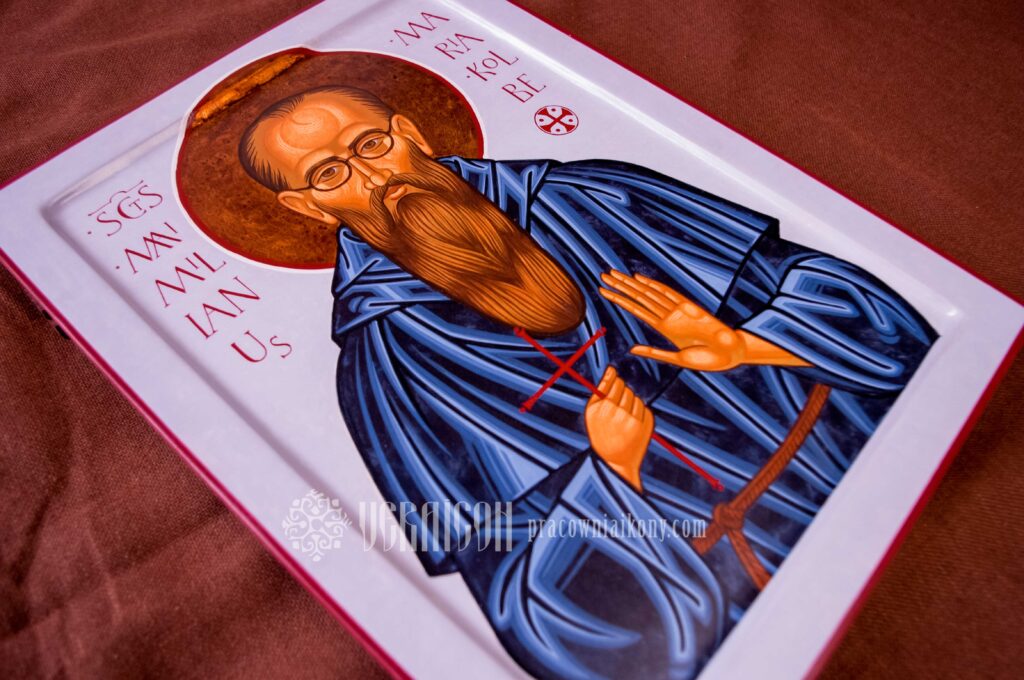
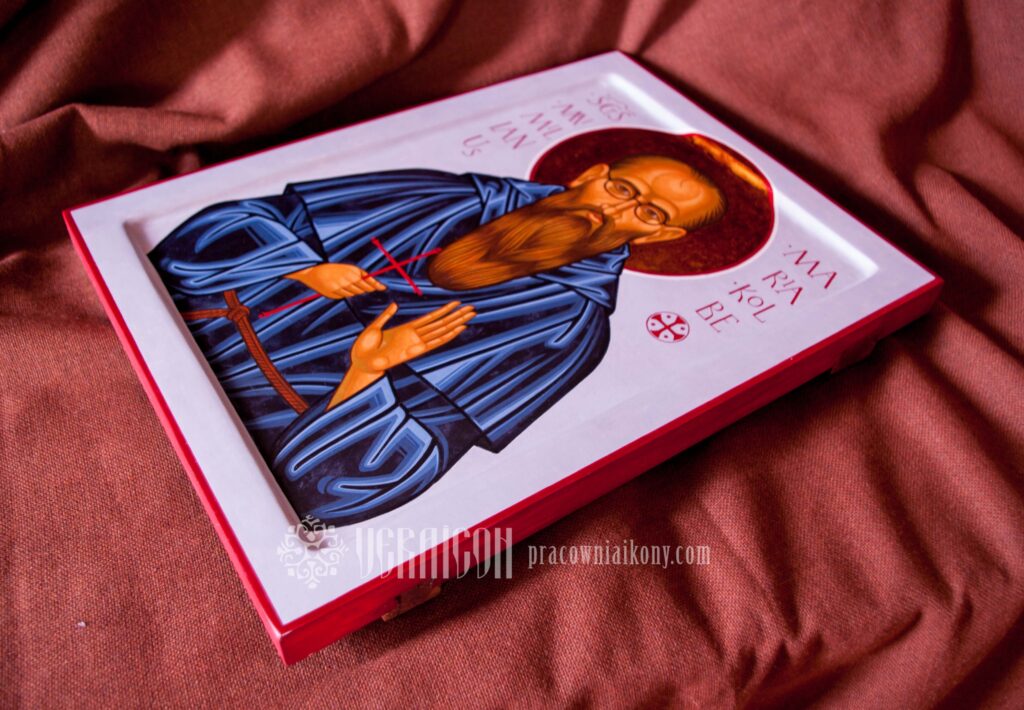
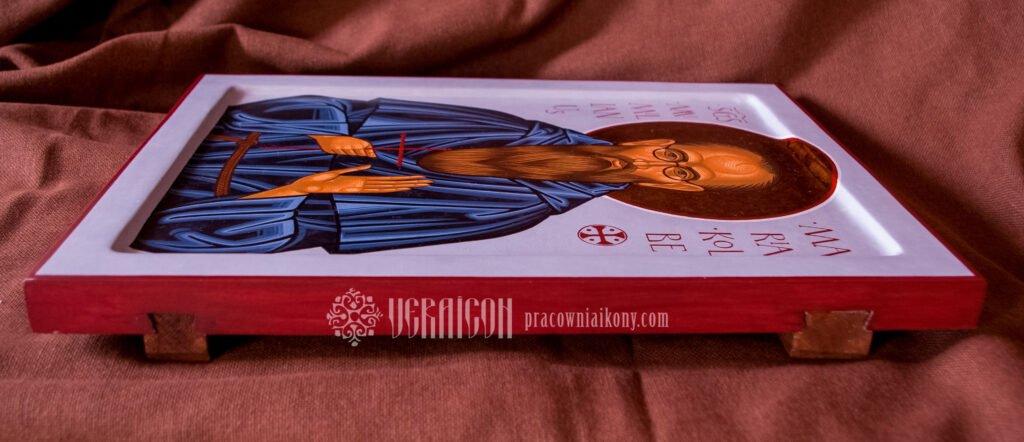
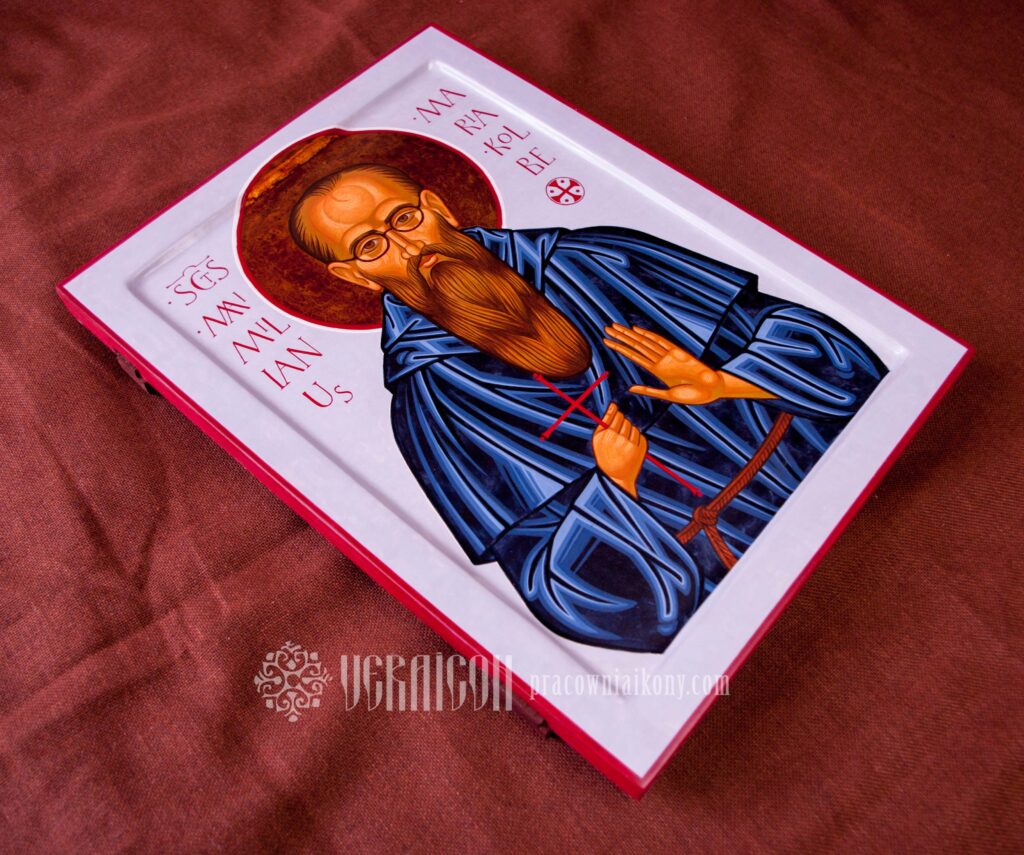
This original icon of Saint Maximilian Kolbe depicts the saint in the Franciscan habit, holding a cross in his hands – a symbol of his faithfulness to Christ and his readiness for sacrifice. The figure is shown with calm focus and simplicity, emphasizing his monastic spirituality and a life devoted to prayer and service.
The facial features were created based on archival photographs of the saint, preserving his recognizable traits and serene expression. Above the figure is a Latin inscription identifying the saint, situating the image within the Church’s iconographic tradition.
Egg tempera, gold leaf on wood panel. Size: 30 × 40 cm, 2021.